Building a second income
By Randell Tiongson on August 5th, 2015
 Question: I’m a young engineer working in Makati. I love my job, but my parents want me to start building my own business. I’m not business-oriented, and I don’t see the point of doing so since I have a stable job. Should I start building extra income opportunities anyway? I’m only 24 and still starting to build my career. -Kyle, asked on Facebook
Answer: I understand your dilemma, Kyle. It’s good to know that you are serious and focused about building your career. Most young people think that a job is the most stable income source, and feel like their monthly salary will be enough to sustain them forever. But if you lose your job for whatever reason, you will also lose your only source of income.
To protect yourself from being financially crippled, it’s good to start looking for another income stream, whether it’s your own business or investments. There are a number of ways to have multiple income streams and make you financially secure.
I always recommend having savings or an emergency fund intended for unfortunate incidents that are out of your control, such as a major illness or loss of a job. You can use your salary for your regular expenses, while the money you earn from your other income stream can be allotted for your emergency fund. This way, you have a financial safety net for any emergencies that require a large payout.
I recommend that you build three to six months of your living expenses in the emergency fund. Sudden loss of income is the most common reason for dipping into this fund, and it often takes weeks or months for anyone to find suitable employment after unexpectedly losing his job. If you are helping your parents with the household expenses, having an emergency fund will make sure everything is covered while you search for a new opportunity. A second income stream will also keep cash coming in to take care of needs that the emergency fund can’t cover.
If you’re already thinking of buying a home, a second income stream will facilitate the purchase. You can get a housing loan to finance most of the costs, but you need to submit bank statements, income tax returns, and other documents that will prove that you have enough income to pay for the loan. Showing evidence that you earn your money from different avenues may increase your chances of getting your loan approved.
First-time home buyers also make the mistake of thinking that the property’s selling price is the only expense they have to consider. However, there are a number of fees that come with buying property, such as property taxes, title transfer fees and insurance. Your second or third income stream can prepare you to meet all these expenses, which will then expedite the loan application and buying process.
If you aren’t even 30 yet, saving up for your retirement might be the last thing on your mind. But I highly recommend that you start saving up for it in your early 20s because time is still on your side. Money saved and invested when you’re 24 will enjoy four more decades of compounding interests or market gains. This means that the P1,000 pesos invested at age 24 is five times more valuable than P1,000 invested when you’re 44. Having a second income stream allows you to set this money aside while enjoying the material benefits of your full-time job’s salary.
Of all the clients I’ve advised, the ones who had the most money when they retired aren’t the people who earned the highest salaries. They’re the people who saved the most money. If you don’t start saving for your retirement while you’re young, you’re going to have to work extra years to make up for it or make more aggressive investments for a better rate of return. Neither of these situations is advisable. You should enjoy a comfortable retirement at the end of your career, and the best way to do it is to pay yourself and save up for your golden years.
For these reasons, developing multiple streams of income is something that each of us should start doing. The good news is that you don’t necessarily have to start your own business in order to do this.
One way to begin is by examining what you know and seeing if any of your skills are unusual or valuable to others. Do you know math well enough to tutor high school students? Are you skilled enough at a musical instrument to play gigs on the side? Monetizing your talents in this manner will not only benefit you financially—it’s also a way to level up your skills and grow your network.
Just be careful that the extra work you do is a legitimate one as there has been a barrage of scams lately riding on the need to earn extra cash.
Check out my blog on 5 Things to do before hitting 30 also, it may be helpful to you as well.
Get my books at a discount.. CLICK HERE.
Teaching Kids Money
By Randell Tiongson on August 3rd, 2015
Question: Hi Randell. I’m a mom of two kids—a 3-year-old girl and a 4-month-old baby. I know that they’re still too young to understand what money is, but my husband suggested that we already start teaching them the value of money. I think this is a good thing. Soon, they will be in school and I want them to use their allowance wisely. What’s the best way to do this?—Dina, from Facebook
 Answer: Dina, I’m glad you’re already thinking about how to pass on important money lessons to your kids—especially since money management is not part of the typical school curriculum. As a parent, your kids will look up to you for these important financial lessons. In fact, research says that kids start inheriting money habits from their parents as early as 7 years old. Early childhood is a great opportunity to pass on healthy attitudes towards saving and investing.
Your kids are indeed young, but if your 3-year-old is old enough to count, then she is old enough to start learning about money. Start by sneaking in some money lessons in a playful manner. For example, nursery rhymes are a great way to start instilling a money mantra. Create a simple rhyme like, “See a coin? Save a coin!” and mimic the act of putting a coin in a piggy bank. Your little girl might not understand what this means right now, but just like “Mary had a little lamb,” this could stick with her for life.
Storybooks are another great way to pass on positive financial habits. I recommend Rose Fres Fausto’s The Retelling of the Richest Man in Babylon, which is a story and activity book that teaches kids the basic laws of money. Go through the activities with your daughter—it’s a great reminder to adults just how simple these laws are.
By the time your kids are old enough for kindergarten, they can already have their own bank account. This will be important in terms of teaching them how to save, and teaching them that money should be protected. At this age, kids don’t understand abstract concepts like mobile deposits. So you need to make the lesson stick by having them do tangible interactions.
Bring the kids to the bank and encourage them to hand the money to the teller while making the deposit. Show them the bank book and explain that this money can grow if they leave it in the bank and don’t withdraw anything. Help them understand that these are savings they can someday use to buy a car or go to college.
Once your kids are in grade school, you can build upon these financial fundamentals by setting mid-term goals—the kind that requires a bit of discipline and teaches sacrifice. For example, if your child wants to buy a bike, explain that she needs to set her allowance aside for a few weeks in order to afford it. To boost her motivation, you can track progress with a visual graph.
Bringing the kids when you do the groceries offers great opportunities to teach smart financial decision-making. For example, you can compare several brands of cereal, and show that the imported ones taste just like locally made ones—but costs twice as much. And that’s why you won’t buy it. When your kids are older, you can give them a budget and a grocery list, then divide and conquer supermarket duties.
Introducing the benefits of charity and tithing is also a good way to teach healthy money habits. Encourage your kids to donate part of their allowance to a charity or non-profit. You can also volunteer your time as a family, or hold a birthday party in an orphanage. Doing charity work at a young age develops the core value of sharing their wealth to others in need, while teaching them to appreciate the material goods they have. Tithing also teaches them about stewardship and that money is really the Lord’s — they are merely managers. Teaching kids the true purpose of money is a great way for them to see and appreciate its real value.
For these strategies to be effective, you and your husband need to be good financial role models to your kids. Your words and actions should not contradict each other, especially while your kids are young. For instance, if you tell your daughter she can’t buy a toy because it’s too expensive, and you turn around and buy something for yourself, it sends her the wrong message.
Besides teaching your kids how to save and budget, it’s important to pass on a healthy attitude towards money. Giving the impression that you’re struggling to feed the family can instill a fear of money in young kids. Avoid sighing when you open your credit card bill or complaining when you take your wallet out to pay for something. Choose your words carefully. Emphasize that when used carefully, money can be a valuable tool to a good life.
It’s never too early to start teaching kids the value of money, and I’m glad you and your husband are already thinking of how best to do this. I’m confident that you will do a fine job in raising money-smart kids.
“Train up a child in the way he should go; even when he is old he will not depart from it.”—Proverbs 22:6, ESV
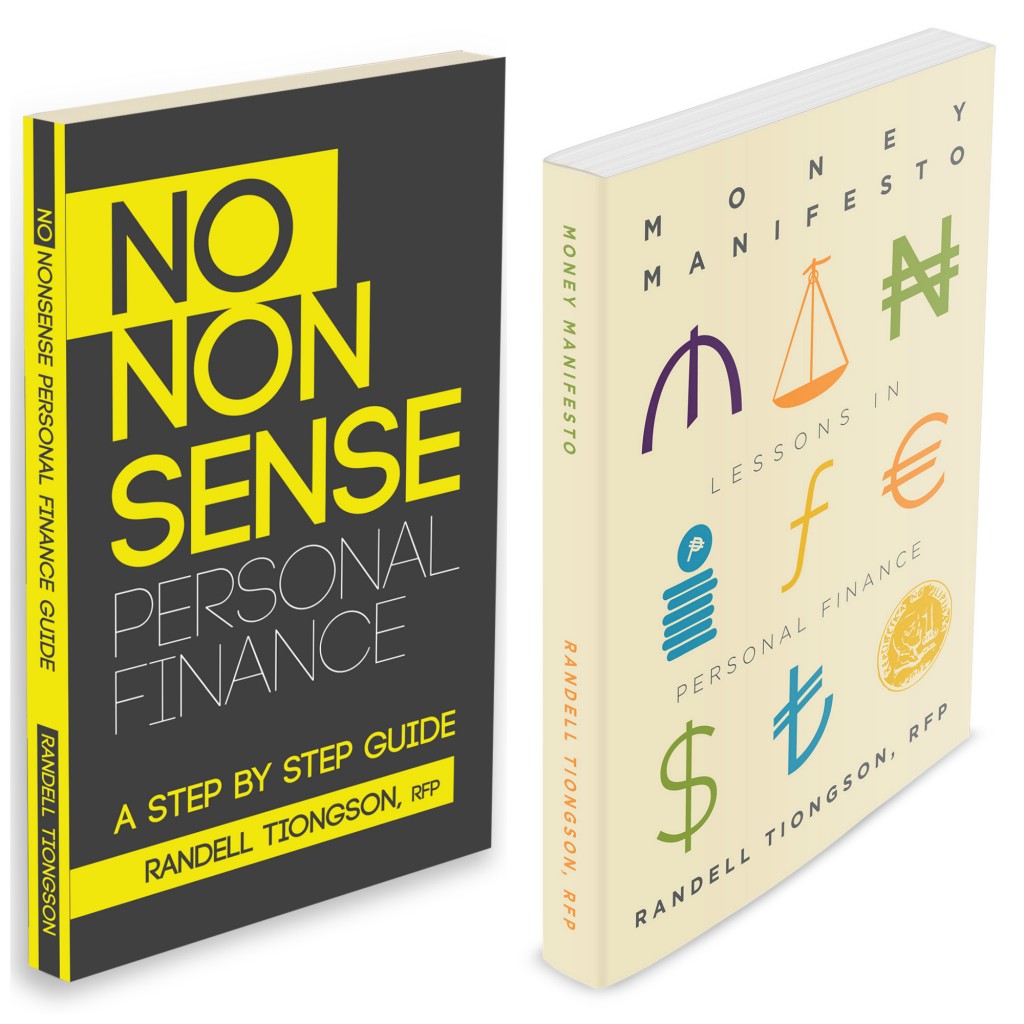
Get both my books at a discount bundles! Instead of P 1,100 for both books, you can now get it at only P900 with free shipping for Metro Manila (add P100 for provincial address).
Here’s how you can order:
1) Pay the amount via BPI 0249-1113-09 or BDO 006440069496.
2) Take a screen shot of the deposit slip or transaction slip.
3) Email the screen shot to mia.tiongson08@gmail.com along with your complete address and contact number. Indicate in the email if you want the books autograph.
This offer is only until August 7, 2015.
Why you should stay away from Success 200
By Randell Tiongson on July 23rd, 2015
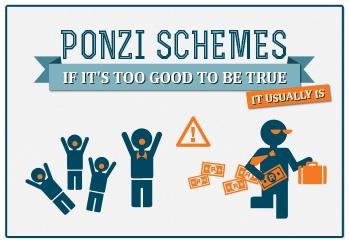 It almost feels like every week there’s a new scam that the SEC has to warn Filipinos about. Online investment scams are becoming more common these days as more Filipinos log on to the internet and use it in their day-to-day lives.
This week, the SEC issued an advisory warning people against Success200, telling investors to “exercise self-restraint from investing their money into such investment scheme,” which is a nice, polite way of saying “don’t put your money in this scheme.”
What is Success200? The company is essentially a scheme that asks investors to put in anywhere from P1,800 (low-end) to P36,000 (high-end), with a promised return of P10,000 to P200,000 upon payout exit, respectively. That’s a “guaranteed” ROI of 455.56%, which is unrealistically high and should already set off the warning bells in your head.
On their website, Success200 state that they are a “iuly [note: the typo is theirs, not mine – I assume they meant “duly”] registered domestic corporation with the Securities and Exchange Commission with SEC Registration No. CS201509200 issued May 12, 2015.” But just because a company is registered with the SEC, it doesn’t automatically mean they are authorized to take investments from customers. The SEC itself says in the advisory that the company has not obtained permission to solicit investments, as required under Section 8.1 of the Securities Regulation Code.
Because they have no license to take money for investments, you should not give them your money.
In their defense, Success200 state on their site that they are not an investment company; instead, they claim that they are simply in the multi-level marketing industry. But what are they marketing? The product is supposedly “pure agaricus capsules”, but to earn anything from the scheme, each participant HAS to recruit two other people. In addition to that, each person has to put in money.
Of course, some multi-level marketing opportunities can be legitimate. But if it looks like a pyramid scam, well, you know what they say; if it looks like a duck, swims like a duck, and quacks like a duck, then it probably is a duck. And if the SEC is warning you away from certain investments, then they have good reason to do so.
Don’t lose your money to scams like this. Many victims of scams aren’t rich; they’re regular working-class people who were duped by fraudsters. Just because someone on an internet forum said that they earned money from one of these schemes doesn’t mean it’s reliable. And just because they have one form of SEC registration doesn’t mean they’re actually allowed to take your money as investments.
If you come across an opportunity like Success200 that’s too good to be true, it probably is. Protect yourself by consulting this handy slideshow on how to detect an investment scam, and doing more research on your own, before putting your hard-earned money in anything. And for investments you can make for just P5,000, you can read this MoneyMax.ph article on the topic.
Read the SEC advisory here.