A basic guide to ETF’s
By Randell Tiongson on July 15th, 2015
 I’ve said before that I pray that more Filipinos become moderate investors, even if most of them are conservative now. A good way to become a moderate investor is by educating yourself on the different investment instruments, and distributing your investments across them.
One investment instrument that gets a lot of attention is “pooled funds”, in which you join a “pool” of other investors, and a fund manager handles the whole pool of money depending on the objectives of the fund. Mutual funds and UITFs fall under this category.
But there’s a relatively recent addition to this category: ETFs, or exchange traded funds. ETFs became available in the US in 1993, Europe in 1999, and the Philippines in 2013. While there are many types of ETFs available in more advanced markets, they haven’t made a big splash here yet. I’ve been getting a few questions about ETFs, so I’ve put together a basic guide here so you can learn more about them.
What are ETFs?
An exchange traded fund is an investment fund that’s traded like a stock. There are lots of kinds of ETFs; some of them track foreign stock market indices, specific sectors like energy or oil, or commodities.
But the most basic type of ETF simply tracks a benchmark index to match its performance. So if an equity index ETF is tracking the Philippine Stock Exchange index, its underlying securities would consist of stocks like Ayala Land, SM Investments Corporation, PLDT, BPI, and so on, much like an equity mutual fund or UITF.
In short, think of an ETF as a mutual fund that you can buy and sell on the stock market. And because ETFs are traded like common stocks, they don’t have a NAVpu or NAVps like UITFs or mutual funds; their share prices change throughout the day as the market trades.
Basically, you get the diversification of a mutual fund with the flexibility of stock trading combined in an ETF.
What are the pros and cons of ETFs?
Pros:
- Cheaper diversification. Buying into just one ETF gives you exposure to a whole group of equities, meaning you don’t have to buy each individual stock yourself. So for a small amount of money, you can have a diversified portfolio. Anybody who can buy the minimum board lot can therefore participate in the growth of the Philippine economy. And ETFs are transparent about their structure; you can just visit their site and see the underlying securities that make up the fund (and in what percentage).
- Can cost less than actively managed funds. Mutual funds charge management fees of around 2%. UITFs can have trust fees of 0.20% to 1.50% per year. With buying and selling stocks, your costs will be lower. This is because an ETF is passively managed, meaning you’re not paying a fund manager for his services; you’re just paying brokerage fees.
- Here’s an example to make things clearer. If you invest Php 50,000 in a UITF, you’d pay up to P750 (1.50%) in fees. (There may also be fees for early redemption.) Compare that to the total trading costs of buying Php 50,000 worth of an ETF on the PSE, which is P147, and P397.50 when selling. These small differences add up to a lot, so ETFs can be cheaper cost-wise in the long run.
Cons:
- Can’t beat the market. Because an ETF is designed to track an index, its aim is not to beat it, but just to match it. So if you were looking for investments to beat the PSE, you’d be better off with actively managed funds that seek to beat the index. You’re well diversified when you buy into an ETF, but remember: diversification limits your losses, but it also limits your gains.
- Can cost more than other pooled funds. If you like to invest small amounts regularly, like Php 10,000 each month, you’ll get charged for every transaction when you buy into an ETF. If small, regular investment is your strategy, you may be better off with a mutual fund or UITF that doesn’t charge you transaction fees each time, which can reduce your returns.
What options are available to the Filipino wanting to invest in ETFs?
Unfortunately, you don’t have a lot of choice in the Philippine market yet. So far, the only ETF here is the First Metro First Metro Philippine Equity Exchange-Traded Fund (First Metro ETF), an equity index ETF which started in December 2013. Other banks such as BPI and BDO have expressed an interest in launching their own ETFs, but they are still considering tax rules and regulations, as well as market appetites, before they do so.
Are ETFs for you?
The answer really depends on your investment goals and risk tolerance. If you can’t tolerate volatility with your money, equity-based ETFs may not be for you. But if you have an eye on the long-term and can take the risk, consider including ETFs in your investment plan. ETFs are still pretty new to the Philippines, so keep an eye out for more ETF options in the future.
I hope this guide has given you the basics about this new asset class that you can add to your portfolio. But before you jump in, remember this quotation from Warren Buffett: “Never test the depth of river with both feet.” Educate yourself on the risks, and you’ll make the best decisions with your investments.
Always remember to invest according to your investment objectives, time frame, risk tolerance and don’t forget to diversify properly.
Why Price Comparison Sites are the Future
By Randell Tiongson on May 26th, 2015
MasterCard recently released the results of its Financial Literacy Index, a research-based report that examines levels of financial know-how in the Asia Pacific region. They found that financial literacy actually declined across the region. The Philippines was awarded 66 in the area of Basic Money Management; a score of less than 70 is considered an issue.
Improve Your Financial I.Q.
While some Filipinos understand everyday concepts like budgeting and saving, many are confused by the technicalities of finding the best car insurance or credit card deals. Personal finance comparison sites can fill in those knowledge gaps. They empower buyers to compare and make financial decisions based on their own knowledge – and that knowledge is bolstered by information and help options that can educate them on various concepts.
Saving Time & Money
The rise in popularity of these websites corresponds to the overall rise internet use. It makes sense; what used to take hours or perhaps even days to call various companies and wait to hear back with a quote can now be accomplished in minutes just by using a single price comparison website. And – people aren’t left with that nagging feeling that there was a better deal out there waiting to be had.
Growth in Southeast Asia
While the phenomenon has been noted globally, it’s perhaps in Southeast Asia that both the rise and the potential for financial comparison sites are greatest. The growth of internet use in Southeast Asia has been phenomenal, with 194 million new internet users between 2010 and 2020 between Singapore, Malaysia, Thailand, Indonesia, the Philippines and Vietnam.
Internet use is high even among low income citizens of the Philippines, typically in the form of mobile telephony and not via a stand-alone computer. Fully 90 percent of users engage with blogs and social media and internet banking use is roughly on a par with the rest of the world. As they’ve adopted the digital lifestyle, price comparison shopping for everything from dresses in the shopping mall to car insurance has been on the rise too. The market has responded with a flood of price comparison sites and start-ups over the last two years.
Peace of Mind
 Along with getting the best price and options, visitors can be assured of the accuracy of the information they’re getting. Growing sites like MoneyMax.ph offer comparison pricing for car insurance and other financial products along with options that explain financial concepts in everyday language. This helps close the gap in financial literacy with price transparency and consumer choice.
Across the globe, financial institutions and even government players are sitting up and taking notice of the enormous rise in the use of these websites. Soon, having to call individual banks and companies to find the best deal will be a practice of the past. Through these websites, Filipinos have quick access to all this information, and become empowered to make choices that are right for them.
5 Simple Ways for OFWs to Invest in the Philippines
By Randell Tiongson on May 13th, 2015
 OFWs are generally the kind of people who leave home because they want to provide for their respective families, others still are looking to broaden their life experiences by working abroad for a time. With their time working abroad comes the idea of eventually putting the money they’ve worked hard for to good use.
Most will find themselves putting that money towards small businesses that their families can run in their stead; others will start a savings account and allow the money they deposit to incur interest. There are other ways to grow one’s hard-earned money, such as investing.
Many people find the idea of investing somewhat daunting – the most common reaction is usually “don’t you have to study the stock market to get anything done?” There is a certain amount of study that comes with investing, but there are a number of accessible investment platforms available to the average OFW, and are usually tailored to one’s Risk Profile.
A Risk Profile basically determines how aggressive someone is when it comes to making an investment, or one’s Risk Appetite. The first thing anyone wanting to start an investment portfolio is to take a client suitability assessment questionnaire, which will allow you to see exactly what kind of investment vehicle best applies.
Of course, the kind of investment vehicle you choose depends on the amount of money you choose to risk, hence the need for one to take the assessment.
There are several ways to start your investment portfolio, and here’s five:
Mutual Funds
By far, investing in a Mutual Fund appears to be the simplest of the options when it comes to investment vehicles. This type of investment takes most of the work out of your hands and places it in the very capable ones of fund managers. Their job will be to grow the money you invested, without you having to monitor it constantly.
Here’s a list of mutual fund investments that you can access online:
Stock Investments
Arguably, investing in publicly traded stocks requires a certain kind of aggression in terms of your risk appetite, and some research. Buying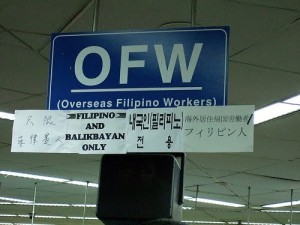 stocks basically means becoming a shareholder in a publicly traded company. Being a shareholder means you own a part of the company, but only so far as much stock that you own in said company. The bigger your stock, the more you can participate, and the more you earn depending on the company’s performance.
Getting started requires opening an account with a broker, and here’s a list of online stock brokers accredited by the Philippine Stock Exchange:
Unit Investment Trust Fund (UITF)
This form of investment involves holding a certain amount of money in trust as part of the investment made. It shares a similar structure to mutual funds in the aspect that your money will be managed by fund managers. This is usually offered by banks, and differs from mutual funds because they revolve per unit investment, as opposed to the shares in a mutual fund.
Here’s a partial list of banks that offer UITFs:
- Metrobank
- BDO
- Union Bank
- BPI
- PNB
- Chinabank
- Security Bank
- EastWest Bank
Bonds
Given the propensity of OFWs to save their money in bank accounts, an investment vehicle that may also be available to them comes in the form of Bonds. This form of investment is generally offered by large corporations and government offices (Retail Treasury Bonds) as a means of raising funds or essentially borrowing from the public. They have a fixed maturity date.
Here’s a few banks that also act as gateways to purchasing Bonds
- PNB
- BDO Unibank
- BPI
- Metrobank
Real Estate
This type of investment isn’t necessarily unusual, but leans more towards preparing for a future home, or somewhere to put up a business. This form of investment requires a higher amount of money to start with as opposed to say, mutual funds. The money invested into real estate generally means having enough to make the payments to the land that you have purchased, and the lower the interest rate, the better.
What may eventually earn money from investing in real estate is the way land use changes over the years. One can acquire property through the Register of Deeds, but make sure to check the land title for encumbrances (mortgage, debts, and the like).
These are just some of the ways that OFWs can invest in the Philippines. It mostly takes a certain amount of patience and research before you pick your investment gateway.
 I’ve said before that I pray that more Filipinos become moderate investors, even if most of them are conservative now. A good way to become a moderate investor is by educating yourself on the different investment instruments, and distributing your investments across them.