When the Economy Is Uncertain, Our Hope Must Remain Steadfast
By Randell Tiongson on November 6th, 2026
Challenging times ahead!
These are increasingly difficult times for many Filipinos. The rising cost of living has placed enormous pressure on households, and many are struggling just to make ends meet. What used to be a manageable household budget is now barely enough to cover basic necessities. Groceries, transportation, electricity, education, and healthcare continue to consume a larger portion of our income. For many families, the concern is no longer how much they can save or invest, but whether their income will be enough to get them through the month.
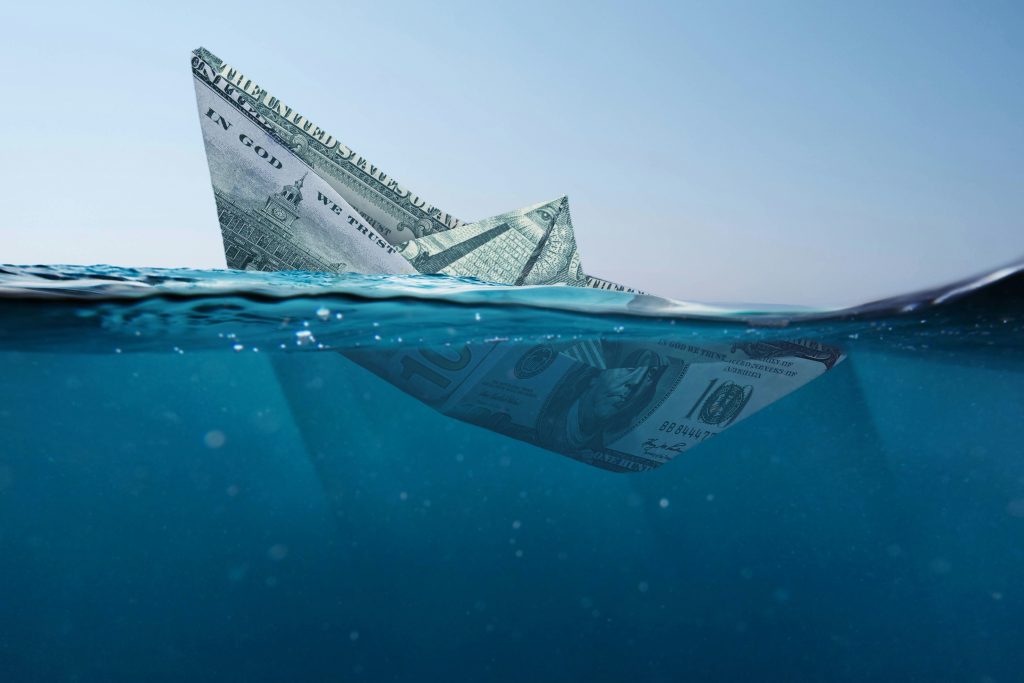
The economic realities are becoming difficult to ignore. Inflation reached 7.8% in October, while economic growth slowed considerably to just 2.3% in the second quarter. The Philippine peso has also weakened significantly against the US dollar, reaching record lows in recent weeks. A weaker peso makes imported goods, fuel, and other essential commodities more expensive, adding further pressure to already strained household budgets.
Unfortunately, our economic problems extend beyond inflation and currency depreciation. The Philippines faces numerous domestic challenges, including weak investment, concerns over governance, inadequate job creation, and longstanding structural weaknesses in our economy. Meanwhile, global economic uncertainties, geopolitical conflicts, volatile oil prices, disruptions in international trade, and tighter financial conditions are creating additional difficulties. As a country heavily dependent on imported energy and other essential commodities, we remain particularly vulnerable to developments beyond our borders.
Perhaps one of the most troubling concerns is the growing uncertainty surrounding employment. With businesses facing higher costs, weaker demand, and declining confidence, many Filipinos are understandably worried about job security, reduced incomes, and the possibility of higher unemployment. The unemployment rate was 5.3% in August, higher than the 3.9% recorded a year earlier. For those already living paycheck to paycheck, losing a job or experiencing a reduction in income could have devastating consequences.
What makes our situation even more unsettling is that there seems to be little immediate relief in sight. While economic conditions can change, the near-term outlook remains challenging. I have spent nearly four decades working in finance, and I have learned that economic difficulties can persist longer than we expect. We would be unwise to dismiss these warning signs or simply assume that things will eventually work themselves out.
We need to acknowledge our economic reality, prepare for what may lie ahead, and exercise greater wisdom in managing our resources. But we must never allow our economic circumstances to determine the strength of our faith or the source of our hope.
Being a Christian does not exempt us from inflation, economic downturns, unemployment, or financial difficulties. Faith is not pretending that our problems do not exist. Rather, it is recognizing that even amid uncertainty, God remains sovereign, faithful, and good. Our circumstances may be beyond our control, but they are never beyond God’s control.
This is where biblical stewardship becomes especially important. Psalm 24:1 reminds us that the earth and everything in it belong to the Lord. Whatever resources we possess have been entrusted to us, and we are responsible for managing them faithfully. Stewardship requires us to exercise wisdom, diligence, discipline, and accountability, particularly when financial conditions become more challenging.
Practically, this means reassessing our household budgets, adjusting our lifestyles, reducing unnecessary expenses, avoiding excessive debt, and building emergency reserves whenever possible. We should also strengthen our earning capacity, develop new skills, and prepare for possible disruptions to our income. Proverbs 21:5 reminds us that diligent planning leads to abundance. While we cannot control the economy, we remain responsible for the decisions we make with the resources God has entrusted to us.
However, there is an important truth that we must never forget. While we are stewards, we are also sons and daughters of our heavenly Father. Stewardship reminds us of our responsibility, but our identity in Christ reminds us of our security. Galatians 4:6–7 teaches that through Jesus, we are no longer slaves but children of God. We do not merely serve a Master who holds us accountable; we belong to a Father who knows us, loves us, and cares for us.
In Matthew 6:25–34, Jesus reminds us not to be consumed by anxiety over what we will eat, drink, or wear, because our heavenly Father already knows what we need. Jesus is not encouraging financial irresponsibility, nor is He promising that we will never experience hardship. Rather, He is teaching us that our security must rest in the Father’s faithfulness rather than in our financial circumstances.
This brings me to something I believe we need to understand more deeply. While we live in the world’s economy, we subscribe to God’s economy. The world’s economy often measures success through wealth, accumulation, consumption, and financial security. God’s economy operates on different principles: faithfulness over accumulation, generosity over greed, contentment over endless consumption, integrity over personal gain, and stewardship over ownership.
Kingdom economics also changes the way we view others. In difficult times, our response should not simply be to protect what we have. Galatians 6:2 calls us to bear one another’s burdens. Those blessed with greater resources should be willing to help those struggling financially. Business owners should care for their employees, employers should exercise fairness and compassion, and those entrusted with influence should pursue integrity and justice. Kingdom principles are not merely about managing money differently; they are about living differently because Jesus is King.
Of course, subscribing to God’s economy does not mean we are insulated from the consequences of the world’s economic problems. We may still face financial setbacks, business losses, or even unemployment. But it does mean that our lives are governed by something greater than market forces, economic indicators, or political decisions. Our ultimate confidence rests in the Lord, whose kingdom cannot be shaken.
The apostle Paul understood this well. In Philippians 4:12–13, he speaks about learning to be content in both abundance and need. His confidence did not come from having sufficient financial resources but from Christ, who strengthened him regardless of his circumstances. This is the kind of faith we need today, one that remains steadfast whether the economy improves or deteriorates.
I do not know when inflation will significantly ease, when the peso will regain its strength, or when our economy will return to healthier growth. I am also concerned about what prolonged economic weakness could mean for Filipino families, businesses, and workers. Yet despite these concerns, I remain hopeful, not because I am confident that economic conditions will quickly improve, but because I am confident in the character and faithfulness of God.
We must continue to do our part. We should work diligently, prepare wisely, spend responsibly, give generously, and care for one another. We must also pray for our nation, our leaders, our businesses, and those struggling to provide for their families. Above all, we must remain steadfast in our faith, knowing that God is at work even when we cannot fully understand what He is doing.
Our economic circumstances may change, but God’s character never does. The peso may weaken, markets may decline, businesses may struggle, and our financial plans may be disrupted, but none of these can diminish the faithfulness of our heavenly Father.
We are called to be responsible stewards, but we must never forget that we are also beloved children of God. Our ultimate hope is not in a recovering economy, a stronger peso, a secure job, or a growing investment portfolio. Our hope is in Jesus Christ, who loved us, gave Himself for us, and continues to sustain us by His grace.
We may live in an uncertain economy, but we belong to an unshakable kingdom. And while we do not know what tomorrow will bring, we know the One who holds tomorrow.
That is why we can prepare without fear, persevere without losing hope, and remain faithful even in the most challenging of times.