Low Growth, High Inflation, and the Filipino Squeeze
By Randell Tiongson on May 11th, 2026
The Philippine economy is in a precarious situation, and I do not think we should sugarcoat it.
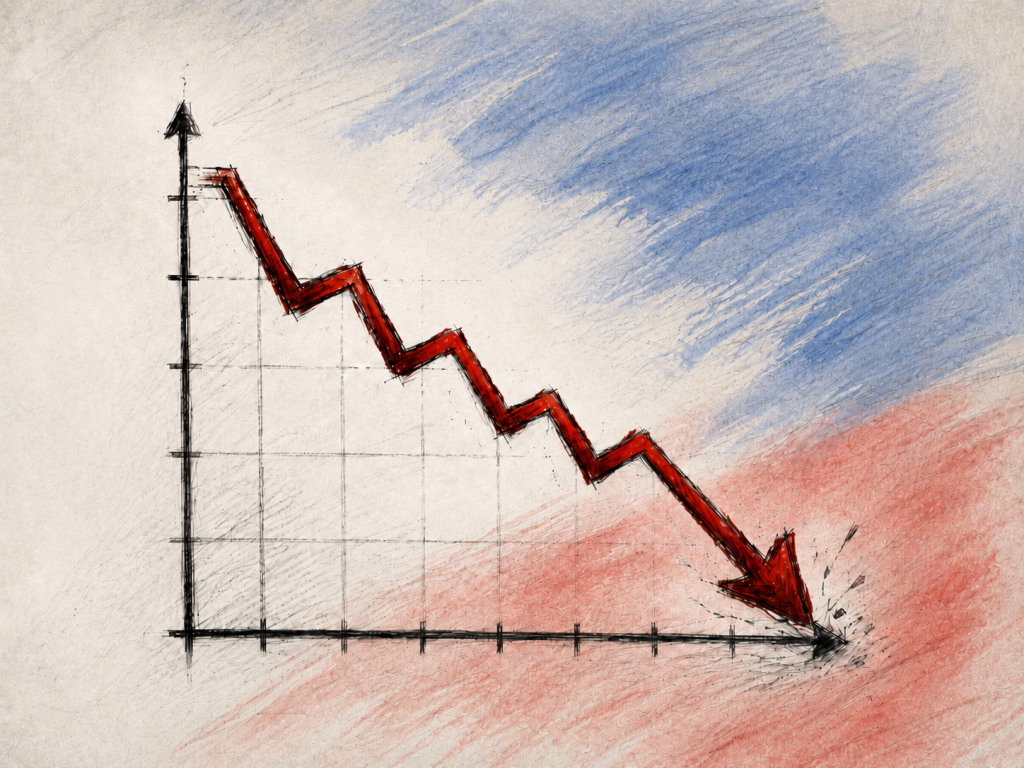
We are facing a difficult combination: low economic growth, high inflation, a weak peso, and deep import dependence. That is a painful mix for any economy, but especially for a country like the Philippines where many households already live with very little financial margin.
When GDP growth is weak, incomes and job opportunities do not expand fast enough. But when inflation is high, the cost of living continues to rise, so families are squeezed from both sides… their income does not grow fast enough, while their expenses keep increasing.
That is not just an economic statistic, that is the reality of parents trying to stretch grocery budgets, workers dealing with higher commuting costs, small businesses absorbing higher input prices, and households postponing important needs because their money simply does not go as far as before.
One of the biggest reasons we are vulnerable is that the Philippines remains a net importer of so many things. We import much of our energy, fuel, food products, raw materials, machinery, industrial inputs, and even many consumer goods. This makes us extremely exposed whenever global prices rise, supply chains are disrupted, oil prices spike, or the peso weakens.
A weak peso does not stay in the financial markets. It eventually shows up in the price of fuel, food, electricity, transportation, and business costs. Since many imported goods and inputs are priced in dollars, a weaker peso means we pay more in local currency for the same products. Businesses eventually pass those costs on to consumers, and ordinary Filipinos carry the burden.
This is why inflation in the Philippines is not merely a monetary issue, it is also a structural issue.
Yes, monetary policy matters. The Bangko Sentral ng Pilipinas can raise or lower interest rates, it can manage liquidity, anchor inflation expectations, and help stabilize the currency. These are important tools. Monetary policy can help smoothen the edges of volatility.
However, monetary policy cannot plant rice, it cannot produce oil, it cannot build cold storage facilities, it cannot build roads, it cannot fix ports, it cannot solve agricultural productivity, it cannot create deep manufacturing capacity, it cannot reduce our dependence on imported fuel and it cannot substitute for serious government policy and fiscal reform.
This is where we need to be more honest as a nation. If growth is low and inflation is high, then simply adjusting interest rates will not be enough. High interest rates may help control inflation, but they can also slow down borrowing, investment, and consumption. Lower interest rates may help stimulate growth, but if the real problem is supply, imports, energy dependence, and weak productivity, then lower rates may not solve the deeper problem either. In other words, we cannot interest-rate our way out of structural weakness.
The deeper issue is that we do not produce enough of what we need. We consume far more than we create domestically. We rely heavily on imports, remittances, consumption, and services. These are strengths in some ways, but they are not enough to build a resilient economy.
We need real structural economic reforms.
We need to strengthen agriculture, not only through subsidies, but through productivity, irrigation, mechanization, farm consolidation where appropriate, better logistics, cold-chain systems, post-harvest facilities, and direct market access. Food security cannot remain a slogan, it must become a serious national priority.
We need a long-term energy strategy. A country that imports most of its fuel will always be exposed to global shocks. We need a diversified, reliable, and affordable energy mix. Renewable energy should be accelerated, but reliability and cost must also be addressed. Energy policy cannot be driven only by political cycles, it must be treated as a generational issue.
We need to build manufacturing and industrial capacity. Not protectionism for its own sake, but strategic value creation. We need to ask: What can the Philippines produce competitively? What industries can create quality jobs? What sectors can reduce import dependence? Where can we build scale? Where can we become globally relevant?
We also need fiscal policy that is disciplined, targeted, and developmental. Government spending must build capacity, not merely visibility. Infrastructure must lower the cost of doing business. Education spending must improve skills. Agricultural spending must increase productivity. Social protection must protect the vulnerable without creating permanent dependency. Fiscal policy must be about nation-building, not just budget utilization.
This is also a governance issue. Investors look beyond interest rates, they look at policy consistency, corruption risks, infrastructure quality, ease of doing business, rule of law, and institutional credibility. A country may have talented people and strong potential, but weak systems will always limit progress. The danger is that we keep treating symptoms while avoiding the disease.
High inflation is a symptom, weak domestic production is a deeper issue. A weak peso is a symptom, heavy import dependence is a deeper issue. Low GDP growth is a symptom, weak productivity, low investment, and poor execution are deeper issues.
For ordinary Filipinos, the response must still be prudence, build emergency funds, avoid unnecessary debt, be careful with lifestyle inflation, increase skills and diversify income where possible. Understand that inflation and currency weakness will affect the household budget.
But personal discipline must be matched by national discipline. Filipinos cannot budget their way out of a structurally weak economy. Households can adjust, but government must reform. Families can tighten belts, but policymakers must build capacity. Businesses can innovate, but the country must create an environment where enterprise can thrive.
The Philippines has great potential, I still believe that. We have a young population, talented workers, a strategic location, and a large domestic market. But potential is not the same as progress, potential must be stewarded.
And that is the word I keep coming back to: stewardship. A nation’s economy is also a stewardship issue. We must manage resources wisely, make courageous decisions, and think beyond the next election cycle. We cannot simply consume what others produce, import what we fail to develop, borrow what we cannot afford, and hope that monetary policy will rescue us every time.
Low GDP growth, high inflation, a weak peso, and import dependence are not isolated problems. They are connected warning signs. They are telling us that we need to build a stronger, more productive, more resilient Philippine economy.
We do not need cosmetic solutions, we need structural reform, we need courageous leadership, wise policy, disciplined execution, and long-term thinking. But as we call for these things, we must also remember that behind every economic statistic is a person, a family, a worker, a parent, a business owner, and a community trying to endure.
This is why our response must not be fear, anger, or despair. It must be wisdom, compassion, and faithful stewardship.
From a kingdom perspective, economics is never just about money, markets, or numbers. It is about people, justice, work, provision, generosity, and the faithful stewardship of what God has entrusted to us. The kingdom of God reorders the way we see resources. We do not see wealth merely as something to accumulate, but as something to steward. We do not see work merely as a way to survive, but as a calling to create value. We do not see policy merely as technical governance, but as a responsibility to pursue justice, protect the vulnerable, and promote human flourishing.
For households, this means learning to live wisely, avoid unnecessary debt, build emergency funds, increase skills, and make thoughtful financial decisions. For business owners, it means creating value, treating people fairly, and building redemptive enterprises that serve more than profit. For leaders, it means making decisions not merely for political survival, but for the good of the next generation.
And for all of us, it means remembering that while we live in the world’s economy, we are called to follow a different set of priorities. The world’s economy often teaches fear, scarcity, greed, and self-preservation. The kingdom teaches trust, wisdom, generosity, justice, and stewardship.
We can be prudent without being anxious. We can be realistic without becoming hopeless. We can prepare responsibly while still trusting that God remains faithful in uncertain times.
The economy may be fragile, but our hope does not have to be.
God calls us to steward what is in our hands, care for those who are vulnerable, speak truth where reform is needed, and keep building even when the times are difficult. Kingdom people do not ignore economic realities… we engage them with wisdom, courage, and compassion because we know that God cares about the poor, the worker, the family, the marketplace, and the future of the nation.
Because in the end, the real question is not only how we survive the next oil price shock, inflation spike, or currency movement. The bigger question is this:
Are we building an economy, a society, and a way of life that reflects God’s justice, blesses the vulnerable, rewards honest work, and serves the next generation of Filipinos?
May God give us the wisdom to reform what must be reformed, the courage to lead where leadership is needed, and the grace to remain faithful in the work entrusted to us. Most importantly, may we humble ourselves before the Lord and acknowledge that our ultimate savior is Jesus Christ.