Called to Stay, Called to Build
By Randell Tiongson on April 27th, 2026
There are days when loving the Philippines feels heavy… warning, this is a long post!
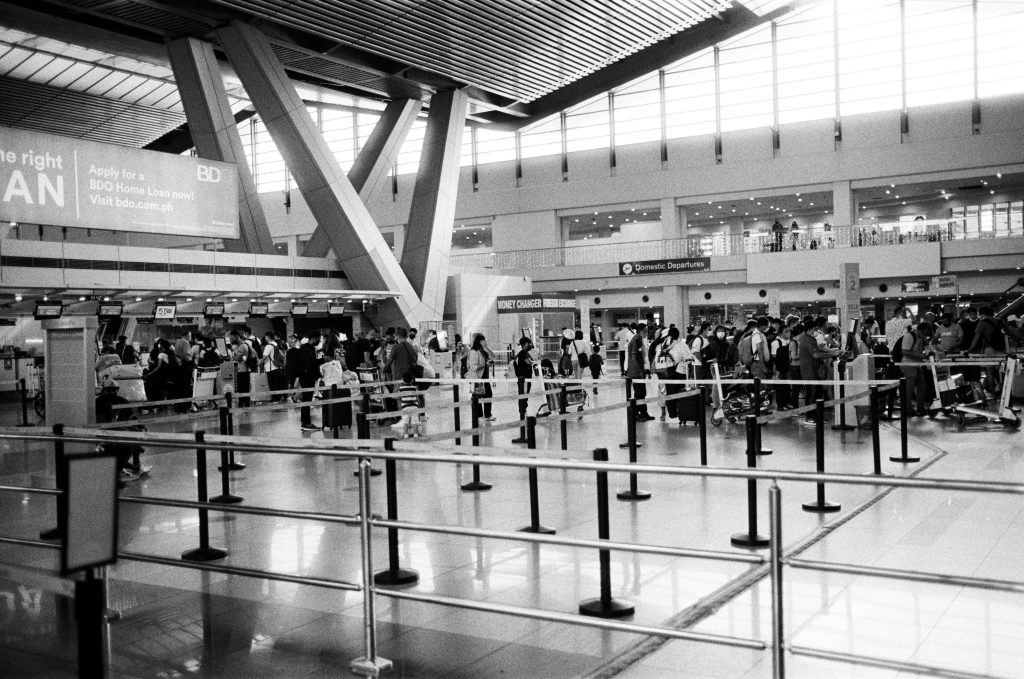
I say that not out of bitterness, but out of honesty. We are a nation gifted with so much: natural resources, strategic location, a young population, creative minds, resilient families, and deeply relational people. Filipinos are talented, hardworking, adaptable, and faithful even in difficult seasons. And yet, when we look around Asia, we must admit something painful: we have been left behind by many of our neighbors. Countries that used to look to us as a model have moved ahead in manufacturing, infrastructure, education, exports, food security, and national discipline. Even Vietnam, once devastated by war, has built impressive capacity in production, exports, and industrial development.
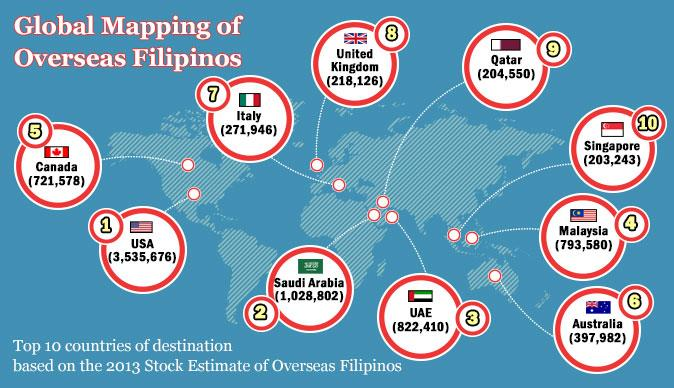
The Philippines, meanwhile, continues to struggle with the consequences of decades of bad governance, wrong priorities, weak institutions, and an inability to build the productive capacity needed for long-term growth. For too long, we have leaned heavily on OFW remittances and the BPO sector. These have helped millions of families survive, and we should honor the sacrifice of our overseas workers and the excellence of our service workers. But survival is not the same as sustainability and a nation cannot depend forever on exporting its people or servicing other economies while failing to build enough farms, factories, industries, research, innovation, and quality jobs at home.
And now, even the BPO sector, one of the pillars of our economy, is facing a very real threat. With the rapid development of artificial intelligence, there is a realistic concern that parts of the BPO industry, especially routine voice, customer service, and repetitive back-office work, may face severe disruption in as short as three to five years. The issue is not simply whether BPO will disappear overnight, it probably will not. The deeper issue is this: if our economy remains too dependent on labor arbitrage, low-cost service work, remittances, and consumption, then AI will expose how fragile that model really is.
I really believe that we need to move from being merely a service-dependent economy to becoming a nation that produces, innovates, builds, grows food, creates technology, strengthens education, and forms people for higher-value work.
We also face serious issues in food security. We import too much of what we should be able to produce. Our farmers struggle, our supply chains are weak, and our people feel the cost every time food prices rise. Add to that the high cost of living relative to income, inadequate infrastructure, traffic, energy concerns, and the declining state of education, and it becomes understandable why many Filipinos dream of leaving.
So yes, I understand why people migrate and I do not fault them. Many leave because they want to provide for their families. Some leave because they are tired. Some leave because they feel they have better opportunities elsewhere. Some leave because they simply want a more stable future for their children. I respect that.
But as for me, I have chosen to stay. Not because I am blind to the problems, not because I am overly optimistic, not because I think things will magically improve after the next election or the next economic cycle. I stay because I am first and foremost a Filipino. This is my home, this is where God placed me, this is where my story was formed, this is where my family, my work, my ministry, and my calling have taken shape. I have traveled enough to know that other countries may offer more convenience, but the Philippines still carries the burden and beauty of my calling.
More importantly, I stay because I believe I am called here. The older I get, the more I realize that calling is not always glamorous. Sometimes calling means staying when leaving is easier, sometimes calling means building when others are giving up and sometimes calling means serving in a place that frustrates you because you love it too much to abandon it. I do not say this to sound noble, I say this with fear and trembling. Staying is not always easy. There are days when the news is discouraging, the economy is uncertain, and the future feels fragile and there are days when I wonder why a country so gifted remains so burdened.
But I am not hopeless. I am not hopeless because my hope is not ultimately in the Philippine economy. My hope is not in political leaders. My hope is not in the peso, the stock market, foreign investment, or government programs. Our Savior is Christ, not our political leaders. Our ultimate hope is the reign of God, not the performance of the economy. This does not mean politics and economics are unimportant. They are important, governance matters, policy matters, education matters, infrastructure matters,food security matters and economic productivity matters. We should pray, vote wisely, speak truth, demand accountability, build institutions, and work for reform.
But we must never confuse reform with redemption. Only Jesus redeems. This is where the kingdom of God gives me a deeper lens. We need to remind ourselves that the gospel is not merely about going to heaven when we die. It is about Jesus becoming King, God’s kingdom breaking into the present, and His people living now as signs of the coming new creation. Biblical eschatology is not escapism, it is hope with responsibility.
Because Jesus is risen, our work is not in vain. Because Jesus reigns, we do not surrender to cynicism. Because God will one day renew all things, we can participate in His renewing work now. That means staying in the Philippines is not just nationalism for me, it is kingdom participation. It is saying, “Lord, use whatever I have, however small, for Your purposes here.”
I live in the world’s economy, but I follow God’s economy. The world’s economy often runs on fear, scarcity, self-preservation, and competition. God’s economy runs on trust, stewardship, generosity, justice, discipleship, and faithfulness. The world tells us to secure ourselves first. The kingdom teaches us to seek first the kingdom of God and His righteousness, trusting that our Father knows what we need.
That is why I still believe in building here. Build families, build businesses, build churches, build schools, build communities, build leaders, build disciples.
And this is where the business community has a very special and important role. If we are serious about nation-building, then our business leaders, entrepreneurs, executives, investors, and professionals must begin to embrace kingdom economics. Business cannot be seen merely as a machine for profit. Profit is important and a business that does not make money cannot sustain its mission. But profit is not the ultimate purpose of business, it should be the kingdom.
In God’s economy, business can become a channel of human flourishing. It can create dignified work,it can produce goods and services that bless people, it can train people in excellence, stewardship, discipline, creativity, and responsibility. It can become a place where integrity is practiced, justice is pursued, generosity is modeled, and people are treated not merely as resources, but as image-bearers of God.
This is why I believe Filipino businesses must be transformed into redemptive enterprises. A redemptive enterprise is not simply a business that puts Bible verses on its walls or opens meetings in prayer. Those may be good, but they are not enough. A redemptive enterprise asks deeper questions: Does our business create value or merely extract value? Do we treat employees with dignity? Do we pay fairly? Do we serve customers honestly? Do we build people or burn them out? Do we steward resources well? Do we contribute to the common good? Do we see profit as a tool for kingdom purpose, or has profit become our master?
In a country like ours, where poverty, unemployment, underemployment, corruption, poor education, and weak productivity continue to hurt many families, the business community cannot remain passive. We need businesses that create jobs, develop skills, strengthen communities, support local production, innovate for real problems, and help build the productive capacity of our nation.
The Philippines does not only need more successful businesses. We need more redemptive businesses. We need entrepreneurs who see their companies as platforms for stewardship. We need executives who understand that leadership is service. We need investors who deploy capital not only for returns, but also for renewal. We need professionals who treat their work as worship and their workplace as a mission field. This is kingdom economics. It is not anti-profit, it is anti-greed. It is not anti-business, it is pro-stewardship. It is not about escaping the marketplace. It is about bringing the values of the King into the marketplace.
The world’s economy often asks, “How much can I get?” God’s economy asks, “How much can I steward for His glory and for the good of others?” And if more Filipino business leaders begin to think this way, then perhaps our companies can become more than income-generating entities. They can become instruments of renewal. They can become redemptive enterprises that point people, in practical and tangible ways, to the goodness, justice, creativity, and generosity of God’s kingdom.
We may not be able to fix the whole country overnight, but we can be faithful with the part of the country God has entrusted to us. This is where the local church has a crucial role. The church is not a political party, and it should never be reduced to one. But the church is also not a retreat center from national pain, the local church is a kingdom community, a people formed by the gospel and sent into the world as salt and light.
We need churches that disciple people deeply, not just inspire them weekly. We need discipleship that shapes how people handle money, lead companies, vote, parent, serve, study, work, and treat the poor. We need believers who understand that following Jesus is not limited to Sunday worship but extends to boardrooms, classrooms, farms, markets, government offices, and homes.
The Philippines does not merely need better professionals. We need better disciples. Disciples who will not steal when no one is watching. Disciples who will lead with integrity. Disciples who will build businesses that create value and dignified jobs. Disciples who will teach the next generation. Disciples who will care for the poor without exploiting them. Disciples who will not sell their conscience for power, popularity, or profit. Disciples who know that the kingdom of God is bigger than their comfort.
If we want a better nation, we need better formation. And true formation begins with Jesus Christ.
I still believe the Philippines can change. But my hope is not naïve, I know change will be difficult. We need long-term thinking in a culture often addicted to short-term fixes. We need capacity-building, not just consumption. We need production, not just remittances. We need education reform, not just slogans. We need infrastructure that truly supports inclusive growth. We need leaders who serve, not leaders who simply rule. But more than anything, we need hearts transformed by the King.
So I stay. I stay not because the Philippines is easy to love, but because love is not measured by ease. I stay not because I believe everything is fine, but because I believe God is not finished. I stay not because I have no options, but because I have a calling. I stay to build where I can. I stay to serve where I am needed. I stay to disciple. I stay to teach stewardship. I stay to proclaim that Jesus is King, even when the kingdoms of this world are shaking.
One day, Scripture tells us, the kingdoms of this world will become the kingdom of our Lord and of His Christ. That is our eschatological hope, not escape, not denial, not despair… but the sure promise that God will make all things new.
Until then, we work. Until then, we pray. Until then, we build. Until then, we disciple. Until then, we stay faithful.
And for me, by God’s grace, I will stay here. Because I am Filipino. Because I am called. Because Christ is King.
And he made from one man every nation of mankind to live on all the face of the earth, having determined allotted periods and at he boundaries of their dwelling place, that they should seek God, cand perhaps feel their way toward him and find him. Yet he is actually not far from each one of us
– Acts 17:26-27, ESV

Amen – successful
Business can be a blessing to the staff and the community it serves.
Hi Sir Randell, nandito sa article mo kung anu nasa ilalim ng puso ko na hindi ko maarticulate. Thank you for sharing your thoughts publicly. This is also what I strongly feel about staying or leaving. I feel if i leave, sarili ko lang iniisip ko. I know i am called for a purpose here in ph. I’m not a famous person. Im just ordinary/average worker. But I know deep down I can help my country thru spiritual formation and that is more important in life regardless your location,citizenship, nationality.