Fear of Lack and the Formation of Faith
By Randell Tiongson on April 8th, 2026
I was attending a Staff Convergence for Victory Metro Manila and Pastor Paolo Punzalan, Victory’s CFO, was sharing and it made me think hard.
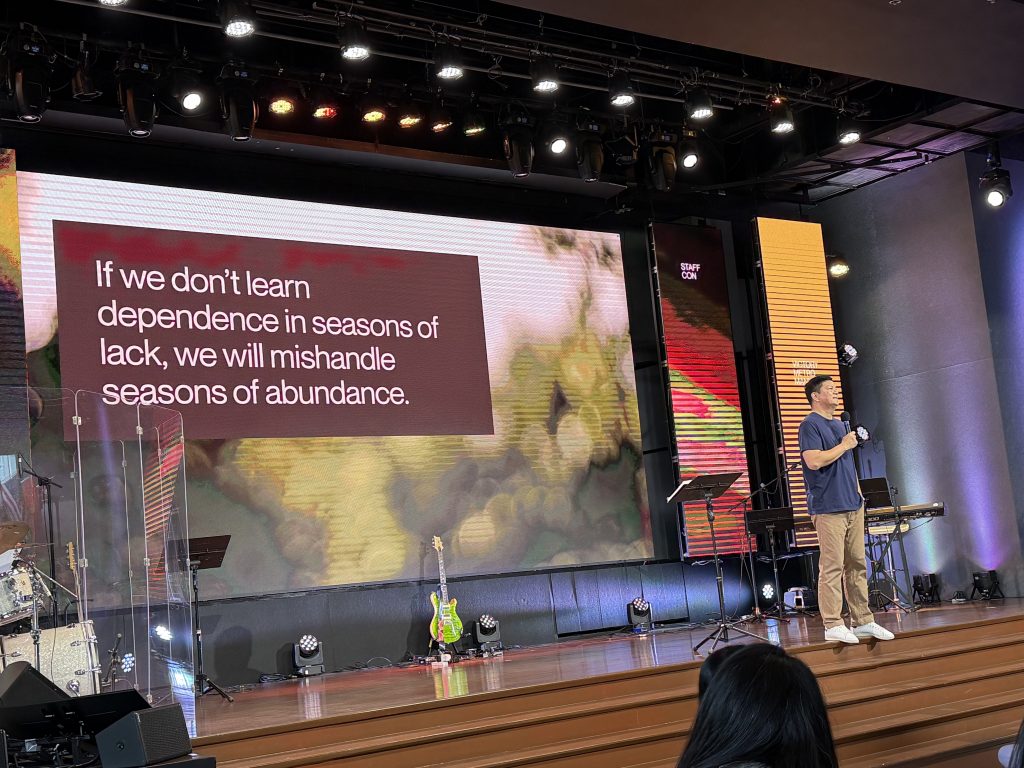
He was speaking from Deuteronomy 8:1–20, and as I listened, I felt the weight of the passage in a fresh and personal way. It was not merely a reminder about God’s provision, it was a reminder about God’s purpose. Moses was not simply telling Israel to remember that God fed them in the wilderness, he was telling them to remember why. God was forming a people, He was shaping their hearts, He was teaching them dependence, He was preparing them not only to survive lack, but also to survive abundance.
That struck me deeply because we are living in a time when fear of lack is easy to understand. The ongoing crisis in the Middle East has once again shaken global markets, threatened supply chains, and stirred fears about rising fuel prices, inflation, and economic uncertainty. And when these things happen, many of us immediately think about money. Will prices go up again? Will our income be enough? Will our savings last? Will our plans have to be delayed? These are not imaginary concerns, they are real and they affect families, businesses, and even our emotional and spiritual well being.
But Deuteronomy 8 reminds us that in every season, especially seasons that trigger fear, God is doing more than managing our external conditions. He is dealing with our hearts.
Moses told Israel that God led them through the wilderness, humbled them, allowed them to hunger, and then fed them with manna so that they would learn that man does not live by bread alone, but by every word that comes from the mouth of the Lord. That is a deeply spiritual truth, but it is also a deeply practical one. In personal finance, we often focus on bread alone, we think in terms of income, investments, inflation, interest rates, reserves, and returns and obviously, these things matter. I have spent much of my life teaching people to steward money wisely, and I still believe that budgeting, saving, reducing debt, investing prudently, and preparing for risk all matter… but this passage reminds me that while bread matters, bread is not ultimate. Provision is important, but the Provider is more important. Financial wisdom is necessary, but dependence on God is indispensable.
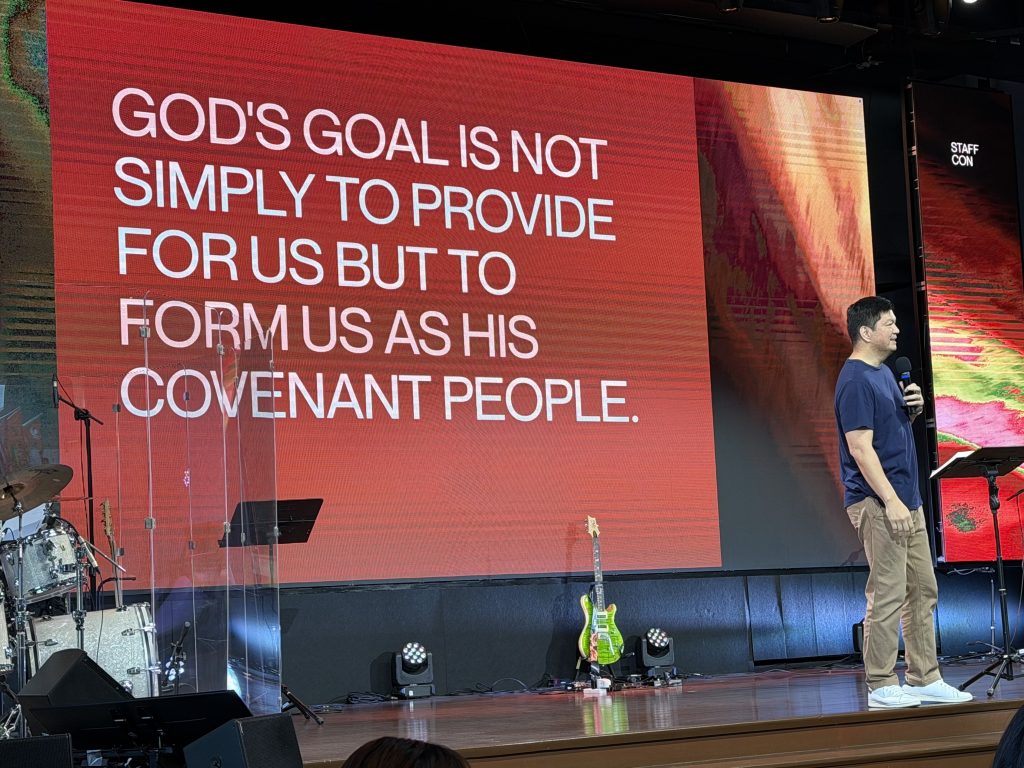
One of the dangers of financial teaching is that it can sometimes sound like the goal is simply to become secure, comfortable, and prosperous, but Deuteronomy 8 corrects that thinking. God’s goal is not simply to provide, God’s goal is to form us as His covenant people. He is not merely trying to raise our standard of living, He is after our standard of trusting.
That is why seasons of lack can be painful, but also profoundly formative. When resources are tight, when uncertainty rises, when our calculations no longer give us peace, we are forced to confront what we really trust. In those moments, God is not absent. He may actually be doing some of His deepest work. He is exposing our idols. He is showing us whether our confidence is in our salary, our savings account, our business, our ability to hustle, or in Him.
And if we do not learn dependence in seasons of lack, we will almost certainly mishandle seasons of abundance.
That, I believe, is one of the great warnings of Deuteronomy 8. The greater danger for Israel was not the wilderness but the Promised Land, it was not hunger but fullness, it was not lack but prosperity. Moses warned them that once they had eaten and were full, built good houses, multiplied their herds, increased their silver and gold, and flourished in the land, their hearts might be lifted up and they might forget the Lord.
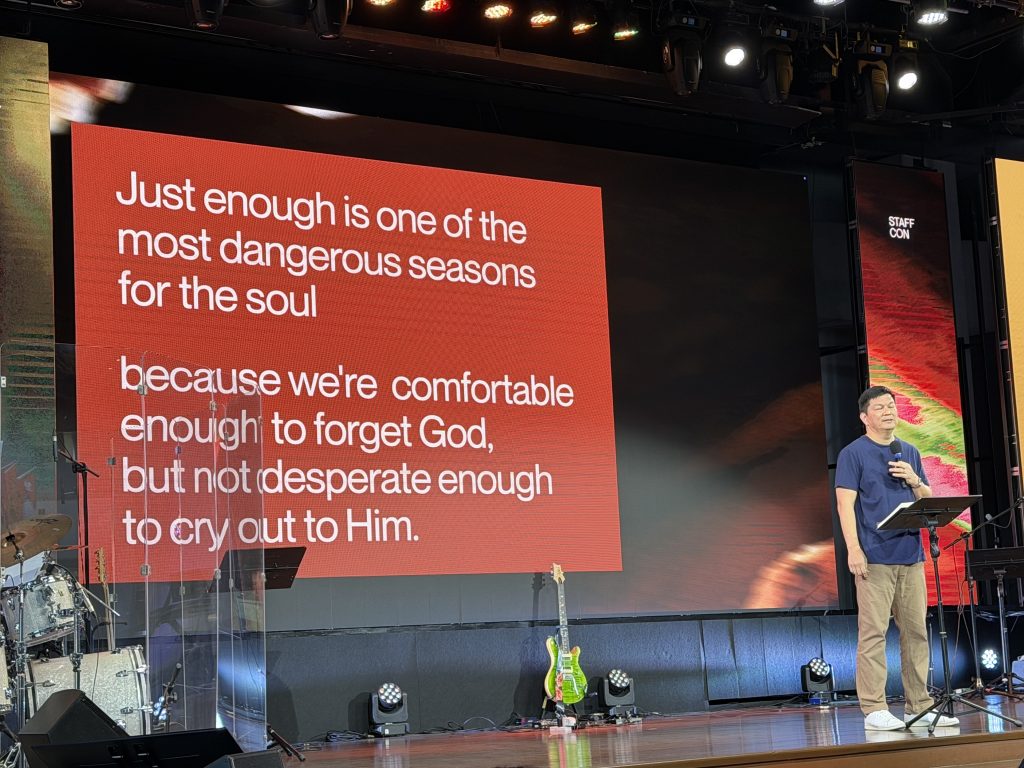
That is still true today. In fact, one of the most dangerous seasons for the soul is the season of just enough as reiterated by Pastor Paolo. When we are in serious lack, we tend to pray. When we are in overwhelming abundance, at least some people still have enough self awareness to know they are being tested. But when we have just enough, we can become spiritually dull. Pastor Paolo also shared that when are comfortable enough to forget God, but not desperate enough to cry out to Him. We stop depending because life feels manageable, we do not feel the urgency of need, and we do not feel the weight of excess. So we drift, quietly, respectably, gradually. That may be one of the most dangerous forms of poverty, a soul that no longer feels its need for God.
Prosperity must always be understood through the lens of the Kingdom as prosperity is not an end in itself. It is not proof that we are more loved, more favored, or more spiritually mature than others. Prosperity has a purpose… God gives us the power to produce wealth, Deuteronomy says, not so that we can worship wealth, but so that He may establish His covenant. In other words, provision is meant to serve covenant purposes. Wealth is a tool for worship, stewardship, generosity, justice, discipleship, mission, and Kingdom advance.
This changes the way we think about money. The question is no longer simply, “How can I have more?” The better question is, “How can what God entrusts to me serve His purposes?” The issue is not merely whether I am prospering, but whether my prosperity is making me more grateful, more generous, more humble, more surrendered, and more committed to God’s Kingdom.
If prosperity does not deepen our obedience, it may be damaging our souls. On the flip side, if fear of lack pushes us into anxiety, hoarding, panic, and self reliance, then lack is also revealing what still needs to be surrendered.
Deuteronomy 8 becomes so timely for all of us. In a world rattled by war, uncertainty, and economic volatility, God’s people are called to live differently. We are not called to be careless, and we are not called to be naïve. We should still plan wisely, we should still build emergency funds, spend carefully, avoid unnecessary debt, and think long term. Good stewardship matters but underneath all of that, there must be a deeper confession in our hearts: our lives are sustained not merely by the economy, but by the Lord. He is our source. He is our sustainer, He is our shepherd in lack and our guard in abundance.
The wilderness and the Promised Land are both tests. Lack tests whether we will trust God for daily bread and abundance tests whether we will still remember who gave it.
And perhaps that is the real issue… forgetting God is the root danger in both poverty and prosperity. In poverty, we may forget His faithfulness and give in to fear. In prosperity, we may forget His grace and give in to pride.
So Deuteronomy 8 calls us back to remembrance. Remember the Lord; remember the wilderness; remember the manna; remember the lessons of dependence; remember that what looks like delay may actually be formation; remember that what feels like lack may actually be mercy; remember that the God who provides is also the God who shapes, disciplines, and forms His people for covenant life.
As I reflected on Pastor Paolo’s message, I realized again that God is not just trying to get something to us. He is trying to do something in us. He is forming a people who trust Him whether they have little or much. He is raising sons and daughters who know that money is a resource, not a source. He is building a covenant people whose confidence rests not in abundance, but in Him.
And perhaps that is the prayer we need in this season.
Lord, do not let fear of lack rule our hearts. Teach us to trust You in the wilderness. Teach us to handle abundance with humility. Keep us from forgetting You in seasons of just enough. And let every season, whether of need or plenty, form us into a people who seek first Your Kingdom, honor You with what You entrust to us, and live with deep and steady dependence on You.
Because in the end, God’s greatest gift is not wealth, it is Himself.


Very glaring and drives home a point – that only GOD can give us our provision. It convict us to write in our hearts how GOD want us to be His covenant people. Let’s follow Him always even at times we do not understand. We follow Him because we love Him.