I am currently reading Tim Keller’s Preaching book and something he quoted from British Literary Theorist Terry Eagleton made me think hard, “societies become secular not when they dispense with religion altogether, but when they are no longer especially agitated by it.” That quote caught my attention deeply, probably because I’ve lived on both sides of it.
For decades, I was in the finance world. I lived in the language of markets, money, targets, performance, strategy and I understood what it meant to build something, protect something, grow something. I’ am genuinely grateful for that season: God used it, God shaped me through it and God provided for my family through it.
But now, I’m in full-time ministry at Victory Makati, and I’m walking with people closer than ever—listening to their stories, carrying burdens, praying with leaders, preaching the Word, and seeing God transform lives in real time.
And here’s what I’ve realized: Urban Philippines is not lacking religion, but we may be losing agitation. We are not short on spiritual content, we are short on spiritual weight.
The Most Dangerous Secularism Is Not Atheism
When people hear the word secular, they imagine a country that rejects God, but Eagleton exposes something far more subtle… and honestly, far more dangerous.
A society becomes secular not when it forgets religion… but when religion no longer interrupts life. Not when faith disappears… but when faith becomes harmless.
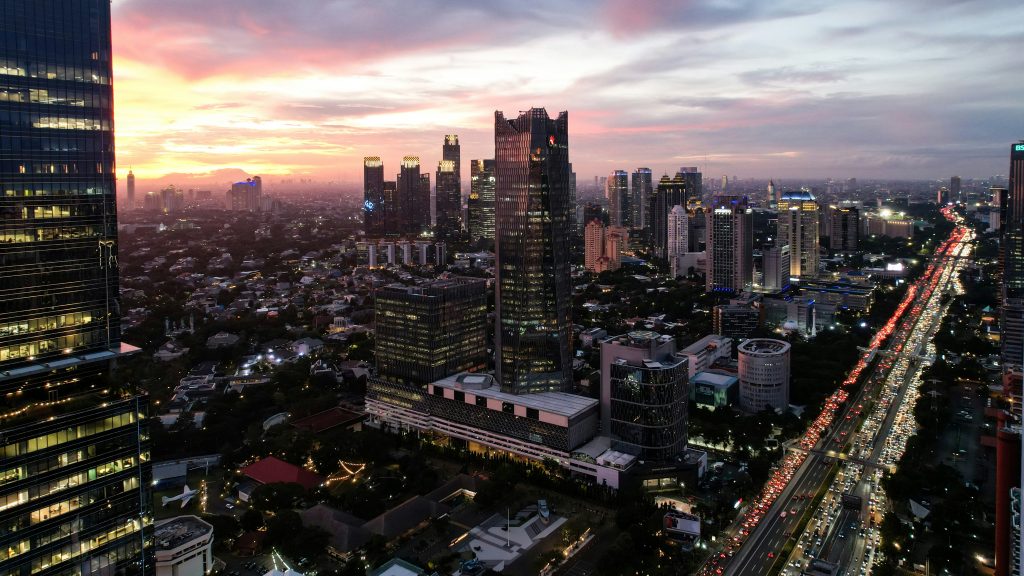
In Metro Manila—Makati, BGC, Ortigas, Alabang—religion is everywhere:
churches on every major road
crosses in homes
devotionals on phones
prayer requests in group chats
Bible verses in bios
worship playlists in traffic
And yet, many people are no longer agitated by God. We are comforted by Him, we are inspired by Him, we are occasionally grateful to Him. But challenged? Confronted? Corrected? Disrupted? That’s different.
Metro Manila Doesn’t Need Less Religion
It needs more reality, because it’s possible to believe in Jesus and still live like God is a side feature.
We can attend church and still be anchored in money for security, we can pray and still be driven by fear, we can post Scripture and still be ruled by image.
We can worship on Sunday and still be discipled by the city from Monday to Saturday… and I’m not saying this as an outsider criticizing the culture but saying this as someone who lived in that current for years.
I understand the pressure, I understand the grind and I understand the temptation to keep achieving, keep proving, keep upgrading, keep moving.
The city has a way of shaping you—quietly, daily, consistently.
The City Has Its Own Liturgies
When people hear “religion,” they think rituals. But Metro Manila has rituals too, we just don’t call them spiritual.
We have the liturgy of:
checking your phone before checking your heart
measuring worth by productivity
staying busy so you don’t have to deal with pain
scrolling to numb anxiety
spending to cope
overworking to feel secure
avoiding silence because silence exposes what’s really going on inside
These are not neutral habits, they shape us and over time, without even noticing, we become disciples: not of Christ, but of the city.
Religion Without Depth Becomes Background Noise
This is where Eagleton’s word agitated becomes really helpful.
To be “agitated” by something means you are:
stirred
confronted
awakened
unsettled
compelled to respond
So maybe the question isn’t, “Is the Philippines religious?” because we obviously are. The question is, “Is Jesus still unsettling us?” Or have we learned how to keep Him at a safe distance?
Once religion becomes a routine, it stops being a relationship. Once faith becomes “normal,” it stops being transformative. Once God becomes familiar without being feared, we drift into a Christianity that is shallow… present, but powerless.
The Missing Piece: Deep Spiritual Conversations
Here’s what I believe we desperately need in the city:
We need to learn how to have deep spiritual conversations again, not the surface-level ones, not the usual:
“Kamusta?”
“Ok lang.”
“Praying for you.”
“God is good.”
“Blessed.”
Those lines are not wrong, they’re just not enough because many people in the Metro are slowly dying inside while staying functional outside. They are succeeding publicly while struggling privately. They’re dealing with:
anxiety and burnout
emptiness despite achievement
secret sin
quiet disappointments
marriage tension
parenting fears
loneliness in a crowded city
spiritual dryness that no amount of “busy” can fix
And yet we rarely talk about it. Why? Because deep conversations are inconvenient, they take time, they require vulnerability and they demand honesty.
But shallow faith thrives in shallow conversations. If we never go deep, we will never grow deep.
We’ve Become Experts at Avoiding the Soul
One thing I noticed in the corporate world, and I still see it in the city:
We can talk about almost anything: business, politics, trends, investments, strategies, food, travel, sports but when it comes to the soul, we get awkward.
We don’t want to talk about:
what we really fear
what we really worship
what we’re really addicted to
what we’re really running from
what we truly believe about God
whether we’re actually okay spiritually
We have become “busy” but not “known”, connected, but not discipleship-deep.
We have a lot of conversations… but not enough that lead to confession, healing, repentance, and transformation and this is one reason society becomes secular: not because God is rejected, but because we stop taking Him seriously enough to talk about Him honestly.
The Church Must Be a Place Where Depth Is Normal
If we want Makati to be shaken by God again, the church cannot simply be a place of attendance. It must be a place of formation and formation doesn’t happen through content alone. It happens through community, through confession, through prayer, through discipleship and through people who love you enough to ask real questions.
We need circles where it’s normal to ask:
“How is your soul, really?”
“What is God teaching you lately?”
“What are you anxious about?”
“What are you tempted by these days?”
“Where are you compromising?”
“What truth are you struggling to believe?”
“Have you been in the Word—or just in survival mode?”
“Are you obeying God… or just admiring Him?”
That’s not small talk, that’s spiritual warfare and that’s how the city loses its grip on us.
Faith That Doesn’t Disturb You Won’t Change You
Here’s the truth I keep coming back to: If God never confronts you, you will never grow. If He never interrupts your greed, you’ll stay anxious. If He never challenges your pride, you’ll stay stuck. If He never exposes your idols, you’ll keep worshiping them.
The gospel is not meant to inspire us only. It’s meant to transform us.
Jesus doesn’t just give us better advice, He gives us a new life and transformation usually begins with a conversation. A moment of honesty, a confession you’ve been avoiding, a truth you finally admit out loud, a prayer you’ve been too proud to ask for.
A More Honest Prayer for the City
Maybe the prayer we need isn’t just: “Lord, bless this city.” Maybe it’s: “Lord, disturb this city.” Disturb our obsession with success, disturb our dependence on money, disturb our addiction to approval, disturb our numbness, disturb our compromise.
Then replace that disturbance with something deeper: A hunger for righteousness, a thirst for God, a courage to talk about what matters most. Because when Jesus is real, He doesn’t leave us neutral, He awakens us.
Reflection
I spent decades in finance. I understand the world of metrics and performance. But ministry is re-teaching me something I cannot forget: The greatest danger is not that we stop believing in God. It’s that we start living as though He doesn’t matter.
Metro Manila does not need less religion. It needs a deeper encounter with the living Christ. Not a Jesus we can fit into our calendar, but a King who reorders our life.
And one way that begins, very practically, is this: Let’s bring back deep spiritual conversations. Not as a church program, not as a forced activity but as a culture… a culture where we stop pretending, stop performing, stop hiding behind busyness and start being honest enough to say:
“I need Jesus.” “I’m struggling.”
“I need prayer.”
“I need someone to walk with me.”
“I want God—not just His blessings.”
Because the gospel isn’t background noise, it’s the voice that wakes us up and maybe that’s the mercy of God in this generation: that He is still willing to disturb us…so He can finally heal us.
Mendicancy Culture Among Filipinos… Is It Always a Bad Thing?
By Randell Tiongson on January 22nd, 2026
Poverty remains one of the most painful realities in the Philippines.
Yes, we hear about economic growth. We see new buildings rising, more malls opening, and more businesses expanding. But at the same time, many Filipinos still feel like they’re barely surviving. Some don’t just feel poor: they are poor, and their daily life proves it.
Just take a drive around Metro Manila. You’ll see it everywhere: children selling sampaguita, families living under bridges, makeshift shanties beside rivers, and people knocking on car windows with outstretched hands. It’s not just “sad scenery.” It’s a reminder that for many, life is still a daily fight for food, shelter, and dignity. And when people are pushed to the edge, they do what they believe they must do to survive. Sometimes, that includes begging.
But here’s the deeper question: Are we simply seeing poverty… or are we slowly developing a mendicancy culture? And if we are, is it ever a good thing?
What Is a Mendicancy Culture?
“Mendicancy” is often defined simply as the practice of begging for alms.
But when we talk about a mendicancy culture, we’re talking about something bigger than a few people on the streets.
It’s when a mindset quietly grows in society:
“Someone will help me.”
“Maybe I just need to wait.”
“Someone with money should provide for me.”
“I don’t really need to change my situation—I just need assistance.”
To be clear, receiving help is not wrong. But a culture of dependency slowly weakens initiative, personal responsibility, resilience, and dignity and when that becomes normal, we don’t just create poverty, we prolong it.
The More Obvious Faces of Mendicancy
If you commute in the Philippines, you’ve probably seen these regularly:
The “preacher” on the bus who gives a short sermon and then passes an envelope
The child who jumps onto a jeepney to wipe shoes quickly, then asks for money
People trying to clean your windshield, the asks for coins
Beggars singing, playing instruments, or carrying infants for sympathy
People roaming in groups asking for alms during the holidays
We’ve seen Aetas, Badjaos, and other groups travelling to cities, especially during Christmas, appealing to the generosity of strangers. These are the visible, street-level expressions of mendicancy. We can debate the motivations, but the reality is this: many of them are responding to desperation.
The Less Obvious Faces We Don’t Talk About Enough
Some forms of mendicancy are subtler, even socially accepted and that’s what makes them dangerous.
1) Disaster Vulnerability + Relief Dependence
The Philippines is one of the most typhoon-exposed countries in the world. PAGASA notes that around 20 tropical cyclones form in the region yearly, with around 8–9 crossing the Philippines.
We can’t stop storms from coming. But we can strengthen our systems:
preparedness
early warning
safe housing
evacuation readiness
rehabilitation planning
The problem is, when preparedness is weak, we repeatedly depend on emergency relief, both local and international. Again: help is not wrong, aid is often an expression of compassion. But if we never build long-term resilience, we train ourselves to expect rescue every time, and over time, helplessness becomes an identity.
2) OFW Dependence at the Family Level
OFW remittances have carried many Filipino families through crisis and we should honor the sacrifice.
In 2024, cash remittances reached about US$34.49 billion, according to the Bangko Sentral ng Pilipinas. But here’s the danger: sometimes families adjust their lifestyle not around work and stewardship, but around the next padala.
spending grows
discipline weakens
local ambition fades
financial planning becomes “optional”
What begins as help can become dependency and what begins as blessing can become entitlement.
3) A “Handout Mindset” Even Among the Able
This is the part that stings: mendicancy isn’t only a poverty issue, sometimes it’s a heart issue.
You can be employed, educated, even comfortable, yet still have a mindset of:
shortcuts over process
rescue over responsibility
entitlement over effort
It shows up when someone refuses hard work but demands reward. Or when people keep blaming everyone else for their situation, without ever asking, “What can I do with what I already have?”
So… Is Mendicancy Always a Bad Thing?
Let me answer that carefully.
Begging is not always “bad.”
Sometimes it’s survival. When someone has nothing,no food, no home, no options… helping them is mercy, compassion is holy and kindness is human.
But a mendicancy culture, where dependence becomes normal and progress becomes optional, that is dangerous. Because God did not design people to merely survive, He designed people to build, steward, create, grow, and carry dignity.
A Better Way to Look at This
The real issue is not just poverty. The deeper issue is loss of dignity and loss of hope.
A person who believes they are only a recipient will never discover they are also a contributor, and that’s why genuine help must go beyond giving money.
True help restores:
dignity
responsibility
capability
direction
hope
Sometimes the most loving thing we can do is not to enable dependency, but to empower progress.
What We Need as a Nation
If we want to break the cycle, we need more than charity, we need transformation:
Better education and employability
Livelihood opportunities and dignified work
Stronger disaster resilience
Financial literacy for families (especially OFW households)
A culture of stewardship, not entitlement
Communities that lift people out of poverty, not just keep them afloat
Because the goal isn’t to create a nation that begs better. The goal is to raise a nation that stands stronger.
My Thoughts
There will always be people in crisis. We will always be called to compassion. But we must also fight for a Philippines where fewer people are forced to beg, and more people are empowered to build.
Yes, we should help, but we should also teach, equip, restore, and strengthen, because the Filipino is not meant to live by handouts alone. We were created with dignity. We were created with purpose. And we were created to rise.
Progress Is Progress: Helping People Move Toward Jesus at Work
By Randell Tiongson on January 18th, 2026
I had the privilege to co-host a Victory Makati Business Community gathering earlier where my Australian friend Martin Delabat was sharing. Years ago, Martin was in full-time ministry, but today he’s in the business world… still ministering and preaching, just in a different pulpit. He now embraces and advocates Kingdom Economics, helping leaders see that the marketplace isn’t a detour from God’s purpose. For many, it is the mission field.
As Martin was speaking, I found myself reflecting on something he shared which I have encountered a few years back: the Engel Scale.
The Engel Scale is a simple way to understand that people don’t usually move toward Jesus in one dramatic moment. Most people travel a journey, from skepticism, to curiosity, to openness, to seeking, to trusting Christ, and then toward discipleship. It reminds us that faith is often a process, not a switch.
In the marketplace, this matters deeply because in your office, your industry, your boardroom, your client meetings… you are not always surrounded by people who are “ready” to hear a full gospel presentation. Many are still in the earlier stages: cautious, resistant, hurt, indifferent, curious, or searching. But here’s what we often forget: God is already at work in them, even before they ever say yes to Him.
This is where I’m reminded of theologian N.T. Wright’s constant refrain: Christianity is not about escaping earth and going to heaven one day. It’s about God’s kingdom breaking into the present, renewing lives, relationships, communities, and even systems. The gospel is not just “how to get saved.” The gospel is the announcement that Jesus is King, and His reign is already unfolding right now.
So when we talk about evangelism in the marketplace, we are not just trying to “recruit converts,” we are participating in God’s work of renewal, helping people take real steps toward the King. This is why the Engel Scale seems so helpful: it teaches us to value movement.
Every step toward Jesus matters.
Sometimes the win isn’t conversion yet. Sometimes the win is:
a hardened heart becoming curious
a cynical person becoming open
a wounded person learning to trust again
a broken leader seeing the difference between religion and relationship
a skeptic finally asking, “What makes you different?”
Those are not small things. Those are Kingdom moments.
This aligns perfectly with what Brett Johnson emphasizes in Kingdom Economics: that economic life, work, money, business, ownership, was never meant to be separated from God’s rule. The marketplace is not simply a secular place where Christians try to survive with integrity. It is a place where God’s people can model a different kind of economy, one shaped by stewardship, justice, generosity, and love. Brett Johnson talks about how the Kingdom redefines prosperity, not as accumulation, but as responsibility. Not as self-indulgence, but as stewardship. Not as “How much can I keep?” but “How much can I bless?” This is why marketplace believers are more than workers, they are Kingdom representatives.
Your life is actually preaching something every day. Your work ethic preaches. Your integrity preaches. Your generosity preaches. Your humility preaches. Your peace under pressure preaches. In fact, for many people, your life will be the first gospel they are willing to read. Mother Theresa famously said “spread the love of God through your life but only use words when necessary.” I may not fully agree with that quote since we need to proclaim the gospel, but she does makes a very important point on the need to demonstrate the gospel.
And when you see it through the Engel Scale, you realize: those daily choices are not just “good behavior.” They are Spirit-empowered ways of helping others move one step closer to Jesus, because evangelism in the marketplace often looks like farming, not hunting.
Plant. Water. Cultivate. Pray. Trust God for growth.
This is also very consistent with how N.T. Wright speaks about Christian mission: we are called to be “signposts” of the coming Kingdom, people whose lives give the world a preview of what God intends for humanity under King Jesus.
So when you do business with honesty in a culture of shortcuts, you are pointing to the Kingdom. When you choose generosity over greed, you are pointing to the Kingdom. When you treat people with dignity in a world that treats them like tools, you are pointing to the Kingdom. When you lead with compassion, patience, and courage, you are pointing to the Kingdom. In that sense, you don’t just share the gospel, you embody the gospel.
So yes, we pray for salvation moments, we pray for boldness, we pray for open doors and we pray for people to come to faith in Christ. But we also celebrate the smaller movements, the quiet progress, because those are often the beginnings of surrender.
Maybe today, God isn’t calling you to “close the deal.” Maybe He’s calling you to represent Him faithfully, and help someone take one step closer to Jesus. Because in the Kingdom, progress is progress, and God is always at work… even in boardrooms, sales calls, strategy meetings, and deadlines.
The marketplace isn’t outside God’s story. It’s one of the main places where His story is unfolding.
He must increase, but I must decrease.” – John 3:30
Want to learn how to manage your finances better?
Register now and get a free copy of my e-book. Start your financial planning journey today!