This installment will showcase the views of James Lago of PCCI Securities Brokers Inc.
James is one of the most insightful and in-depth analyst I know and this is because he sees things from a big picture approach being an economist and an analyst at the same time.
—————-
Economy – For 2016, our initial GDP growth forecast range is 5.8% –
6.0%. This baseline assumption is premised on the following growth
rates of the major industry groups: industry growing by about 5.3%,
services expanding by 6.0% and agriculture posting a 1.0% growth. On
the expenditures side, we see household spending (HFCE) rising by 5.9%
– 6.4% as the continued decline in energy prices will still translate
to additional disposable income. The major election year historical
contribution to GDP is likewise considered.
Should the lower energy prices environment continue, we forecast 2016
inflation to remain manageable. Factoring in our anticipated
peso-dollar exchange rate this year, our initial yearend CPI range
forecast is 146.0 – 147.0 resulting in an average inflation forecast
ranging from 2.0% – 2.3% using the 2006 base year.
PSEi – The bullish trend since its recovery in 2009 remains intact. A
new historic high of 8,136.97 was recorded as the bull market entered
its 7th consecutive year last year, surpassing our most optimistic
estimates but was certainly short-lived.
2015 starts with an unfolding minor correction phase and the leading
relative valuations still above its historical averages, and at a
premium to the regional average anew. Since only a 23.8% correction
of the 2009 – 2015 uptrend was achieved, the corrective phase may
still continue in to 1H 2016 before a real rebound unfolds. Most
corporate earnings will continue to improve even at a base case of a
slower growth rate compared to 2015. Our base case scenario for the
PSEi this year is minor supports of the ongoing healthy correction at
6,200 and 6,000 before a recovery to 7,000 – 7,300. Undoubtedly, the outcome of the Presidential elections will sway investor confidence.
Peso – The peso depreciated as expected last year as international
investors continued to move back to dollar assets.Net portfolio
outflows primarily from equities, weak net FDI flows and lower export
receipts sent the peso to a 47.49 low, way past our 46.00 – 47.00 base
case scenario.
For this year, we see the ICE dollar index rising to at least 101.50,
as funds continue to flow back into US dollar assets given the FOMC’s
gradual interest rate normalization. The pace should not be as severe
as that in 2015. With this, our base case scenario therefore for the
peso is a depreciation to around 48.00 that will result in a 76.4%
retracement of its October 2008 – January 2013 appreciation. A further
depreciation to 49.00 is possible if the former is surpassed. While it
is currently at equilibrium at around 47.00, an appreciation back to
46.00 or even 45.00 is possible.
The PBOC’s managed weakening of the renminbi (or yuan) will not
significantly impact on the peso. We were not surprised by this
development after their initial action in August last year as the PBOC
is guiding China’s currency to a level that it believes will be
appropriate given several variables. Our base case scenario for the
renminbi is an eventual return to the RMB/CNY6.80
level.
Domestic Fixed Income Yields – Real returns on the short-term yields
turned positive by mid-year last year as inflation slowed and
investors took profits price-wise to demand higher yields ahead of the
U.S. Fed’s interest rate normalization. The yield curve underwent a
nonparallel upward shift and remained a normal yield curve at yearend.
The spread between the average short and long-term yields spread was
below our 200 – 250 bps range expectation throughout last year as the
medium and longer tenor yields did not move up significantly.
For 2016, the yield curve is also seen to remain essentially normal
with yields ranging in between early-2012 to 2013 levels. The spread
between the average short-term and long-term yields might move within
a 150 – 200 bps range and investors will continue to be opportunistic
to find ways around the yield levels. We expect corporate debt raising
and preferred shares offerings to continue this year as rates remain
affordable vis-à-vis historical levels coupled with the gradual rate
hike path in the U.S.
Portfolio Strategy – Our overall core equity strategy remains anchored
on the soundness of a firm’s core business model and its stock’s key
relative valuations, PER and PBV, trading at a discount to the PSEi’s
averages. It is also worth looking into some key index heavyweights as
the valuation premium have narrowed to reasonable levels versus the
PSEi’s averages
Taking account as well of a generally bearish market scenario and a
consumption driven GDP growth that will get an added lift from
election-related spending, high dividend yield, non-cyclicals and
baseline consumer stocks are on top of our recommendations. Should a
firming up of global equities markets occur by midyear, there should
be no hesitation to switching from a dividend yield play to capital
appreciation to improve total return.
Our recommendation for fixed income investors is still to spread out
investments over the offerings this year and several tenors for
diversification. Short-term yields are now at attractive levels
vis-à-vis inflation expectations. Positive real returns may be
harvested again.The suggested average tenor or duration of the
portfolio is it is skewed to the relative middle of the middle-tenor
ranges given that yields across the yield curve range at the start of
2016 are attractive.
Joseph James Lago is AVP of the PCCI Securities Brokers Corp. He has over 2 decades of experience in the investments industry in various capacities. He is also a professor of the De La Salle University Graduate School teaching in Management and Economics. He is a much sought after researcher, economist and analysts. He is a Registered Financial Panner.
2016 Outlook, part 1
By Randell Tiongson on January 14th, 2016
2016 started on shaky grounds largely lead by external factors such as the China concerns, issues in the middle east, oil prices, etc. wiping out all the gains of 2015 and with negative stock indexes world-wide.
In the Philippines, the PSEi traded to a low of 6300 a few days ago causing jitters among many investors. 2016 is also an election year so a lot of people would be naturally concerned. I have been getting a lot of messages from a lot of people and my answer remains the same, if you invested according to your objectives and you are invested for the long-term then stick to your convictions. Stock traders are obviously concerned because of the nature of their strategies but alas, the stock market behaves like it is supposed to – with much volatility.
The stock market, although one of the indicators, is not the economy… and it does not fully reflect the state of the economy. Stock markets are all about perception of value and they are decide optimistically or pessimistically, depending on what the investors see. After all, it still operates on the law of supply and demand.
The Philippine economy, although far from being a stellar economy, is a fundamentally sound economy. There are many macroeconomic numbers that can prove that soundness and we are a consumer-driven economy that is not that much affected by China unlike others. The top stocks in the index are likewise fundamentally sound; they remain profitable and have good prospects of the future. It is widely expected that the Philippine economy will continue to grow and because of that, many top publicly listed companies will continue to rake in profits.
However, times like these also calls for caution and recalibration of one’s investing strategies, albeit not as drastic as some doomsayers are recommending. The largest economy (U.S.) in the world is beginning to show signs of growth and it will definitely have a positive impact, although not immediately.
The elections remain to be as expected – people debating who the better candidate is left and right and who will better steer the nation towards progress. Regardless of who wins, what is important is the political exercise of the transition of administration. The economy will continue to grow and investments will continue to grow after the May elections so long as the process is a credible one.
Just like in previous years, I will be presenting the views of many of the experts whom I really look up to. Their opinions may differ from each other and they will also differ from mine but they are all valuable insights nonetheless. I do not believe that anyone, no matter how intelligent he or she is, has the monopoly of absolute wisdom. It is now up to you as the reader, who will read, understand and form your own convictions for 2016 and beyond.
As before, I implore upon all of us to continue to pray for our nation…
“Blessed is the nation whose God is the LORD, the people whom he has chosen as his heritage!” (Psalm 33:12, ESV)
Be an employee or be an entrepreneur?
By Randell Tiongson on January 13th, 2016
[ File # csp12862242, License # 2646873 ] Licensed through http://www.canstockphoto.com in accordance with the End User License Agreement (http://www.canstockphoto.com/legal.php) (c) Can Stock Photo Inc. / michaeldbQUESTION: Hello sir Randell! Five years ago, I started an online business on Facebook while holding a full-time job. In the last year, my online business grew faster than in previous years, and I dedicated most of my time after work towards the business. I usually sleep way past midnight now. At the same time, my full-time job is stable and pays well.
This is my dilemma: should I be a full-time employee or a full-time entrepreneur? With the demands on my time, health, and overall well-being, I have to choose, sooner than later. Thank you po, sir Randell. —Kris via e-mail
Answer: Hi, Kris! That’s a very good dilemma to have as you’re in a stable place financially. You have the option to choose. While you’re financially stable, I understand where you are coming from. Your passion, maybe, lies in the online business.
But at the same time, you can’t disregard the security and stability full-time employment offers you.
Below is a checklist I made to help you determine whether you should be an employee or an entrepreneur:
Be an employee if:
1. You don’t have a safety net, yet you have multiple responsibilities.
If your emergency fund is insufficient, you are still paying down your debts and loans, and you have a family to care for, then employment would be the better option. Entrepreneurship is very risky at the start and you can’t afford that with the responsibilities on your plate.
2. You prefer working at a set time instead of being on call 24/7.
If you’re the type who stops thinking about work the moment you close your laptop, then the traditional 9-to-5 suits you better. This allows you to focus on your hobbies and passions after working hours.
3. You’re prepared to experience income swings.
If earning six digits one month and then zero the next will give you a heart attack, then employment is the better choice for you. In entrepreneurship, your income will be fluctuating.
4. Your workplace offers flexible working opportunities.
Some companies allow you to work from home and will even pay for the furniture for your home office. If your company is like this, then this kind of employment will give you the environment of self-employment with the stability of a full-time job.
5. The income from your side business doesn’t exceed your salary.
Unless you have a large safety net, never quit your job if your business doesn’t bring in more money than your full-time job. When computing for this, also take into account how much you’ll pay for insurance costs and taxes which your employer does for you in a full-time job.
Be an entrepreneur if:
1. You thrive under pressure.
Unlike a full-time job where you earn according to the number of hours you log in, in a business, you earn according to the amount of work you put in. If you thrive under pressure and are always looking at how you can improve and grow, being an entrepreneur may be your calling.
2. You’re a risk-taker.
From getting potential clients to increasing your revenues, entrepreneurship is a very different environment compared to full-time employment where you do the same work and earn a set income every month. If you live the high-risk, high-reward mantra, then entrepreneurship is for you.
3. You’re a jack of all trades rather than a specialist.
When you’re an entrepreneur, you’re the marketer, the finance and sales person, the HR officer, and the business development expert all rolled into one. If you love continuous learning and self-development, being an entrepreneur is the right fit for you.
4. You can be your own salesperson.
To keep your business alive, this means marketing and selling your business to potential clients. If a room full of strangers excites you, then you have the blood of an entrepreneur who can garner clients and customers with your networking savvy.
5. Your revenue continues to grow and you have a loyal customer and/or client base.
At the end of the day, this is one of the key factors. Before you jump ship and become an entrepreneur, make sure that your business is stable and continues to grow. This is your bread and butter, and you’ll need the business to still be alive decades down the road to meet your needs.
Kris, hope these checklists help. This is no easy decision. Both options (employment and entrepreneurship) have their own pros and cons. It all depends on your present condition (current finances, responsibilities, etc.), your risk tolerance, and what your inner self is telling you. Pray hard about this decision and seeking some counsel from those who have been in this crossroad will do you wonders.
God bless you as you determine your path!
———-
Get a copy of my latest book! Everyday Moneyfesto: 365 Days of No Nonsense Financial Advise
Here’s how you can order:
Deposit P 600.00 + shipping charges (P60.00 for Metro Manila and P100.00 for provincial address) BPI #0249-1113-09
Email your deposit slip or transaction advise to michael@randelltiongson.com along with your complete address and contact number. Indicate in the email if you wish your book to be autographed.
Expect the book to be delivered to your doorsteps in a few days.
Want to learn how to manage your finances better?
Register now and get a free copy of my e-book. Start your financial planning journey today!
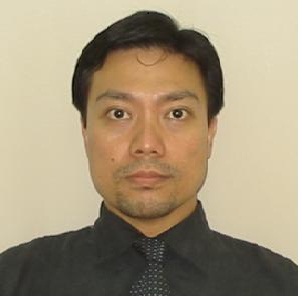 Joseph James Lago is AVP of the PCCI Securities Brokers Corp. He has over 2 decades of experience in the investments industry in various capacities. He is also a professor of the De La Salle University Graduate School teaching in Management and Economics. He is a much sought after researcher, economist and analysts. He is a Registered Financial Panner.
![[ File # csp12862242, License # 2646873 ] Licensed through http://www.canstockphoto.com in accordance with the End User License Agreement (http://www.canstockphoto.com/legal.php) (c) Can Stock Photo Inc. / michaeldb](https://www.randelltiongson.com/wp-content/uploads/2016/01/Employee-or-Entrep.jpg)