‘If a man empties his purse into his head no man can take it from him. An investment in knowledge pays the best interest.’ – Benjamin Franklin
This is a longer version of the usual quote “An investment in knowledge…” The author expresses a straight forward saying, which means that there will be a great outcome if you start focusing on nurturing your intellectual being. You’ll gain a better understanding over some matters, and this is not something that anyone can take away from you.
This kind of investment is something that we tapped without noticing. But add a little consciousness to it and you’ll see its essentiality.
The essentiality today
In a recent study, 60 % of the Philippine population would be people of ages 30 and below, a portion of which are the millennials. From my past blog about “Personal Finance for Millennials,” 75% of the latter spends more on experience rather than material goods. They have this hardworking, motivated, “everything in an instant” attitude, that gives them a fast pace of knowing things.
Experiences correlate with knowledge as these two are the foundation of wisdom. It is not enough if you just know it without doing it, as the same goes to if you just do it and don’t learn from it.
But, millennial or not, all of us need to keep up with the changes and learn as much as we can.
Where to find them
The technological or digital age is our period where information is within grasp. The least we can do is to make the most out of it. With the aid of a powerful tool called the internet, we know that searching for what we need now can be done easily.
Whether it is searching for a nearby library, a current event, a technological advancement, socialize to learn, etc. it’s just one click away.
It’s a great way to start on consciously investing on knowledge for its compact-ability and multiple platform-compatibility. It gives you an experience where you’ll gain knowledge at ease. This article too, is a contributor to your intellect as it gives you an insight on the essentiality of the subject matter.
But, that is just one of the sources.
One of the most effective way of consciously finding an investment opportunity in both intellect and business setting is by attending business seminars and conferences, more specifically, in the field of finance. The eminent and selfless transfer of knowledge from one body to a numerous number of persons is a great opportunity to be a part of. The people who may came from different parts of the country, yet unifies them in a single interest that gives them a sense of belongingness. Those are some things that I have observed from numerous seminars and conferences that I have been on.
The bottom-line
Our brain works in many ways, and what we need is to give input for it to make it work with ease. Knowledge is an essential investment in your intellectual well-being. It takes you to a point of view with deeper understanding of a subject.
Also, it takes out the fear of the unknown. It brightens the grey areas of your thoughts and gives you a confidence boost on what you want to endeavor, especially in business. It can be really tricky for a person who doesn’t know much how business works rather than the principle of spending money to earn money.
Being financially knowledgeable is a great way for you to know how to intelligently cope up with the ups and downs of daily business operation; Trends that you can see fit to venture in to, in order to make your money grow while spending less; And how to make your money work for you.
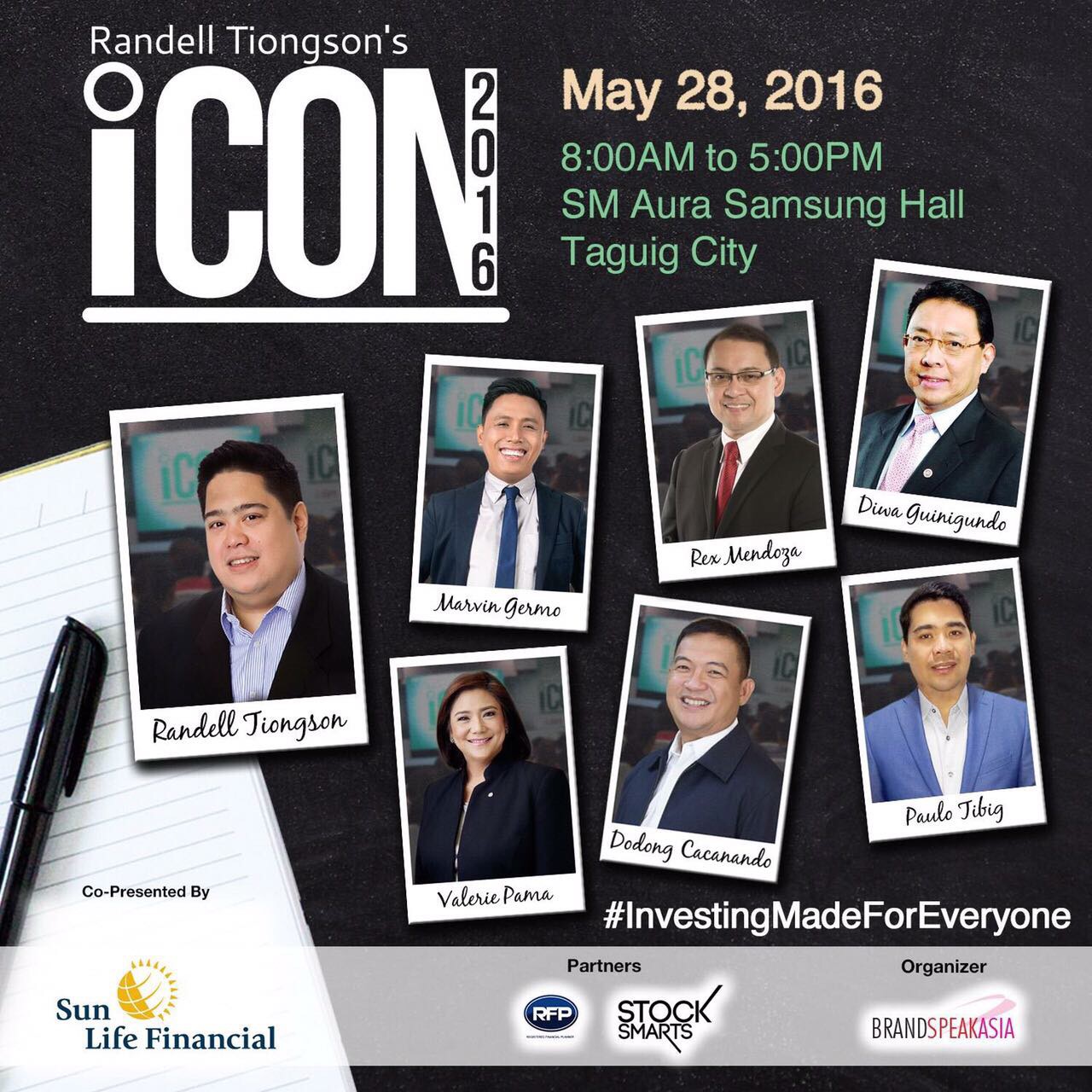
You can start investing in knowledge now by attending the fourth install of my Investment conference dubbed as #iCon 2016 this coming May 28, 2016 at the SM Aura Samsung Hall in Taguig City.
Take part of this iCON-ic event as with a bigger innovation, we have gathered a stronger group of local finance authorities in the country to talk about basic finance and how the recent innovation affected the economy through Marvin Germo, one of the most passionate personal finance experts in the Philippines; Diwa Guinigundo, an economist and Deputy Governor of the Bangko Sentral ng Pilipinas; Paulo Tibig, one of the most sought after professional speakers in the entrepreneurship community; Rex Mendoza, Founder and Managing Director of Rampver Financials and the most dynamic financial speakers in the Philippines; Jose Feron “Dodong” Cacanando, a businessman who owns Moriah Farms, Inc. and Karmel HA-Moriyah, Inc. and a truly inspiring business speaker; Valerie Pama, the President of Sun Life Asset Management, one of the country’s biggest mutual funds, and yours truly.
For transmission confirmation or questions contact Deniece Pineda at (+632) 750-6510 or 0926-691-0126 or at icon2016secretariat@gmail.com.
REGISTER NOW AT bit.ly/GO_ICON2016
7 Things to Consider Before Buying Your First Car
By Randell Tiongson on March 11th, 2016
The local automotive industry continues to grow, with sales (cars and trucks) increasing by 23% in 2015. This is according to a joint report by the Chamber of Automotive Manufacturers of the Philippines Inc. (CAMPI) and the Truck Manufacturers Association (TMA). Even more, sales of imported cars surged to a growth of 65% in the same year according to the Association of Vehicle Importers and Distributors (AVID). Looking forward, the 2014 Nielsen Global Survey of Automotive Demand reported that car sales are expected to grow in the coming years.
Are you one of those planning to buy a car? A first-time car buyer without an inkling of what to look for? Here are seven things to consider before buying your first car:
What’s your budget?
For a car worth Php 1 million, you will need Php 200,000 upfront. Despite feeling that you deserve a new ride, ask yourself if you can afford the down payment and the amortization. If not, you can either downgrade to a more affordable car or forego purchasing your dream car until you’ve saved up enough to make the 20% down payment.
What’s your main purpose for buying a car?
Your main objective is to get from points A to B, but your car can serve numerous secondary functions as well. Assess your purpose for buying a car, and buy one that ticks most of the criteria off your checklist. For example, a sedan is good for going to the office while a pick-up truck is more appropriate for logistics transportation.
Have you done your research?
From making a pros-and-cons list between automatic and manual vehicles to looking for the most affordable car manufacturer, it’s best to do your research first before purchasing a car. You can also go to branches of the same dealership to get the lowest price on your car through negotiating. Paying in cash or foregoing add-ons can bring the price of the vehicle down.
What are your financing options?
You may have more than enough to cover the 20% down payment, but how about the remaining 80% of the car’s value? The common option is to take out an auto loan, and you can apply for this in-house or in a separate financial institution. Before you sign the papers and opt for in-house financing, it’s best to go back to point 3 – research. Applying for in-house financing may be less of a hassle, but you can get a better deal elsewhere. Consider all your financing options first and look for the one with the lowest interest rate and flexible payment terms. After this would be the right time to make your decision.
Can you keep up with the monthly payments?
You’ve finally made a decision on which car and auto loan to get, but are you ready for the monthly payments? A shorter repayment time frame equals a larger amount for car payments so you should have a separate budget for your monthly loan payments.
To stick with your budget, pay down your loan balances the moment you get your salary. This way you’ll avoid paying only the minimum amount due and racking up interest payments. This is because you’re paying down debt first and spending later rather than spending first and paying debt later.
Are you satisfied with the test drive?
You’ve always dreamt of having car X, and you saved for years to be able to afford said car. You’ve saved up the 20% down payment and have a test drive of the car you want to purchase. If the car doesn’t meet your expectations in terms of ease in maneuvering or other factors upon test driving, then rethink your decision. Do your research again by test driving various cars until you find the best one for your needs and budget.
Are you ready for the car ownership expenses?
Car expenses don’t end upon purchasing it. Ask yourself – ‘Am I ready for the extra expenses car ownership entails?’
This includes car insurance, toll fees, fuel expenses, and a budget for maintenance check-ups among others. Routine check-ups ensure that your car is in tip-top shape through the years. An empty fuel tank deems your car useless. If you need to pass the toll way every day to get to work, then you need to budget for toll fees. Most importantly, car insurance – with one, you’ll save money in the long run since you pay a lesser amount for your insurance policy than a major repair (in the event that you encounter a road accident without insurance).
To create a realistic budget, list down all your car expenses for one month. For car insurance, MoneyMax.ph, the Philippines’ leading comparison website for car insurance, lets you compare car insurance from different providers to find the most affordable and suitable car insurance for you.
The responsibility of car ownership
Car ownership is a large responsibility and should be given consideration before purchasing one. Whether you’re a first-time, or repeat car buyer, the seven tips above will help guide you in making a decision.
Join us for #iCon2016, the biggest finance and investment conference of the year!
QUESTION: I have been following Money Talks on Viber and I have been seeing a lot of posts saying it is a good time to invest in the stock market. Is it really a good time? What are the things I need to prepare for before investing?—Asked by Michael via Facebook Messenger
Answer: Thank you for subscribing to our Viber chat group. I am sure you get a lot of insights from our discussions there.
I am sure that you are referring to the substantial decline in the stock market, in the last month or so which was brought about by external issues like the slowing down of the Chinese economy and the alarming drop in oil prices, among others. Although the market has made a significant rebound, it is still not clear from a downward trend. In other words, it is very difficult to determine if the rise in stock prices will hold. The stock market is behaving the way it is supposed to, reacting to perceptions of investors and the prevailing mood of many stock market investors of fear and caution. They say that when it comes to the stock market, investors are overly optimistic or severely pessimistic and when a market is sentiment-driven, expect volatility.
Stock market investing is about timing and also about time. Should you come in now? It really depends on your investment objectives. Is it a good time to invest? I always say that it is always a good time to invest if you know what you are doing and if you are prepared. Stocks go up over time, but they do not do so in a straight line.
The chart reflects how the Philippine Stock Market performed in 10 years. You will see that despite volatility, it does go up over time:
So to answer your question if you should be investing now is really dependent on what your investment objectives are. If you are investing for the long run then my answer is yes.
A bigger question that needs to be answered is what you need to do before investing. Many people jump in unprepared, which ends in mixed results. Before even thinking about putting your money somewhere, there are a few things that you need to take care of first:
1) Money Management—Proper management of your finances is the foundation of your quest for wealth.
If you are like most of us, your money doesn’t come in just one shot—they come in and dissipate in just one instance. You can only keep on adding to your investments if you know how to save properly … and you can only save properly if you know how to spend properly. Create and stick to your budget, as that will be your most important weapon in building your wealth.
2) Emergency fund—I cannot overly emphasize the importance of building a buffer fund before investing. Investments are volatile. There is always a danger that when you liquidate your investment, it may not have earned yet or worse, it’s lower than its original amount. The buffer fund will allow you to keep your investment funds untouched since you have another fund to dip your hands into when emergency strikes. At least three to six months worth is a good emergency buffer fund.
3) Investment objectives and timeframe—What are you investing for? Many people invest without really knowing why they are investing in the first place. Knowing your objectives and timeframe will allow you to match the right investment instruments with what’s best for you.
4) Risk tolerance—It is good to determine your risk appetite before jumping into any investment. A lot of people invest in risky instruments and yet they are not prepared to handle investment risks, which cause a lot of frustration and stress. Never invest without knowing the risks.
5) Time—Think long-term. There are no shortcuts to wealth and you need to be patient in building your wealth over time. Do not take shortcuts and do not be in a hurry as those actions can cause you to make a lot of financial mistakes.
Good planning and hard work lead to prosperity, but hasty shortcuts lead to poverty. (Proverbs 21:5, NLT)
———–
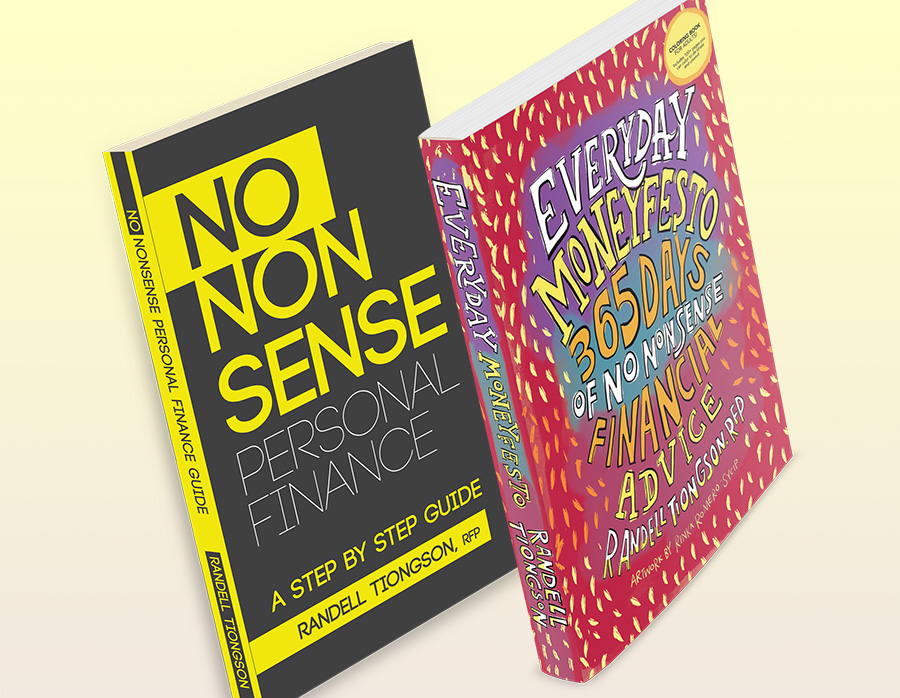
Get 2 of my books with a discount! No Nonsense Personal Finance and Everyday Moneyfesto. Click HERE
Want to learn how to manage your finances better?
Register now and get a free copy of my e-book. Start your financial planning journey today!