5 tips to get rid of your credit card debt
By Randell Tiongson on August 27th, 2017
QUESTION: Because of emergency and other unforeseen expenses, I have racked up credit card debt. I hate the feeling of having debt. It scares me that I may never be able to pay them down, and the interest rates are discouraging. I would love to get some tips from you on how I can pay down my debt. Thank you so much for your help. – Johnny via e-mail

Answer: Ah yes, when you have credit card debt, it can feel like there’s a heavy weight on your shoulders. You want to do a number of things, but you can’t because you’re always thinking about the debt you have. It feels hard to relax when you pay more on interest month per month. Eradicating credit card debt will take a heavy weight off your shoulders. If you’re up to neck in debt, here are 5 easy tips to get out of credit card debt:
- Use the snowball method
The snowball method is a method used to tackle debt by attacking your credit card with the smallest balance first. Just as a snowball is rolled and piled together to create a bigger snowball, the snowball debt method lets you start with the smallest balance to give you the confidence to attack bigger balances in the future. Paying off the smallest balance will make it easier and faster for you to pay down debt. For those who are new to saving and budgeting, starting small (read: paying the smallest balances first) will ease you into the habit of paying debt. If you start big and pay off the biggest balance with the highest interest rate first, this can shock you and make you feel like you’re not making any progress and you might fall back into the trap of accumulating more debt.
- Automate payments
“Out of sight, out of mind” right? If you set up your account, so that your credit card dues will be automatically debited from your bank account, you’ll treat the money as if you never had it at all. If you choose to pay your credit card balance manually, you may be tempted to pay the minimum balance only to give way to other expenses you prioritize. By automating your credit card payments, you’ll feel like you didn’t even have the money in the first place. Even better is that you’re paying the full balance each month, which avoids extra fees. Multiple banks, such as BDO, BPI and HSBC, offer this auto-payment service. Just log on to your online account to apply.
- Track your expenses
A lot of people get into credit card debt because they treat it as free money. It’s easy to hand that plastic to the register, swipe it, then sign. Until the billing statement comes. Then, you find yourself searching every corner of your home for spare change to pay your balance. By tracking your expenses (pro tip: have a separate category for credit card expenses), you’ll see where your money is going, and you’ll realize just how much you’ve racked up in purchases using your credit card. Tracking your expenses avoids adding to the debt you already have. Multiple phone applications, such as Expense Manager, Mint and You Need a Budget, allow you to track your expenses in a comprehensive manner (e.g. by timeline, by category, current balance, etc.).
- Transfer balances
Multiple banks provide this service of transferring and consolidating all your credit card debt into one bank. To get the most out of balance transfers, transfer all your balances to the bank that offers the lowest interest. This way you’ll be paying less in interest, which can save you a lot. Late fees for credit card dues start at around 3 percent a MONTH, so it’s best to avoid sky-high interest rates as much as possible. By transferring your balance from one account with a high-interest rate to the one with the lowest, just imagine how much you can save. It’s best to remember that there’s no such thing as free money and the interest rates on credit cards will make you wish you never had a credit card in the first place.
- Use a part of your savings
Have an emergency fund, it’s one of the basics of personal finance. This e-fund must be used ONLY for emergencies, nothing less; however some rules can be broken. If your e-fund is well-padded, if you have a continuous flow of income, if you have a partner that has his or her own income and emergency fund, if you have investments, THEN you can use a portion of your emergency fund to make a lump sum payment. Remember that in a savings account, you only earn 0.25 percent in interest a year, humiliatingly less than the 3 percent a month you pay in credit card interest. Consider using a portion of your savings to pay your debt down faster and avoid incurring the 3-percent interest a month.
Road to financial freedom
It’s a different feeling when you don’t have to worry about debt. You don’t feel like you have a rope tied around your neck. You feel like you’re able to save and invest earlier and faster. Having zero debt maximizes your opportunity to live a life free of worries. That portion of your income you used to pay down debt? Use that money to go on a much-needed vacation that is not funded by debt. Even better, use the money to start investing, saving for a house down payment, or whatever financial goals you may have. The bottom-line is once you pay down all your credit card debt, you’re on the fast track to reach a life free of money worries.
“The rich rules over the poor, and the borrower is the slave of the lender.” – Proverbs 22:7, ESV
Sign up for my financial planning diagnostic system for FREE! Visit https://parachure.com/
Financing your adult children
By Randell Tiongson on August 9th, 2017

Question: Hi, Randell. My child has been working for five years already but I feel that I can do more to help him become financially independent. I’ve been helping him out by giving him a monthly allowance of P10,000, instead of him contributing to our expenses in the house. He was recently unemployed and lives in our house in Manila. I do not want him to have a hard time like I did when I was the same age, but I think he can put more effort into building his savings and becoming financially independent. I just don’t know where to start. It’s so common for us parents to worry about our children even when they’re already grown up. I hope you can help me with this.—Jose, 54 years old from Mindoro
Answer: Hi, Jose. I completely understand what you feel. We Filipinos have close family bonds and this kind of relationship also entails financial bonds unlike other countries where people are considered independent upon reaching 18 years old.
However, there is a fine line between helping your child and tolerating bad financial habits. Remember that doing this to your child today can get him the financial habits he needs for a better future. What will happen if you’re not there to support him? He might panic and get into a dangerous debt cycle because he fears to live below his means.
What you can do is have a talk with your child about the situation. Have an open conversation about the matter and he can voice out the reason why he thinks he is not self-sustaining yet even after working for a long time. I have seen that open and honest communication helps in situations like this; but you need to be firm. You can also clarify the instances where you can help him and when you will let him figure out things on his own. This way, he will become more discerning and not think of you as a financial cushion even for avoidable shortcomings. This will be a tough conversation but a necessary one. I know it’s not easy to resolve financial matters in the household but with the proper approach, this can do wonders for members of the family.
Another way is to still give the P10,000 allowance but make your child work for it. Have him work part-time in your family business or designate specific tasks for him like running errands for you in Manila if you need any help. It should be clear that he is not doing a favor for you so he needs to finish the tasks you assign to him. Your child is an adult now, you no longer have any financial obligation to him. It’s about time he learns that there is no such thing as a free lunch, so to speak. Also, be the example that he will want to look up to. You can’t preach that your child has to have a budget and be debt-free if you are not practicing this yourself. Your actions can serve as an inspiration to him to improve his financial status. Sometimes it’s necessary to impose tough love on our children so that they can value hard work and recognize the rewards of financial independence. We love our children but there are times we need to show tough love; this is the time to do so.
Remember, when we do help, let’s make sure we actually help and not encourage bad behavior, otherwise we do more harm than help.
Associate Financial Planner UAE 2017
By Randell Tiongson on August 8th, 2017
If you are a Filipino based in the UAE and you are serious with being a professional financial planner, it is time for you to be certified!
Since 2013 the AFP has been helping Filipino financial planners in the middle east improve their level of competency and professionalism.
The 2017 schedule will be this September 1 & 2, 2017 in Dubai, UAE.
Why the AFP?
Because of the increasing financial awareness and prosperity of many Filipinos, the demand for financial products and financial advisors has been growing through the years. However, while there have been many who claim to be financial advisors, there has been a need for certified advisors to be differentiate a properly trained advisor from one who is not.
This differentiation can be achieved by choosing to become an Associate Financial Planner (AFP®), a professional designation awarded by the Registered Financial Planners Philippines, the Philippine’s leading financial planning institute.
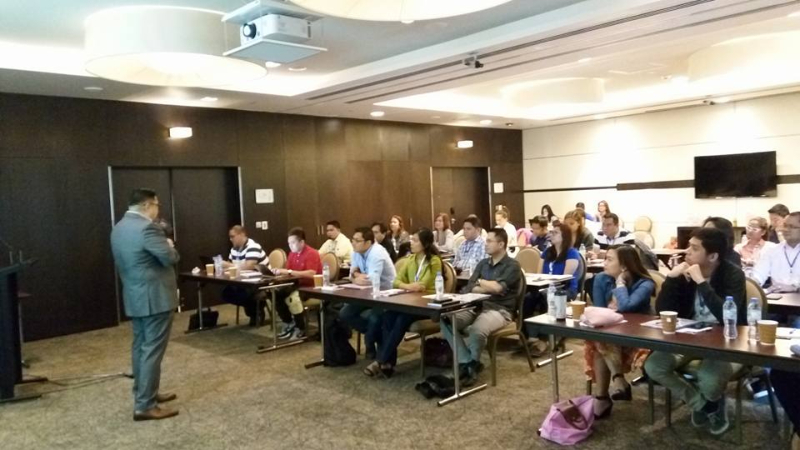
Become an Associate Financial Planner (AFP)®
The public is looking for a financial planner who has demonstrated a commitment to competency, and financial professionals want an established certification that will set them apart in the globally expanding financial planning profession. As an AFP®, you can energize and revitalize your career by leveraging the knowledge and prestige associated with one of the world’s most recognized financial planning certification.
Benefits of the AFP® Certification
– Immediate recognition from clients, peers and employers with AFP® designation after your name.
– Strict eligibility criteria mean only a selected few are privileged to hold this designation.
– Provides a good starting point for professional who have the necessary skills sets and knowledge in basic personal financial planning.
– Provides an interim designation while you are pursuing the Registered Financial Planner (RFP®) quantification in the future.
– Become part of the preeminent financial planning organization in the country, the Association of RFPs in the Philippines with numerous benefits, including access to technical sessions, events, seminars and conferences.
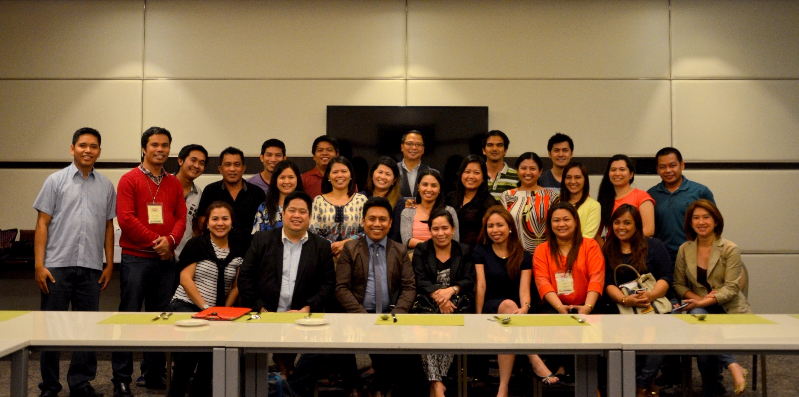
What will be discussed during the AFP® Program?
- Personal Finance Steps
- Insurance Planning
- Behavioral Finance
- Investment Planning
- Time Value of Money
- Stock Market Investing
After completing the training program, a qualifying examination will be performed within 1 to 2 months after the program. Those who pass the exams can apply for membership to the AFP®
Who will be conducting the AFP® Program?
Randell Tiongson, RFP is the director of the Registered Financial Planner Philippines and has been engaged in the financial services industry for 3 decades. He is one of the most respected personal finance speaker and educator in the Philippines and has given over 1000 lectures & training on finance through the years. He is a columnist of the Philippine Daily Inquirer, best-selling author of 5 finance books.
Marvin Germo, RFP is the Philippine’s most in demand speaker and educator on stock market investing. He has given hundreds of seminars on investing in equities for Filipinos across the globe. He is frequently seen in Philippine media on the subject matter of investing and he is also a best-selling author of 5 books on investing and the stock market.
If you are interested to become an AFP®, please send an email dubaifinancialevents@gmail.com AFPdubai@yahoo.com or click HERE