Finance events for Filipinos in Australia
By Randell Tiongson on July 29th, 2017
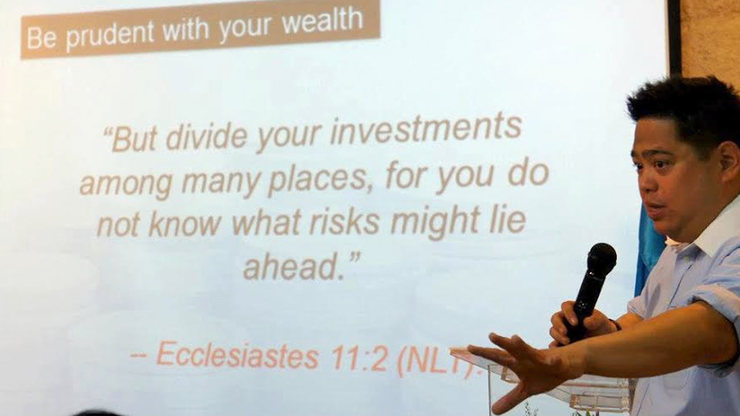
If you are a Filipino based in Australia, join me for my talks there this August 2017. I will have several talks in Canberra and Sydney.
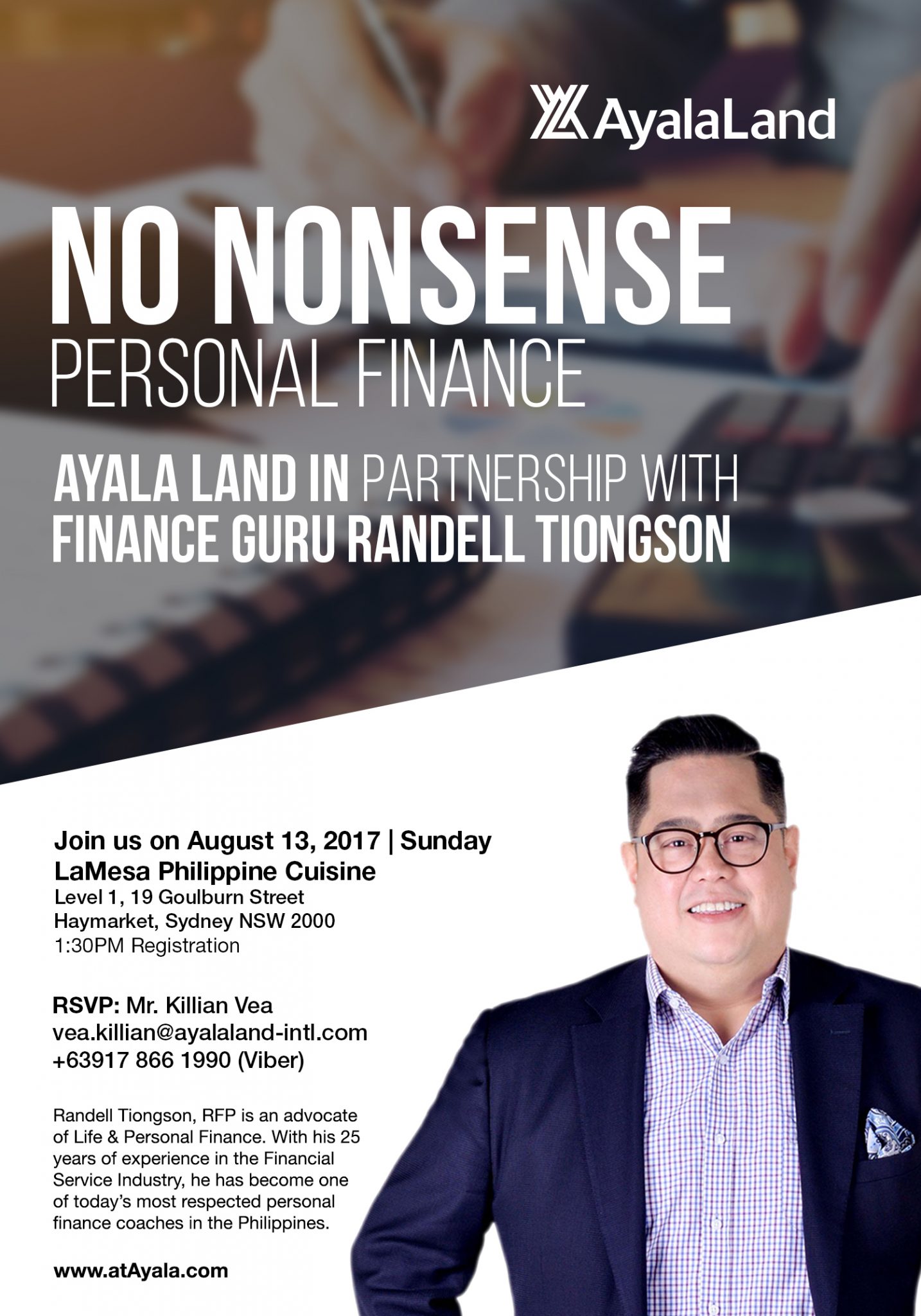
My finance events are practical and easy to understand an apply. Although some of my events are sponsored, I am fully-independent and I do not sell any products. For this trip, all the events are for FREE! Details are in the posters.
CANBERRA Events
August 5, 2017 at Bowes Street, Canberra, ACT; Organized by the Philippine Embassy
Topic: Personal Finance
Contact: Nicole De Castro at ntdecastro@philembassy.org.au

August 6, 2017 at Hotel Realm, Canberra, ACT; Organized by Ayalaland
Topic: Wealth-building strategies
Contact: Killian Vea at vea.killian@ayalaland-intl.com or +63 917 8551990 (Viber)

SYDNEY Events
August 12, 2017 at the Philippine Consulate General in Sydney, NSW; Organized by the Philippine Consulate
Topic: Personal Finance

August 13, 2017 at LaMesa Philippine Cuisine, Haymarket, Sydney, NSW; Organized by Ayalaland.
Topic: Wealth-building strategies
Contact: Killian Vea at vea.killian@ayalaland-intl.com or +63 917 8551990 (Viber)
It’s time to build your wealth the right way! See you mates!
Our children are not our retirement plans
By Randell Tiongson on July 17th, 2017

QUESTION: Hi Sir Randell! I’ve been reading a lot of personal finance articles about millennials. I read one that definitely hit home. It was one about the “sandwich generation” wherein Filipino adults feel sandwiched between their responsibilities to their parents and their responsibilities to their families (or the family they will have in the future). I don’t have any children yet, and I’m still single, but I’m scared and I already feel the pressure being sandwiched. My parents are the best, but unfortunately, not when it comes to money. I already give part of my income to them, and there are times I feel like they see me as their retirement plan. How can I talk to them and express my feelings that we need to do our own parts in setting ourselves up financially on our own? That I cannot fully depend on them and they cannot do the same to me? —Angel via Facebook Messenger
Hi Angel! This is definitely an interesting situation you are in, but a common one nonetheless. Compared to questions on investing and saving, I don’t get this type of question a lot. I’m sure, we see it happening around us always, and the phenomenon tends to be more obvious here in the Philippines where parents have the mind-set their children will take care of them come retirement.
This is a tricky topic to confront your parents with, but here are some steps you can use when the time finally comes that you need to approach them and talk to them:
Let them know their numbers.
If you’re contributing to household expenses, you know how much your parents spend on basic necessities monthly. You may have an idea how much their monthly expenses are.
With this, you can compute your parents’ retirement numbers. This is the amount they need to be able to retire comfortably. Crunching the numbers and showing the amount to your parents will make them realize you won’t be able to handle it on your own, not even when you and your siblings work together, because you have your own futures to prepare for.
Be transparent.
It may be that your parents also have no idea of the financial stress you’re going through contributing to their monthly budget, so it pays to be transparent. Let them know you’re having a difficult time covering even your needs.
If they’re aware of how you feel, they may ease the pressure on you and find ways to sustain themselves.
Do the saving for them.
However, if your parents are stubborn, and no amount of talking to them will make them understand, you can instead reduce your contributions and open an investment account for them. This may be especially effective if your parents do not know how to handle money properly.
When they reach retirement, they already have a retirement fund that you started years prior.
Be fully independent.
Last but not least, the only way for your parents to become truly independent from you is if you are not dependent on them. If you still live with them, then it’s just fair that you contribute to their monthly expenses, especially if your parents are still paying for the utilities.
If you don’t want to be treated as a retirement fund in the future, start by becoming fully independent from them. This could mean renting your own place and avoid asking for financial assistance unless it’s an emergency and is absolutely necessary. This way, your parents will understand they cannot depend on you (financially) because you’ve already stopped depending on them.
Money talk is always difficult, especially since this kind of talk is still taboo in Filipino culture. However, if you never initiate this type of conversation, you stand to risk your future.
When it comes to personal finance, it pays to start early. How will you start your own life if you have people who are still fully dependent on you?
By having the talk, you can make each other aware of your plans and align your next steps for the future.
Just a brotherly reminder: When discussing difficult issues with your parents, always do so with utmost love and respect. Remember, we are blessed when we honor our parents.
“Honor your father and your mother, that your days may be long in the land that the LORD your God is giving you.” Exodus 20:12, ESV
“…For children are not obligated to save up for their parents, but parents for their children.” 2 Corinthian 12:14, ESV
“A good man leaves an inheritance to his children’s children…” Proverbs 13:22, ESV
Relief from the burden of debt
By Randell Tiongson on July 16th, 2017

Debt is something that robs a lot of people of hope. According to Hal Lindsey, “Man can live about forty days without food, about three days without water, about eight minutes without air…but only for one second without hope.” Simply put, debt puts a peso sign on how much of your future you spent in the past.
After going through a debt problem myself for the many years of my adult life and eventually being free from its clutches, I made it a point to spend so much time telling others to get out of debt or at least manage their debt properly.
I have said time and time again the Bible is the best resource for wisdom on personal finance, among many others. But here is a huge “news flash” for you: With over 1,300 passages on wealth, the Bible is virtually silent on debt, at least to the borrower. Only ½ of one proverb tells us, “… the borrower is slave to the lender” (Proverbs 22:7). Since no one wants to be a slave, enough said. How do you get out of debt? Simply put, you need to be a good steward of your finances. You may want to read my other posts on debt or pick up my book No Nonsense Personal Finance, there is a chapter there dedicated on getting out of debt.
The Bible, however, has considerably more to say to the lender, such as those whom have been entrusted with money are instructed to use it mercifully. Nothing drives this home like Jesus’ parable about the servant who, after being forgiven a fortune by the king, fails to pass that same mercy on to another servant. Instead, he chokes him and throws him into prison for a relatively minor debt (Matthew 18:21-25). Jesus tells this parable to Peter, who like us, probably thought he was being surprisingly generous by offering to forgive his brother up to seven times. But Jesus makes it very clear that this is just the start. Jesus’ teaching echoes many other encounters people had with him, like the woman who, having lived a life of sin, came to him at a Pharisee’s house and wet his feet with her tears, then kissed them and wiped them with her hair (Luke 7:36-48). Her response to Jesus was the exact opposite of the inhospitable Pharisee, who offered no welcome to his guest. Why? Because the one who has been forgiven little loves little. But the one who has been forgiven much loves much.
Where does that leave us? If you are a lender, them you need to be merciful. If you are a borrower, you need to be wiser.
So what if you’re one of the millions of people who are trapped by debt? I have great news for you. God, not money, is still your master.
Money might dictate when you serve, or where you serve, but it can never dictate who you serve.
Whatever your financial position, find comfort in this: “…the Lord will reward everyone for whatever good they do, whether … slave or free” (Ephesians 6:8).
Need wisdom with finance? Join me and Dodong Cacanando this August 19, 2017. Click HERE for details.