Here’s your chance to attend a FREE event where I will be talking about personal finance and more. If you are serious about knowing and achieving your financial goals, attend this life-changing goals.
Slots are limited so you will need to confirm your attendance by getting in touch with Arlene Berza at ?+63 977 492 4982.
The event is on October 21, 2017 at 1:00pm at the Ground Floor of the Philam Salcedo Office, 126 L.P. Leviste Street, Salcedo Village, Makati (in front of Makati Sports Club).
This event is made possible by the Pinnacle Group of Philamlife.
The issue of money in marriage
By Randell Tiongson on October 3rd, 2017
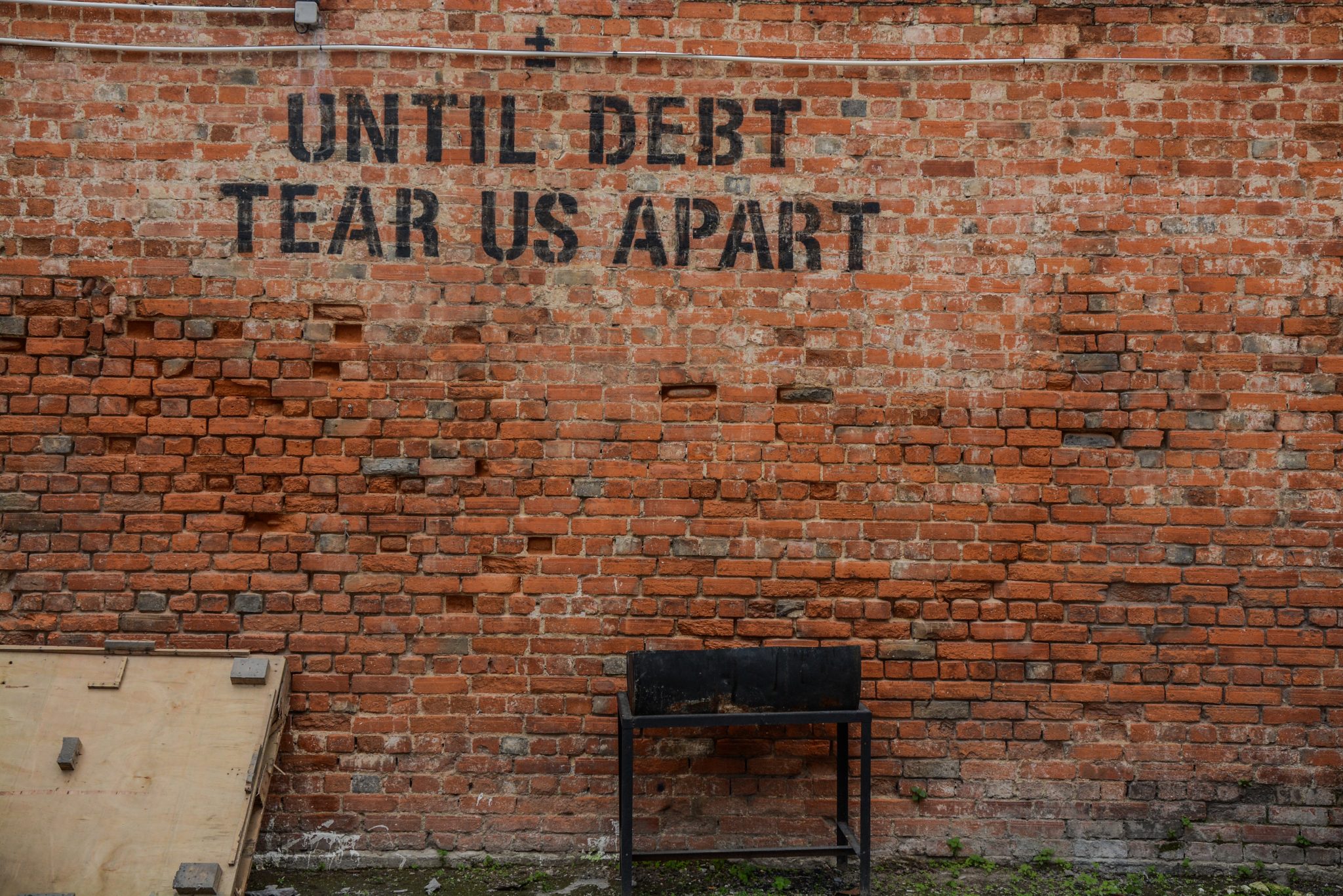
Photo from Unsplash.com
I thought about a lot of marriage breaking up and it seems that annulments have been increasing in the Philippines and has actually been more socially accepted. So why do marriages end? How can a couple who are really in love with each other end up hating each other? How did “till death do us part” become such a cliché?
I have heard many speakers, counselors and even preachers say that money is the number one cause of separation by a factor of 4:1. While money is definitely a primary concern of many break-ups, there is very little factual data to support such a claim. However, many studies would put money as one of the leading cause along with communication, infidelity, wrong expectation, intimacy and commitment; although not necessarily the number one and by no means a factor of 4:1. Sorry to burst the bubble of some speakers, counselors and preachers – I would urge them to double-check their facts.
Despite money not being the leading cause, it is definitely a concern for many marriages and can lead to the breaking up of marriages. I am not an expert in marriages and I have no qualms about telling people that I can be clueless when it comes to keeping a ‘perfect’ marriage, just ask my wife! However, after 26 years of being together, my wife and I managed to survive the many challenges in our marriage and most of those challenges are financial in nature. By God’s grace, I think our union will survive and continue to be blessed in the next 26 or so years.
Here are some suggestion married couples can consider with regards to finances in their marriage:
1) Communicate & be transparent – I find it disturbing that many couples are unaware of each other’s finances. Even the law acknowledges that a marriage brings union, including their finances and made provisions for conjugal properties. Bereft of any pre-nuptial agreement, a marriage solidifies the finances and everything as now co-owned. Statement of income should likewise be transparent; many problems erupt from false assumption. A wife might be yearning for better family lifestyle thinking that the husband’s income can sustain, only to be dismayed that it can’t. By being transparent and communicating properly, expectations can be managed.
2) Plan, plan, plan. Preparing a budget and sticking to one is definitely a conjugal exercise. I highly recommend that a couple sit down and discuss their budgets, how to disperse income and what to prioritize with their limited resources. A couple must agree on the budget and once a budget is set, they must respect each other by be faithful to the budget. Of course, some flexibility should be exercised as well.
3) Practice family financial planning. Set up an emergency fund. Think long term — save & invest for the future. Buy life insurance (this really brings peace of mind). Prepare for retirement. Avoid being buried in debt and if you need to take a loan like home loan, talk about it and get counsel first.
4) Practice stewardship. Many issues arise if couples don’t practice stewardship. They need to be responsible and accountable to each other and most especially, to the Lord.
5) Learn from other couples. This is not just about money management, but also about marriage in general. Have mentors for your marriage and please chose those with a good track record for obvious reasons. You don’t need to learn by experience because it is way too risky to experiment with your marriage.
And here’s my most cherished tip for married couples, keep the Lord in the center of the marriage and everything will turn out great. “If they obey and serve him, they will spend the rest of their days in prosperity and their years in contentment.” – Job 26:11, NIV
Preparations for OFWs Before Buying a Property
By Randell Tiongson on August 29th, 2017
Real estate concept. House on calculator. Mortgage. 3d
One of the main reasons why overseas Filipino workers (OFWs) are willing to sacrifice being away from home is because they would like their families to have better and comfortable lives by earning more money. Saving more money means having more budget to buy and own a property.
Real estate trends based on Lamudi’s latest White Paper shows a promising growth in real estate investments. According to the report, the number of people searching to buy versus renting gives evidence of a fairly higher number. These facts do not eliminate the chances of OFWs buying and owning a real property as well. Remittances from overseas Filipinos either living or working abroad have hit a new record high of $2.56 billion in December of 2016, and is projected to increase further.
Given all the facts and figures of the rising economic growth, marketability, and demand for real estate properties, what should be the proper financial preparations that an OFW must consider when preparing to buy or own a property?
Determine Location, Potential Improvements, and Property Type
This may sound a bit odd but it can be considered as part of being financially prepared. Why? Because anyone living and working abroad for a long time will not have much idea about the assessed and market value of a property. It is essential to know the location, whether it is in an established prime area, an up-and-coming neighborhood, or an area that has the potential to become an “it” location in the future; and what property type to buy, whether it is a land, condo unit, townhouse, or a single-detached house.
Likewise, OFWs should study potential areas really well because the provinces that surround Metro Manila, such as Rizal, Bulacan, Laguna, and Cavite, improve really fast with new infrastructure projects, new roads and expressways, and some even become cities after a few years. These are factors that will give ideas about pricing and how much an OFW can afford and how much he is willing to spend.
Know the Current Status of the Philippine Economy and Rate of Foreign Currency Conversion
It is important to know how the Philippine economy is doing and how the real estate sector is performing. Read newspapers, inquire from reliable sources, read testimonials from economists and buyers, do a lot of research, and check reliable real estate reports. Timing is everything that’s why it is best to make sure that the exchange rate is favorable (and stable) when sending hard-earned foreign currency converted to Philippine peso and the money will be saved in the bank for future use.
Find a Reliable Real Estate Developer and/or Builder
With the rate of competition among real estate developers in the Philippines, there are definitely a lot of options in finding a reputable developer/builder. OFWs should invest time and make it a point to do some research because sadly there are unscrupulous real estate developers and sellers who are bent on ripping OFWs off their hard-earned cash. The following points should be taken into consideration when choosing a real estate developer:
Background
Financial Stability
Company Profile
Track Record
Time Frame for Project Completion
Quality Check
Proper Documentation for Turnover
Choose a Trustworthy Representative
Living and working abroad means that OFWs are unable to process or have limited time in taking care of all the necessary paperwork and documents needed in dealing with any real estate investment, so a trustworthy and capable representative is very much needed. A Special Power of Attorney (SPA) will be granted so that the chosen person can act and do transactions on behalf of the OFW who is the buyer. In SPAs, the OFW may execute and make Attorney-in-Fact any trusted representative who is of legal age and that chosen representative must comply with the requirements of the law. The SPA must be Notarized or Consularized if executed or signed abroad. Note that the SPA is for the trustee and that he or she will not own any part of the real property and his or her main function is to just represent the OFW.
Study Different Financial Institutions for Short- or Long-term Loan Options
Any type of real estate investment will require a large amount of money and whether an OFW will buy via short-term or long-term loan, he will still require a backing from a financial institution that will give the best mortgage terms. Although government agencies give a lot of support to OFWs, there are still requirements needed and it would be good to study all possible options before applying for any type of loan. Government agencies like the Social Security System (SSS) and the Pag-IBIG Fund and commercial and universal banks all have eligibility requirements and loanable amount computations and it is important for OFWs to check if they’re eligible and how much amount they can borrow. Private banks and real estate developers also offer housing loans and in-house financing options that an OFW can avail of. Some may offer discounts and flexible payment terms available only for OFWs.
Open a Checking Account for Real Estate Transactions Only
Anyone investing in any form of real estate transaction should open a checking account that is separate from their regular savings account and personal expenses. The purpose of having a separate checking account for real estate transactions only is for proper monitoring of expenses. This is to make sure that every check that is issued is good and funds are also properly accounted for to avoid bounced checks.
Be Ready for Buying Expenses and Other Taxes
OFWs and anybody who will buy a real estate property should realize that there will be a lot of paperwork and documentations involve. Both buyers and sellers will shoulder expenses, including capital gains tax, creditable withholding tax (if applicable), documentary stamps tax, transfer tax, registration fees, and notarial fees, among others.
After execution of the Deed of Absolute Sale signed by both the seller and the buyer, the seller turns over original copies of tax declaration, tax clearance, transfer certificate of title (or TCT) or condominium certificate of title (or CCT, if what’s being bought is a condo unit), and when all obligations are paid for, the buyer will now be able to obtain a new TCT or CCT under his or her name and a new tax declaration will be issued.
In every paperwork and documentation involved, OFWs and their corresponding trustee that holds the SPA must practice due diligence even to the smallest detail because any mistake can be costly and these transactions are not something to be ignored and set aside.
Real estate property tax is something that cannot be taken for granted because it is a government-mandated law. The legal basis for the law is found in Title II of the Local Government Code of the Philippines. Taxpayers can either pay in full or by quarterly installment. Normally, the local government issues real property tax discounts when taxpayers pay in full and done in advance before the deadline which is due on or every 31st of January of each year.
Buying and owning a real property is definitely not an easy task, especially when considering the fact that the money that will be used is hard-earned. Any OFW who has sacrificed so much of being away from home should see to it that what they have saved for will definitely be worth it. After all, at the end of the day and whichever part of the world they’ve been, OFWs have one thing in common—they will always come back home.
Want to learn how to manage your finances better?
Register now and get a free copy of my e-book. Start your financial planning journey today!