Are UITFs a good investment?
By Randell Tiongson on April 20th, 2019

UITFs, or Unit Investment Trust Funds, are pooled funds offered by the trust department of the major banks of the country.
But what is a UITF?
As per the website (www.uitf.com.ph) of the Trust Officers Association of the Philippines (TOAP), it is “an open-ended pooled trust fund denominated in pesos or any acceptable currency, which is operated and administered by a trust entity and made available by participation. Each UITF product is governed by a Declaration of Trust (or Plan Rules), which contains the investment objectives of the UITF as well as the mechanics for investing, operating and administering the fund. Most UITFs are considered medium- to long-term investments. Clients considering to invest in UITFs must have the financial resources to stay invested in them for a reasonable period of time in order to maximize earnings potentials. If the funds to be invested will be needed by the client in the immediate future, the UITFs may not be a suitable investment vehicle for such client.”
I have written a few posts about pooled fund where I mentioned that pooled funds are investments where people put their money, with an investment manager handling the investments.
To explain further, let me use this analogy: Assuming you want to invest but do not know the first thing about investing in stocks or bonds. You can join a “pool” of investors who allow an investment manager to invest for them, subject to the objectives of the fund. Since there are many investors in the fund, the amount generated by the fund becomes sizeable and an investment manager will invest it for you. The investors actually own the funds and the investment manager (usually an institution) simply manages it. Ownership of the fund is through shares, much like owning shares in a corporation. Of course, the investment manager earns from this arrangement through the charging of management fees.
Is it is a good idea to invest in a UITF? —my answer will be, “It depends!” Like any investment instrument, you must first ascertain your investment objective, time frame and risk tolerance. UITFs (and mutual funds or VULs) are not short-term investment vehicles. If the purpose of your investment is short-term in nature, say less than three years, then it is not a good investment for you because UITFs are market to market investments. The value of a UITF will depend on the performance of the market it is invested in.
If the market of the fund you have invested in, say stock funds (equities), is on a rise, expect the value of your UITF to go up, and vice versa. Pooled funds, of which UITF is one type, are not bank products and do not carry guarantees. They are not covered by the PDIC as well.
However, having a non-guaranteed investment is not necessarily a bad thing because it also means that the yields you can get from investing in them is potentially higher.
If your investment is long-term in nature and your risk tolerance is moderate to high, UITFs can be a good vehicle for you.
Let’s assume that you are investing for retirement, a UITF is a good vehicle to help you build up your retirement funds because the long-term nature of your need will allow you to weather the fluctuations in your funds.
Even if there are fluctuations or gyrations, investments in UITF (or other pooled funds life mutual funds and VUL) are generally on the growth side. Performance is largely dependent on the fund you have chosen to invest in and the rules of risk and return relationship will dictate its performance.
Riskier funds like stock or equity funds will generate higher returns than lower risk funds like bond funds in good years and, of course, expect to have negative growth in bad years.
UITFs allow you to invest according to your risk tolerance. Low risk for bond or fixed-income funds, high risk for stock or equity funds and moderate for balanced funds, which can be a combination of bonds and stocks.
I also like the idea that you don’t need a lot of money to invest in UITFs. Most banks will allow you to invest for as low as P10,000.
BDO, BPI and other banks even have programs where you can invest as low as P1,000 per month which is a great idea for many of us.
A big advantage of UITFs is professional investment management.
Those entrusted to invest UITFs are well experienced, full-time investment managers who are trained to invest properly.
They are mostly objective and are not prone to emotional investing, which is a common mistake of newbie investors.
Of course, the downside of UITFs is that there is management cost. But this is only fair. Another problem I see with UITFs is that the branches of the banks are not properly trained in handling inquiries on the UITFs and there have been reports that some branch personnel even discourage their customers from investing in UITFs because of their non-guaranteed nature.
As to which bank is the best-performing, you may check out posted performance in publications and the Internet.
However, do not look at current performance alone. A fund with an aggressive fund manager will do well in good investment markets but will perform poorly when the markets are down. What you should consider are long-term performances, like their last three or five years. Lastly, look at their charges as not all banks offer the same charges.
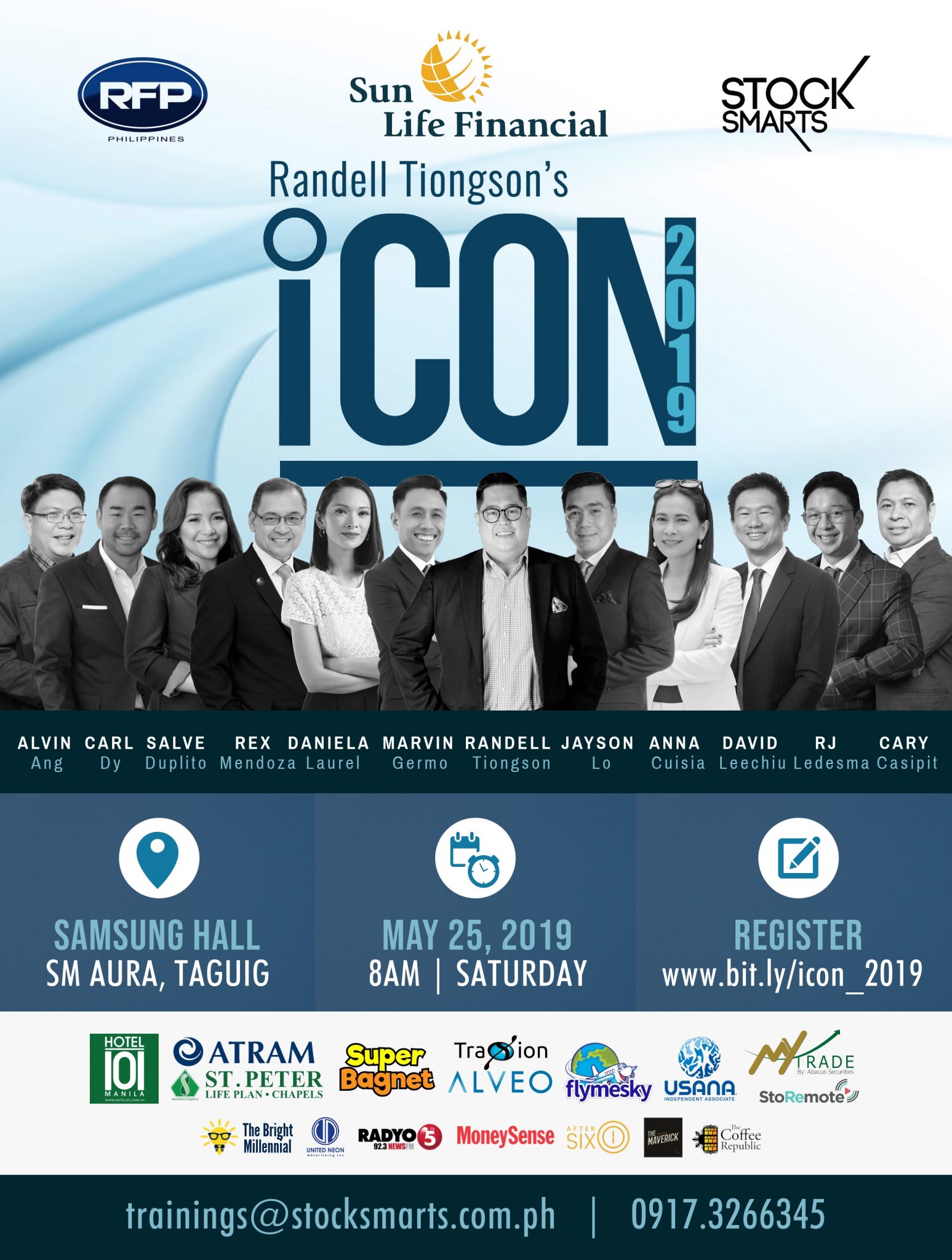
Learn how to invest like a seasoned investor by attending #iCON2019 this May 25, 2019. Register via www.bit.ly/ICON_2019
10 Things to do to build financial freedom
By Randell Tiongson on March 30th, 2019

Are you troubled with financial problems? Do you want to break free from financial stress? Here are 10 practical and helpful ideas that will help you achieve financial freedom and even more importantly, financial peace.
#10 Get a Grip on Desire
If you are feeling overly anxious and depressed, indulgent spending won’t make things better. In fact, after the initial rush of exhilaration, buyer’s remorse can set in and actually make things worse. So get a grip on unnecessary spending. After all: “Whoever loves pleasure will be a poor man; he who loves wine and oil will not be rich.” — Proverbs 21:17, ESV
Keep this in mind: it’s not the cost of an item that determines whether it’s an indulgence. It’s how much you need it. So before you make a purchase ask yourself this question every time, “Do I really need this?” If the answer is no, put it back and you will notice your pace quickens on your way to financial freedom.
#9 Forget About Your ‘Sosyal’ Friends & Relatives!
It may be that your luxurious friends and relatives are in debt too (and you can be sure they won’t give you money!) If you look at your their nice SUV, fancy bags, extravagant vacations or whatever it may be, and your wallet starts to tingle, remember what Solomon wrote in the bible: “Then I saw that all toil and all skill in work come from a man’s envy of his neighbor. This also is vanity and a striving after wind.” — Ecclesiastes 4:4, ESV
#8 Start Tithing and Keep on Tithing
If you don’t want to be ruled by money and possessions, then you must establish the mentality that God owns everything and that we are just stewards of what He gives us. Generosity is the antidote to greed, and generosity begins with a tithe. Generosity is also the trademark of a man who is not a slave to wealth.
A tithe is simply a first portion of our income that we give back to God. Proverbs 3:9, ESV says, “Honor the LORD with your wealth and with the firstfruits of all your produce.” In today’s language, that means we should give the “first of all our income.” And the word “tithe” literally means “a tenth (or 10%).” So, this is the amount I use as a guide for tithing.
Tithing says, “God, I trust you by giving to you first.” If you don’t trust God with your money, then you will trust in your money. I like what Winston Churchill said, “We make a living by what we get; we make a life by what we give.”
#7 Commit Yourself to Becoming Debt Free
It’s impossible to be spiritually free when you are financially bound. Financial experts like Dave Ramsey and Larry Burkett suggest to stop using your credit cards and pay for everything with cash debit card while you pay off your existing debt to prevent additional debt from piling up. And don’t get any more credit or credit cards until all existing debt has been eliminated. The same goes to other debt like personal loans.
“The rich rules over the poor, and the borrower is the slave of the lender.” — Proverbs 22:7, ESV
Debt-free living is still God’s plan for His people today, and the blessings of becoming debt free go far beyond the financial area. They extend to spiritual and marital realms as well.
#6 Save, Save, Save
“The wise have wealth and luxury, but fools spend whatever they get.” — Proverbs 21:20, NLT
Saving is making provisions for tomorrow. The easiest, most effective way to save is to simply do it every time you receive income. And be sure to save for both the long-term and the short-term. Long-term savings are intended to fund long-term needs such as retirement. Short-term savings should be in an account that is easily accessible for planned future spending like replacing appliances, making major home repairs and other emergencies.
#5 Spend Wisely
The old cliche’ is so true: Spend less than what you make! You will never be free from the money trap if you don’t apply that one simple rule. Dave Ramsey says that 90% of people in our culture buy things they can’t afford. That is staggering.
The most helpful tool to keep you from spending more than you make is to simply make a spending plan, also known as a budget. John Maxwell has the best quote I’ve heard on budgeting. He says, “A budget is people telling their money where to go instead of wondering where it went.”
#4 Invest Wisely
The best advice I have received when it comes to investing is to diversify. Ecclesiastes 11:2, NLT says, “But divide your investments among many places, for you do not know what risks might lie ahead.”
Never risk money you can’t afford to lose. It is probably not a good idea to make uninformed or hasty investment decisions, either. Do your homework, educate yourself and learn the investment game before you play it. Never invest in something you do not understand.
#3 Avoid Indulgences
As a responsible adult, we must learn to discern the difference between needs, wants and desires in every financial transaction we make. Before buying, determine whether the purchase is a need or want. For many years, when my wife and I were trying to get out of debt, we continually asked ourselves before we bought something, “Is this a need or a want?” Lots of small, wise decisions over a long enough period of time will be what gets you where you want to be.
#2 Gain Victory Through Vision
When asked if she knew of anything worse than being blind, Helen Keller once said, “Yes, being able to see and having no vision.” Dave Ramsey says, “The ability to see doesn’t mean having 20/20 vision; it means being able to have a clear picture of your vision and how you plan to achieve it.”
And the number one thing you can do to find financial freedom…
#1 Each Day, Pray Before You Pay
Emotional and spiritual balance will lead to financial freedom. So ask God to guide you and give you strength to follow the first nine steps. Don’t be resentful for what you don’t have. Instead, be grateful for what God has provided already. Financial freedom grows out of an attitude of gratitude.
Do not hesitate messaging me if you need me to pray for your financial freedom!
My simple money plans
By Randell Tiongson on March 23rd, 2019
My life was in a financial mess despite having enough knowledge about finances. Eventually, I realized that money is more about behavior and less about skills. When I gave my life to Jesus and began to read the Bible, many things changed for the better for me, foremost is my finances.
Our attitude about money is established in our heart. How we handle our money is a heart issue. The challenge for most people is the heart is attached to the head, and the head is not thinking the way the Bible teaches about money. So what does the Bible have to say about money?
People get surprised whenever I tell them just how much the Bible has to say about finances. There are more than 2,350 verses on how to handle money and possessions. Jesus spoke more about money than any other subject — more than faith and more than prayers. It is not because money and possessions are more important, its just that the Lord truly knows who we are. I eventually realized that the Bible is not just a book of devotions, it is also a book of instructions. Instructions to what? Instructions to righteous living.
Many years ago I starting asking: What is my financial plan? Do I know where every peso is spent? Do I want finances to continue to be a source of conflict in my life? What should I do with my debt? What are my financial goals? So, I created five categories and started living by a simple plan. So here are my top five:
1) Work Well
Whatever you do, work heartily, as for the Lord and not for men, knowing that from the Lord you will receive the inheritance as your reward. You are serving the Lord Christ (Colossians 3:23-24, ESV). In Scripture, hard work and diligence is encouraged. The Bible will make you reveal that the Lord despises laziness. My friend and mentor Dodong Cacanando once told me that work is from the Lord. The most important question you can ask yourself everyday as you begin your work is: “For whom do I work?”
2) Be Generous
The basic level of giving is the tithe. Tithing lets us know how we are doing with our attitude about money. If you don’t trust God with your money, then you will trust in your money. I like what Winston Churchill said, “We make a living by what we get; we make a life by what we give.” When you live a life of generosity, you will realize that you are not a slave to your money.
3) Save Diligently
“Precious treasure and oil are in a wise man’s dwelling, but a foolish man devours it (Proverbs 21:20, ESV).” Saving is making provision for tomorrow. The most effective way to save is to do it every time you receive income. Save for both long-term and short-term. Long-term savings are intended to fund long-term needs such as retirement or for the college education of your kids. Short-term savings should be in an account that is easily accessible for your usual monthly expenses as well as your emergency funds.
4) Be Wise In Spending
We often hear this and yet ignore this simple and yet truly inportant financial wisdom: Spend less than you make! You will never be free from the money trap if you don’t spend less than you make. Dave Ramsey says, “90 percent of people in our culture buy things they can’t afford.” The most helpful tool to keep you from spending more than you make is called a busget (or your cash flow). John Maxwell has the best quote on budgeting: “A budget is people telling their money where to go instead of wondering where it went.”
5) Invest Wisely
The best advice I have received when it comes to investing is to diversify. Ecclesiastes 11:2, NLT says, “But divide your investments among many places, for you do not know what risks might lie ahead.” Never risk money you can’t afford to lose. It is probably not a good idea to make uninformed or hasty investment decisions. Make sure you invest early, wisely and regularly. Another important tip is this: “never invest in something you do not understand.”
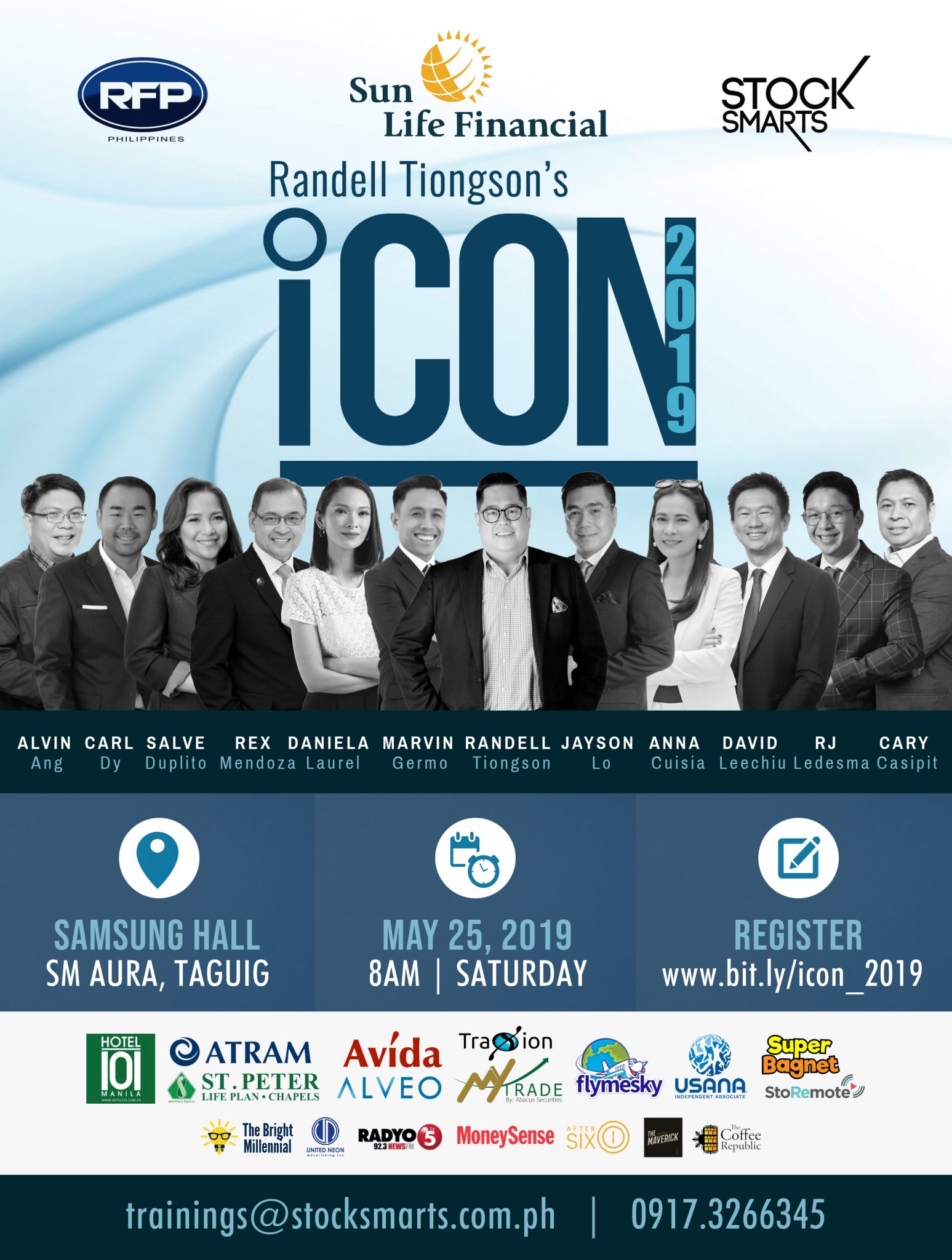
Be part of the country’s most empowering finance and investing event – #iCON2019 and learn from the country’s leading thought leaders in finance and business. Register via www.bit.ly/ICON_2019