Fear, greed & ignorance
By Randell Tiongson on May 3rd, 2014
When dealing with financial issues, one must always be aware of the 3 deadly behaviors that will cause financial havoc and I call them the 3 dangerous money attitudes: Greed, Fear & Ignorance.
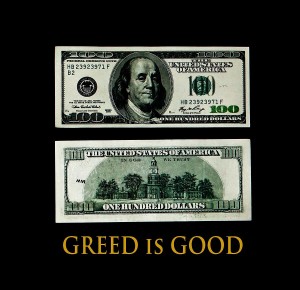 Greed has been man’s downfall since time immemorial. When it comes to our finances, greed clouds our judgment and in many cases it can even make us compromise our values. In investing, greed makes one too optimistic on possible returns based on some experience or even the potential of remarkable growth. While the principle of risk & return always dictate the performance of one’s investment, greed will make one go beyond his risk tolerance in anticipation of fantastic yields. In business, greed makes one engage in cut-throat enterprise and often times have collateral damages like ruined business relationships and even legal issues. After all, it is the love of money which is the root of all evil (1 Timothy 6:10). In the movie Wall Street, Gordon Gecko made a famous line that seems to have been the mantra of many… “Greed is good” (‘That greed, for lack of a better word, is good. Greed is right, greed works. Greed clarifies, cuts through, and captures the essence of the evolutionary spirit’). Well, it is because of greed that there was the recent financial tsunami which almost put the whole world economy into chaos. In fact, the US has yet to recover from their financial crisis which was really a result of greed. Greed is often times the reason for our economic woes. Regardless of how we romanticize it, and despite Holywood’s dangerous seductions, greed is not good.
Fear is not necessarily a bad behavior. In fact, fear allows one to act in prudence and makes us check if we are already becoming greedy. The issue here is too much fear, or crippling fear. Many a times, people would not take any risk at all when it comes to money and they will find themselves with hardly any financial growth because of it. It is a common notion that Filipinos are ultra conservative when it comes to money and to prove a point, one only needs to look at where our money is actually invested – locked in 30 to 90 day short term deposits that give you almost negligible returns. While keeping your capital safe is important, we must also be reminded that inflation is constant and it will erode our wealth. To illustrate, let’s assume that you place your savings in short term placements like time deposits earning 2% p.a. and you don’t mind the low return because safety of capital is your paramount concern and you will probably keep the money there for maybe 3 to 5 years . Let us assume that during those years, the inflation rate will be at an average of 5%, you are actually losing real value in your money with the erosion of its purchasing power by as much as 3% per year. In the end, you will actually experience a real loss despite having no capital loss. In risk management, risk avoidance is not always a good choice because avoiding risk also means one can’t gain. I really like the Parable of the Talents (Matthew 25:13-40) – it is as a very good illustration of fear.
Just like greed, ignorance is a very dangerous attitude. While people lose money because of greed or too much fear (in purchasing  power), people do so knowing what they are getting into. Losing money because of ignorance makes one well, ignorant. It is said that you should never ever, ever, ever, ever put your money into something you don’t understand. It is ironic that despite Filipinos being risk averse (ultra conservative), we are also prone to a lot of scams. Many researches reveals that our FQ or financial quotient is very low as compared to other countries. Financial education, though immensely important, is not on the top mind of our citizens. Schools look at financial education from a text book approach rather than on a personal finance perspective and many homes will not discuss money issues until the family is in severe financial situation. I counseled so many individuals that are in dire financial conditions and most of the time, the core of their problem is ignorance – financial ignorance.
So what is the solution to all these? Financial education and checking one’s heart. We need to live a life of purpose which will keep our greed in check. It is not hard to realize that our purpose goes beyond ourselves, isn’t it (Matthew 6:33)? Overpowering fear is an issue of faith – we need to believe that we are not given a spirit of timidity, but a spirit of power (2 Timothy 1:7). The only fear we should have is a godly fear (Psalms 111:10). As to ignorance, we only need to open our hearts and minds and embrace learning and seek godly wisdom (Proverbs 8:12).
Join iCon 2014, the biggest investment conference of the year! Visit www.brandspeakasia.com/icon
Should you invest on stocks or equity funds?
By Randell Tiongson on May 2nd, 2014
 QUESTION: I am ready to start investing and I would like to invest in equities. Is it better to invest in stocks directly or through pooled stock funds like UITF or mutual funds? —Name withheld per request, asked via e-mail
Answer: As a financial and investment planner, we need to subscribe to the principle of suitability. Without sufficient information, it wouldn’t be prudent of me to categorically say one would be better than the other. The answer really depends on you—if you are knowledgeable enough to select your own stocks, size of funds, and if you have enough time for investing.
However, to help you make a more informed decision, let’s discuss the advantages and disadvantages of both types of investing.
On individual stocks
Advantages :
Control—Buying your stocks directly gives you control over what and when to buy or sell.
Residual income—If you buy a stock with a good dividend payout, then you don’t have to watch the price movement anymore. As long as the company is earning and declares dividends, you will get dividends.
Maximized returns—individual stocks that are growing may beat the market and can give you better-than-average returns. Jollibee beat the market last year, moving from P100-P170 while the entire market was down.
Potentially better returns—with proper selection and assuming that you are very good at selecting market performers, the growth of your own stock portfolio can outperform the stock market index and many stock funds.
Fees—buying your stocks directly from brokers usually means lower fees as fund managers charge a higher investment management fee compared to stock brokers.
Disadvantages :
Time-consuming—before investing, you should spend enough time thoroughly understanding how stock market investing works. You should also accumulate enough knowledge of both fundamental and technical analysis. Fundamental analysis means you must be able to read and understand financial reports of the companies you would like to invest in, the general condition of the industries and market trends to which these companies belong to, general knowledge of macroeconomics and even the management of the corporations you would like to own shares of, etc. Technical analysis will require you to constantly study charts on price averages, trading volumes and a multitude of technical market theories like Dow theory, Relative Strength Index, Elliott Wave theory and more. While fundamental and technical analysis is not rocket science, it takes considerable time for you to learn them properly. Enrolling in a class like Marvin Germo’s Stock Smarts is a good way to start.
Diversification—all investment professionals will always recommend you to diversify. No amount of study and good performance in the past will guarantee the performance of a particular stock in the future so having several and properly selected stocks is always a prudent thing to do. Unless you have a very big capital for investing, you will be limited to the variety of stocks you can carry in your portfolio.
On stock funds
Advantages :
Professional fund management—this is perhaps the biggest advantage of pooled funds like UITFs and mutual funds. There is a dedicated team of investment experts that looks at investment opportunities and is investing the money according to the investment objectives of the fund. It is common to see CFAs or Certified Financial Analysts leading or being part of these investment teams. Good fund managers are clinical and logical investors and are not easily swayed by emotions as compared to individual investors.
Capital requirements—most of pooled stock funds have low capital entry requirements. One can invest in a fund for as low as P 5,000 to P10,000, with other providers requiring a monthly contribution of as low as P1,000 per month.
Diversification—all stock funds carry well-diversified stocks in their portfolio, usually blue chip or premium stocks. Since these are pooled funds, there are economies of scale in place; fund managers will be able to purchase different shares. Proper diversification will ultimately result in reduced portfolio risk.
Disadvantages :
Fees—While not all stock funds charge the same range of fees, these fees are usually much more than broker fees as there are costs involved in managing funds. Some funds even charges entry and exit fees, which can reduce the returns of your investments. Some funds are being sold through agents and advisors and commissions would need to be paid to them.
Control—you have no say on which funds you want or don’t want in your fund as this is already delegated to the fund managers. You also can’t modify the weight of the stocks inside a stock fund as fund managers follow maximum exposure limits per stock to ensure proper risk management practices. Even if you want more PLDT or Jollibee shares in your portfolio, your fund will only have a limited exposure to said stocks, like 10 percent.
The answer to your question is dependent upon you knowing the pros and cons of individual stock investing or through a pooled equity or stock fund. If you are a new investor, I recommend you invest in a stock fund first and as you get to understand how the stock market works and develop your competency in investing, you may want to start investing in individual stocks.
Do not forget, whether investing in stocks by yourself or through a fund, it pays to invest first in investment education.
What is the iCon 2014 all about?
By Randell Tiongson on April 18th, 2014
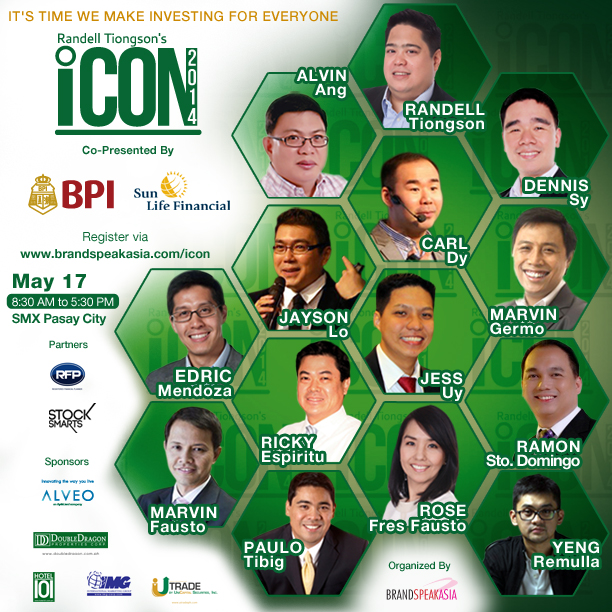
 A lot of people have been talking about iCon — the Investment Conference 2014. Not only is it the biggest investment conference of the year, it really is about more than just investing. The iCon started as a personal dream of mine and in 2013, that dream became a reality. It sounds very self-serving on my part to be writing about a conference I am organizing so allow me to post here a wonderful article that my friend & respected motivational speaker Jayson Lo wrote about regarding the iCon 2014.
————
Why people should attend the iCon 2014 by Jayson Lo
PEOPLE ARE FOND OF THE IDEA OF GETTING RICH THROUGH INVESTING. THEY WOULD WATCH MOVIES LIKE THE WOLF OF WALL STREET OR TV PROGRAMS SUCH AS THE LIFESTYLE OF THE RICH AND FAMOUS, AND THINK THAT INVESTING OR GETTING RICH IS ONLY FOR HIGH ROLLERS AND THE AFFLUENT.
What most people don’t know is that the game of investing is open to everyone—from the simple to the sophisticated, from the young to the old, from the rich, the middle class, and even to the poor. Today, the game has drastically changed. The only thing that is standing in our way is FINANCIAL LITERACY.
My good friend Randell Tiongson, one of the 12 most influential people on finance in the Philippines, has been a staunch advocate of financial literacy. He used to organize events where he was the lone speaker, until he finally realized that the job is bigger for just one individual to educate Filipinos on personal finance. That’s when Icon was born. Randell gathered the top finance speakers and practitioners in the Philippines to promote financial literacy.
Financial Literacy is the ability to understand how money works. So before we start investing, we need to invest in ourselves first. The idea is to know what will work before you work. As the old saying goes, “Luck is where opportunity meets preparation.”
iCon is a great place to learn about finance, both for the novice and the adept. For beginners, the conference introduces the different aspects of personal finance, which includes financial behaviors, debt, investing in real estate or the stock market, and so much more. For the accomplished, the conference will update their know-how by getting added knowledge from experts in different fields.
Investing is not just a method of accumulating wealth, but it is also a way of life. In preparing for this lifestyle, Icon helps us invest in four key areas:
1. INVEST IN YOUR FINANCIAL WELL-BEING
One of the main objectives of Icon is to spur people towards financial freedom. That’s why preparation is key, because financial freedom is impossible to attain without financial literacy. A healthy financial well-being is about cultivating a “Wealthy Spirit.”
When my business went bankrupt, I lost millions and fell into debt. Although my future looked bleak, I never considered myself poor. I only considered myself broke, because poor is permanent and broke is only temporary. I also know that I have a rich God.
In December 2010, I gave a speech for 300 people about my debt story. To conclude my talk, I raised a credit card and a pair of scissors for everyone to see. I told them that my wife and I had eight credit cards with debt, and it took us two years to pay off each one. The card I was holding was the last one, which we paid that same week. I cut the card in half and shouted, “Freedom!” The audience gave me blank stares. I told them, “I don’t care if you think I’m corny, but I’m a big fan of Braveheart.” Then I shouted again… “Freedom!” This time, everyone shouted with me. I later found out that those that shouted with me were also in debt. Something in my heart whispered, “Share your story to inspire people. Show them that if you can get out of debt, then they can too.”
A healthy financial well-being is a reflection of our wealthy spirit and, in turn, touches the spirit of others. Once you have it, a wealthy spirit is contagious.
2. INVEST IN WISDOM
Wisdom is not just knowledge or information; it is about insight and understanding on how to live life skillfully. You will often hear old people say, “The best teacher is not experience, but other people’s experiences.” Icon gives us more than 100 years combined experience from the top finance speakers and practitioners in the country. They will share their success and, most importantly, their failures in life. If you heed their advice, this will cut out years from your learning curve.
3. INVEST IN KEY RELATIONSHIPS
iCon gives opportunities to build new relationships. In fact, I met many of my friends in the finance industry from public seminars like Icon. This avenue is a great way to add to your contact list. Look for mentors who will teach and guide you, peers who will support you, and mentees whom you will mentor to pay it forward. After all, what’s the use of learning something if you can’t share it with others.
4. INVEST IN YOUR FUTURE
“Why ask someone to predict your future if you can create it?” I heard this quote more than a decade ago, yet it still rings in my mind. Spend less than you earn and do it for a long time, then you will be financially independent. Of course, this is an oversimplified maxim to financial independence, yet one can use its wisdom as a powerful blueprint towards creating the future.
Just like what my good friend Marvin Germo, author of Stock Smarts’ “Stock Investing Made Easy,” would always say, “This is the best time to invest in the Philippines. Why should foreigners be the only ones to benefit when we ourselves could benefit by growing with our country?” After attending Icon, you will discover that investing in your future means investing in the Philippines.
To recap, Icon’s goal is to inspire you to invest in your financial well-being, invest in wisdom, invest in key relationships, and invest in your future. But even before Icon, whatever you do, wherever you are, my advice is to “START INVESTING IN YOURSELF NOW, SO YOU CAN START INVESTING!”
JAYSON LO, a public speaker and consultant to companies, non-profit organizations, and educational institutions, he endeavors to develop their top asset: people.
To lear more about the iCon 2014, visit www.brandspeakasia.com/randell-tiongsons-icon/
To register for the iCon 2014, visit www.brandspeakasia.com/icon
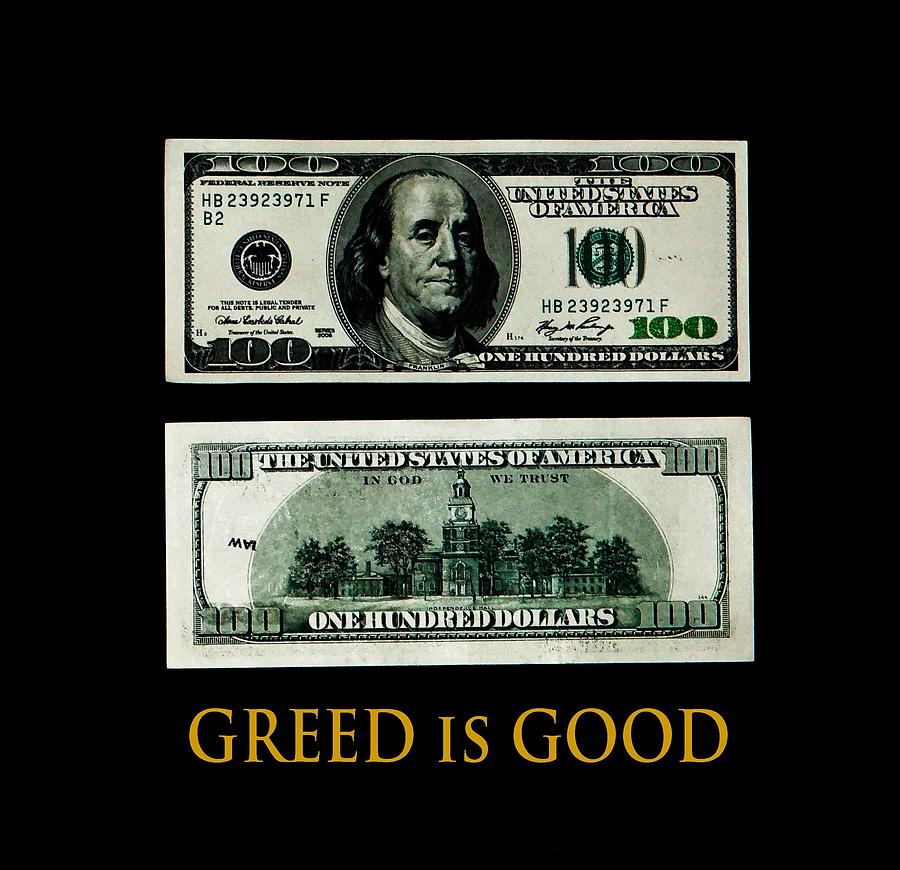 Greed has been man’s downfall since time immemorial. When it comes to our finances, greed clouds our judgment and in many cases it can even make us compromise our values. In investing, greed makes one too optimistic on possible returns based on some experience or even the potential of remarkable growth. While the principle of risk & return always dictate the performance of one’s investment, greed will make one go beyond his risk tolerance in anticipation of fantastic yields. In business, greed makes one engage in cut-throat enterprise and often times have collateral damages like ruined business relationships and even legal issues. After all, it is the love of money which is the root of all evil (1 Timothy 6:10). In the movie Wall Street, Gordon Gecko made a famous line that seems to have been the mantra of many… “Greed is good” (‘That greed, for lack of a better word, is good. Greed is right, greed works. Greed clarifies, cuts through, and captures the essence of the evolutionary spirit’). Well, it is because of greed that there was the recent financial tsunami which almost put the whole world economy into chaos. In fact, the US has yet to recover from their financial crisis which was really a result of greed. Greed is often times the reason for our economic woes. Regardless of how we romanticize it, and despite Holywood’s dangerous seductions, greed is not good.
 power), people do so knowing what they are getting into. Losing money because of ignorance makes one well, ignorant. It is said that you should never ever, ever, ever, ever put your money into something you don’t understand. It is ironic that despite Filipinos being risk averse (ultra conservative), we are also prone to a lot of scams. Many researches reveals that our FQ or financial quotient is very low as compared to other countries. Financial education, though immensely important, is not on the top mind of our citizens. Schools look at financial education from a text book approach rather than on a personal finance perspective and many homes will not discuss money issues until the family is in severe financial situation. I counseled so many individuals that are in dire financial conditions and most of the time, the core of their problem is ignorance – financial ignorance.