Are you on the right path to financial freedom?

By Randell Tiongson on May 24th, 2016

Freedom

What is financial freedom? It sounds like a heavy word. In reality, financial freedom is being able to afford and do what you want, when you want it. This could be having the ability to buy material things without thinking about the cost. This could be retiring early, way before you hit sixty. This could be having the power to quit your job and pursue passion projects, be it starting a business or giving back to the community. Financial freedom sounds like a dream, but if you look around, you may know of some people living the dream, living financial freedom. Do you want to reach financial freedom as well?

Here are 5 points to determine if you are on the right path to financial freedom:

1) You don’t worry about last-minute emergencies

Car broke down? Are you feeling aches and need a trip to the doctor? Other people may hold off having car repairs and medical trips because of the expenses they will incur; however, if you have an emergency fund and even health and car insurance policies, you won’t even think twice of taking your car to the shop or having a doctor’s appointment. If you find yourself panicking during emergencies because of finances, then that’s a sign that you have money problems. If you’re on the right path to financial freedom, you find yourself having the monetary means to pay for last-minute emergencies.

2) You have a positive money mindset

There are people who balk at the idea of having credit cards or loans. “Credit is evil and should be avoided at all cost” is an exaggeration but a very true statement you may hear. It’s time to change that mentality. Credit can be good for you if you use it to your advantage. This means paying your credit card balance in full or taking out loans to set up your future, such as taking out a house loan to buy an investment property. By having a positive money mindset, you’ll learn to make money work for you.

If you want to build a positive money mindset, you can start with reading online blogs, such as mine, and educate yourself on personal finance. At present, self-education is easier than ever what with the multitude of resources available. Even when it comes to applying for a credit card or a house loan, the information and resource you need can be found through comparison websites, such as MoneyMax.ph. The availability of finance-related resources makes talking about money more accessible. The more you read about personal finance, the more you realize that money isn’t as scary or evil as you may have originally thought.

3) You have a healthy savings account

Do you know someone who earns so much and yet always complains about being broke? At the same time, do you have a friend who may not earn so much and yet never complains of not having enough? Between the high and the low-earner, the latter is the one closer to financial freedom. Having a large salary becomes futile if you save 0%. What happens during retirement when you’re not earning a salary anymore? To be closer to financial freedom, start with having a healthy savings account. This means saving a portion of your salary every month. It’s even better if you have a large income; this means you’ll be able to save more. Remember, you cannot invest what you do not save.

4) You know how to say ‘no’

Whether it’s saying ‘no’ to that new pair of shoes or saying ‘no’ when your friends chide you to treat them to another round, having the ability to say ‘no’ can do wonders for your finances. If you track your expenses, you will notice that the little things add up. A cup of Php 100 coffee may not seem much, but drinking one every day of the working day adds up to Php 2,200 a month, or Php 26,400 a year. By learning to say ‘no’, you’ll be able to do your finances some good. Learning how to control your impulses and building the habit will have positive effects not only when it comes to your finances but yourself as a person.

5) You’re making money while you sleep

You may find yourself raising an eyebrow. ‘Making money while I sleep? Is that even possible?’ Yes, it is, and it can be done through investing. I mentioned earlier that employees lose their primary source of income when they reach retirement. This means they won’t be earning a salary anymore, and yet, they’ll continue to spend. If you reach retirement and you have insufficient savings, how will you cover your expenses? You can start investing.

However, don’t start investing when it’s already too late, start as soon as possible. To stay on the right path to financial freedom, make you money work for you while you sleep, and this can be done through investing. You can put your money in a time deposit or a bond wherein you’ll earn interest. You can also invest in stocks, real estate, or a business wherein the value of your investment grows; however, it’s best to note that investments are not guaranteed, and you can lose money as well. This is the importance of starting as soon as possible. The earlier you start investing, the more time you have to spread your risk through the years. The longer your investment, the less riskier they become.

The road to financial freedom

The road to financial freedom is not easy but nothing worth it ever comes without hardships and difficulties. What is important is you take the first step, be it opening a bank account or saving a small percent of your monthly salary. Once you take the first step, you’ll start building the discipline and the habit to continue making smart money choices, and before you know it, you’re already financially free.

As you experience financial freedom, always remember that money is only a tool, not the end goal. Be generous and always be a blessing to others. Wealth and the ability to create wealth comes from the Lord, and it is not for our own purpose, it is for His.

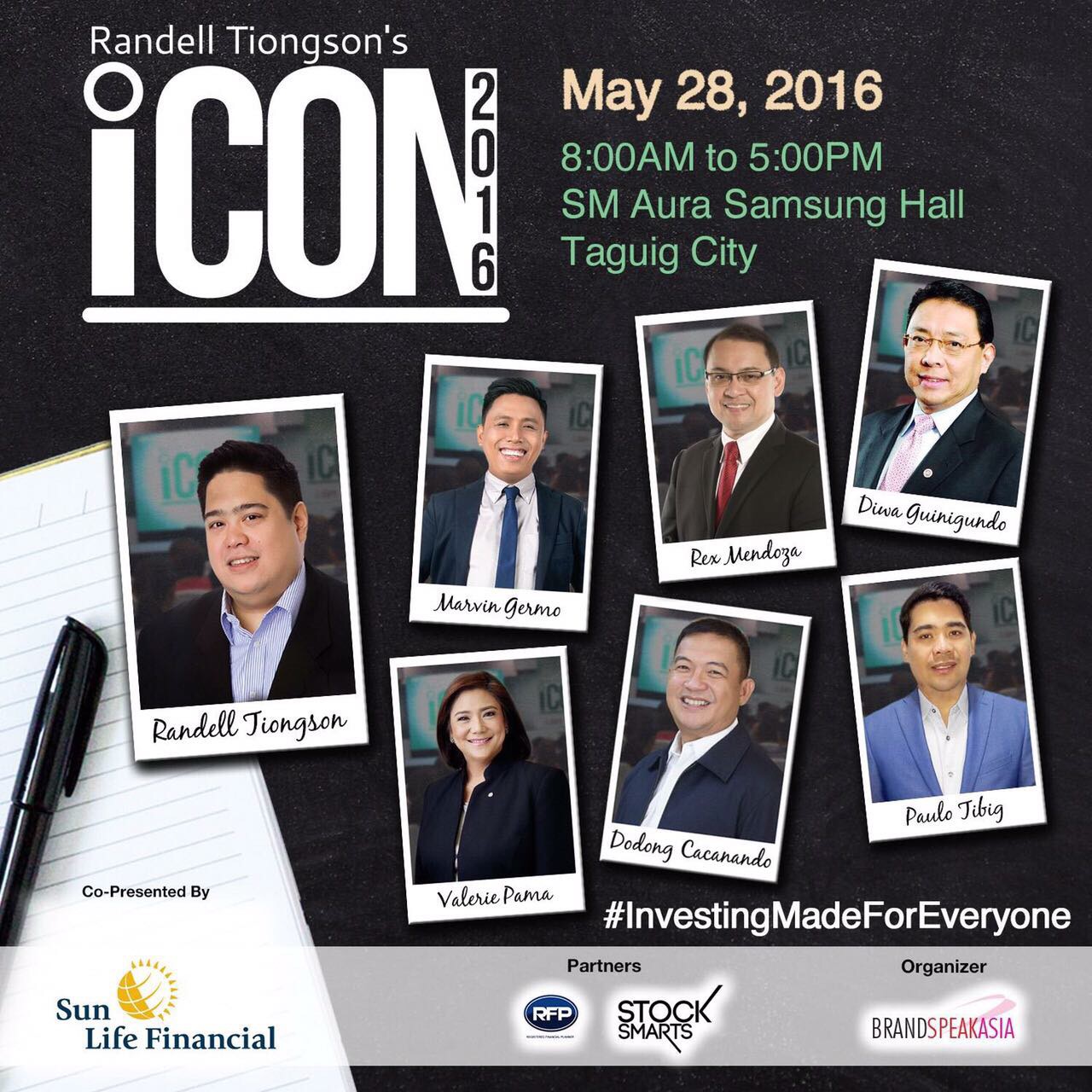
Join the biggest investment conference of the year – iCon2016! Visit www.iCon2016.info or contact 09266910126 for details.
IMG_9619

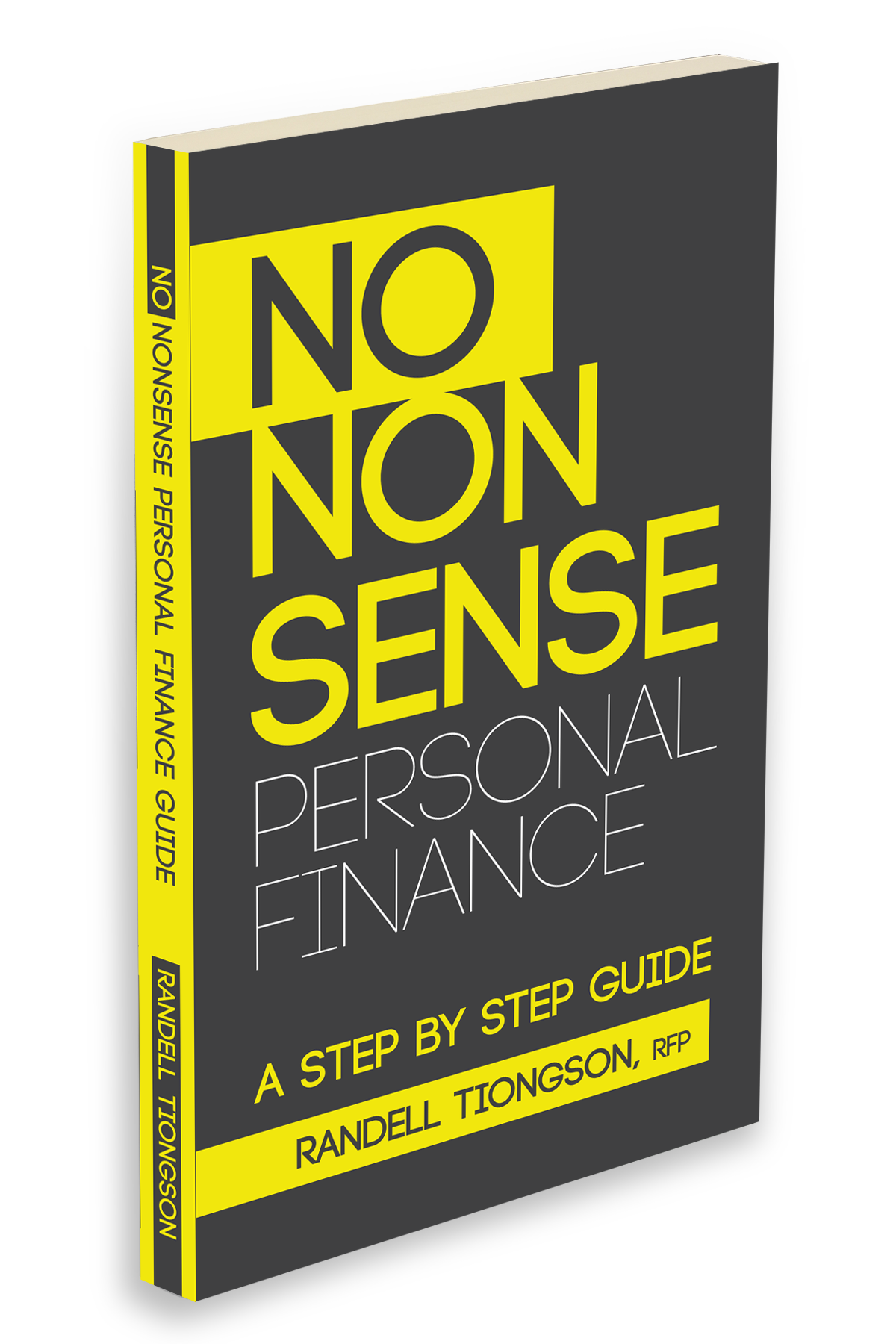
Want a copy of my life-changing book No Nonsense Personal Finance: A Step by Step Guide? E-mail michael@randelltiongson.com on how you can order a copy.

No nonsense cover

Share

1 Day Book Bundle Sale

By Randell Tiongson on May 19th, 2016

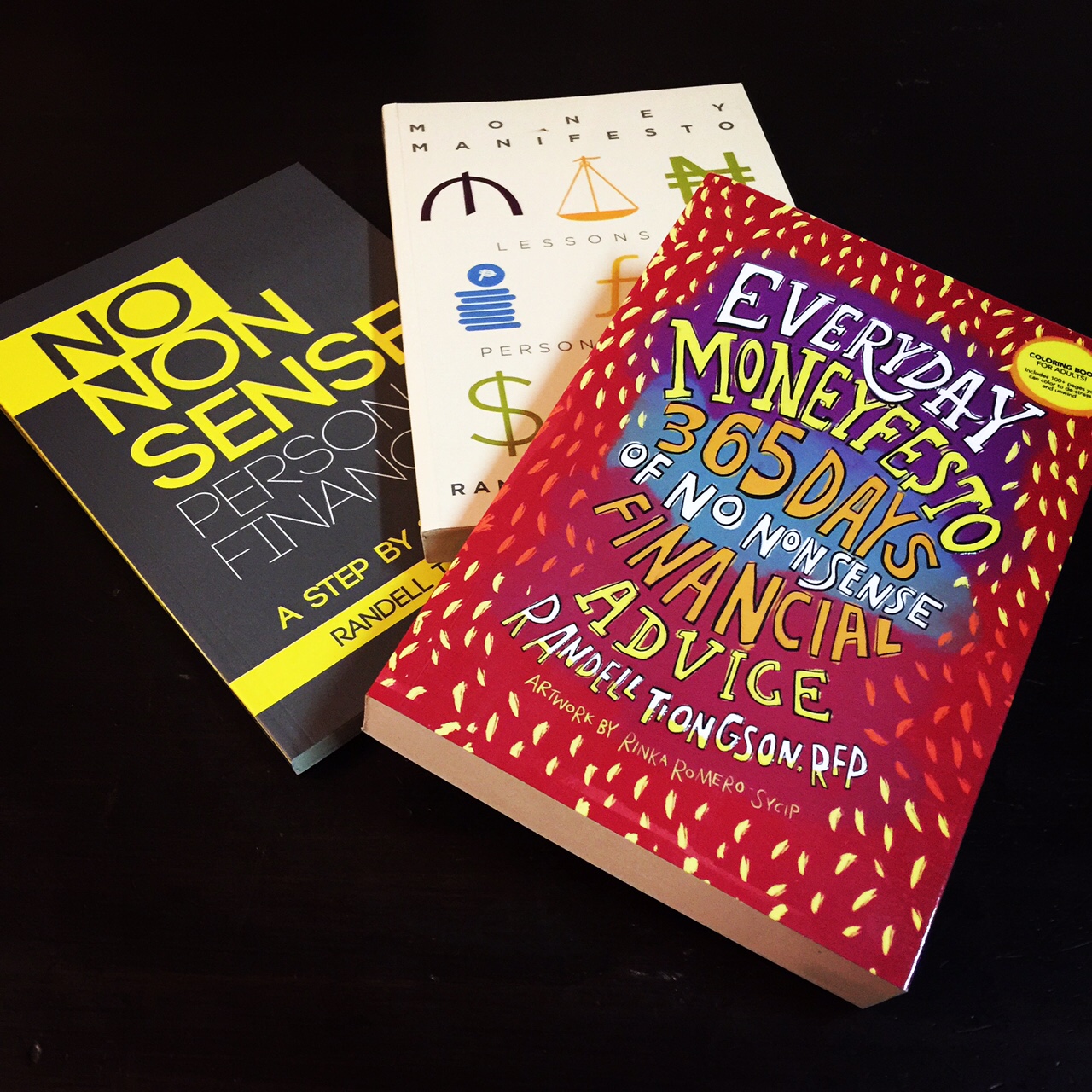
Due to many requests, I will be having a 1 day crazy sale for my 3 books:

  • No Nonsense Personal Finance: A Step by Step Guide; P500.00
  • Money Manifesto: Lessons in Personal Finance; P600.00
  • Everyday Moneyfesto: 365 Days of Financial Wisdom; P600.00

IMG_0663

Regular price of my 3 books is P1,700.00 but for just today, May 19, 2016 all 3 books will be at P1,000.00 (as a bundle). I am throwing in free shipping for Metro Manila deliveries; for provincial orders please add P100.00

Here’s how you can order:

  1. Deposit to BDO #006440069496 or BPI 0249-1113-09 (John Randell Tiongson)
  2. E-mail photo of deposit slip or transfer advise to michael@randelltiongson.com along with your full name, complete address and contact number.
  3. Expect your books to arrive in a few days!

Hurry, the bundle sale is only for 1 day and there will not be extensions!


Share

Should you do cost averaging?

By Randell Tiongson on May 18th, 2016

Question: I am Sam, in my 30s and an employee. After many years, I was finally able to open two investment accounts, one for UITFs and another one for stocks. After joining many Facebook groups on investing and reading your blog, I learned about the strategy called peso cost averaging. Is peso cost averaging always the best strategy? As I am a long-term investor, wouldn’t it just be better to make a lump sum investment instead? Thank you for your help.—Sam via e-mail

Answer: Hi Sam! Congratulations on opening an investment account, and two for that matter! It is good to know that you’re taking the initiative to read and learn about investing. It’s always better to do research and study first, instead of facing something head on, especially in investing. Learning and researching beforehand tells me that you have the discipline to make smart decisions, instead of depending solely on your instinct and gut feeling. Making smart decisions is important when it comes to investing.

As for your question, peso cost averaging is a great strategy because this builds the habit of setting aside money for your investments regularly, unlike lump sum payments. However, it is not without drawbacks.

Investment-Planning_Lump-Sum-vs-Dollar-Cost-Averaging

Pros and cons of peso cost averaging or PCA

Pros

It is affordable. Gone are the days when you need hundreds of thousands of pesos to start investing. Today, you can open an investment account for P5,000 and put as little as P1,000 depending on the frequency you prefer (pro tip: put a set amount into your investment on a monthly basis). PCA comes into play when you buy investments, be it more units of your UITFs or stock shares, on a regular basis. For those who cannot afford a lump sum investment and have only a few thousands to spare, PCA is a good first step into investing.

You ride market highs and lows. Markets tend to follow an up-and-down cycle. One day, company A’s stock may be priced at P2 per share, and then the following day, it can dip to P1.50. PCA evens out your risk by buying shares in different prices. Sometimes you can buy shares that are a little bit more expensive than the last time you bought them, but you can also buy shares for a lower price at other times. In a lump sum investment, if you buy shares during a market high and it tanks, it will be harder to recuperate your losses, unlike in PCA, where you buy shares during both market highs and lows.

You lessen your emotional investment. When you put a lump sum investment and it tanks the following day, week or month, it would be harder on your psyche than if you put in P1,000 every month through PCA and lost. When you do PCA, you become mechanical, rather than emotional, when it comes to your investments. You’re putting in P1,000 every month because you’ve built the habit. If the market tanks, it’s the best time for you to buy, unlike in lump sum investing—when you buy high, you pray for the market to go up so you don’t lose your hard earned money.

Cons

You can miss out on bigger returns. PCA allows you to ride the highs and lows of the market, so this evens out your risk. But you’ve heard the saying, ‘high risk, high reward,’ and when you buy shares during a market low with a lump sum investment, you may be jumping for joy when you get your returns. A 20-percent return on a one-time P500,000 investment is P100,000. In PCA, you’ll be buying stock shares or index fund units at different prices, so your returns may not add up to P100,000 even if you’ve put in P500,000 over time. It’s best to note that no one can really time the market and there’s no saying when the market will bottom out, so it is best to do your research first before deciding on whether to do lump sum investing or PCA.

It is more costly. As you know, every time you make a trade, whether it’s a buy or a sell, you pay a certain amount of fees, such as transaction or servicing fees, trust fees and management fees, among others. Fees vary depending on your investment (e.g. mutual funds, UITFs, stocks), so it’s best to check the website of your provider or broker for the specifics. In PCA, if you invest P1,000 every month, you will pay fees once a month or every time you make buy and sell. In a lump sum investing, you only pay twice—once you buy and once you sell.
Now, that you know the pros and cons of peso cost averaging, you can decide whether or not to push through with PCA. However, as I mentioned earlier, PCA helps you build the habit of saving (instead of spending) your money. You can do both: put in a lump sum to open your initial investment account and then add a percentage of your income regularly.

Learn practical and effective investment strategies from the biggest investment conference of the year iCon2016! We have assembled an impressive roster of experts for this year’s conference with Rex Mendoza of Rampver Financials, stock market advocate Marvin Germo, BSP Deputy Governor Diwa Guinigundo, Agri investor and business speaker Dodong Cacanando, entrepreneurship advocate Paulo Tibig, Sun Life Asset Management President Riena Pama and yours truly. May 28, 2016 at the Samsung Hall of SM Aura. Visit www.iCon2016.info for details and registration.

IMG_9619

Share