Is he a real financial planner?
By Randell Tiongson on February 17th, 2010
The term ‘Financial Planner’ has been a buzz for quite some time now. It makes sense to have a doctor for our medical needs, architects & engineers for our building needs, computer engineers for Information Technology needs – why not a Financial Planner for our personal finance needs?
The benefits of having a Financial Planner makes it a great idea. A Financial Planner’s best trait is that he sees the ‘big picture’ of your financial life and will be more objective and more deliberate in helping you achieve your financial goals.
However, just like in any profession, not everyone deserves to be called a ‘professional’. In the absence of any local regulation or guidelines, anyone can call himself a ‘Financial Planner’ without having the necessary training, education or certification. Worse, there are self-serving companies that certify their own people as financial planners. There are so many individuals who decided to start putting the term ‘Financial Planner’ in their business cards and the public got more confused as to who is a financial planner and what a financial planner really does. Agents of financial services products started to ride on the wave of financial planning, calling themselves financial planners and yet their only objective is to sell their products. There’s nothing wrong with selling financial products, it is a very noble profession but my beef is when the public is being mislead just so that one can make a sale.
Further, a fancy designation, though helpful, is not a guarantee that a person is a real financial planner. The acid test of a financial planner is if he subscribes to an accepted financial planning process and willing to put his program on paper, also referred to as a financial plan. A good gauge to discern a real financial planner is if he subscribes to the internationally accepted 6 Step Financial Planning Process (by the Certified Financial Planner Board of Standards):
From http://www.cfp.net/
1. Establishing and defining the client-planner relationship.
The financial planner should clearly explain or document the services to be provided to you and define both his and your responsibilities. The planner should explain fully how he will be paid and by whom. You and the planner should agree on how long the professional relationship should last and on how decisions will be made.
… to be continued.

Confession of a Financial Planner
By Randell Tiongson on February 15th, 2010
Here’s an article I wrote for my column at the Business Mirror a year ago, just thought of sharing this once more.
—————————————————————-
Confession of a Financial Planner
MY wife Mia and I went on a date last night. Since my wife loves to watch movies and since the secret to a happy life is a happy wife, I instinctively knew she would prefer watching a movie.
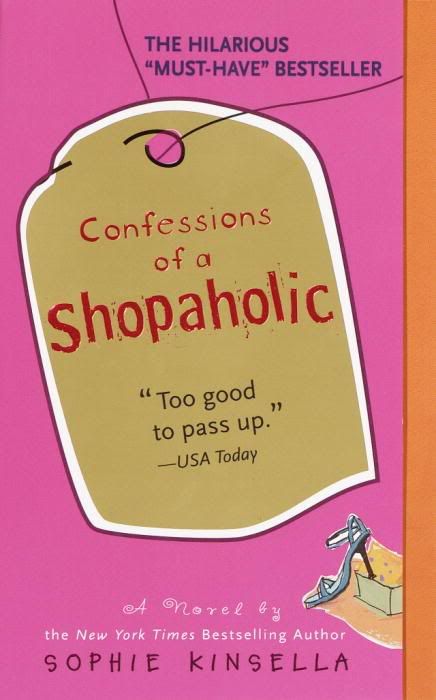
I thought she would prefer watching the John Lloyd Cruz-Sarah Geronimo movie so I was trying to psyche myself to watching it, but I was so delighted to find out she wanted to watch something else. My wife knew I’m not a big fan of those movies so she wanted to watch something else for my sake. That’s one of the many reasons I love my wife so much—so unselfish! Not wanting to be a total jerk by asking her to watch an action movie, I suggested to meet half-way. As a result, we ended up watching the movie Confessions of a Shopaholic. I was actually intrigued by it because my daughter Gabbie said it was a great movie while another daughter Billie liked the book.
How was the movie? It was awesome! In fact, I urge everyone reading this to watch the movie. Watching it is like attending a financial-literacy seminar, only more amusing, more relevant and actually more effective.
The plot revolves around a character named Rebecca Bloomwood (brilliantly portrayed by Isla Fisher) who has an exaggerated spending problem and ends up being a columnist for a personal-finance magazine. The main character represented many of us, albeit in a humorously exaggerated way. We live in a society that is afflicted with a debilitating disease called “consumerism.” This burden has manifested itself in a “spending problem,” resulting in many of us living a debt-ridden life—a life that robs us of true freedom and of victory.
As a financial planner myself, I was endeared with the character in the movie. Her column gives out a lot of practical and great personal advice and has a lot of followers, despite her financial life being in complete havoc. Well, I wouldn’t say I’m exactly like Ms. Bloomwood in the sense that I don’t really have a shopping addiction, and I’m not too sure if I do have many followers. While my financial life is not in havoc, it is far from being ideal.
Many times, I find myself “preaching” to myself whenever I write or speak. It’s not very wise for someone like me to say that I don’t have an “ideal” financial life, but I want people to know that I, too, experience the difficulties of putting my financial life in order. I went through a lot of mistakes that I have been trying to rectify. I was also afflicted with a spending problem that nearly left me in ruins. I made so much mistakes I later on regretted, which I wrote about in this column many months ago. But I learned from those mistakes and I am in a very long process of rectification. What is crucial is the realization of one’s problems and the resolution to learn from them, and have a lasting solution for them.
I do not only write or speak from a theoretical point of view. I am writing from painful personal experiences. We can’t “undo” many things we have done, but it doesn’t matter anymore as what’s done is done. Like anything in our lives, we must learn to stand when we fall. In doing so, we become more resilient, stronger and, most important, wiser.
Here’s a wise advice: To really fix a problem, go to the source of the problem. When I found myself with a financial burden, I tried many ways to “fix” it but I noticed that while some of those remedies worked, most of them did not permanently solve the problem. Like the many “solutions” we try, I found myself applying mostly short-term or “Band-Aid” solutions.
If we have a financial problem or a spending problem, we should determine the root cause of the problem. Is it the lack of income or the way we spend? Why do we spend the way we spend? In my case, I got into a financial mess because I had a “want” issue: I wanted this, I wanted that. It wasn’t just with me, it was with my family, too. But it was a “want” problem nonetheless.
Over the years, my “wants” became bigger and bigger and I found myself doing everything just so I can satisfy my “wants.” It didn’t really feel wrong at that time. In fact, some people might even say that it helped motivate me to work harder and harder. In retrospect, I now know it was very foolish of me not to have stopped my insatiable desire to want more and more. I am glad I came into my senses and was able to curb my “want” issues. I guess those desires are still there as I am only human, but I have developed a strong willpower to overcome them.
How was I able to overcome my weaknesses? Simple. I merely reexamined what is really important in my life. Do I want to impress others because of what I have, or do I want others pleased with me because of my character? Do I want to please my family with a life that I can hardly afford and, as a result, become a preoccupied husband or father? Or do I want my family to be pleased with me because I am a real and approachable head of the family for them, always there when they need me? Do I want people to listen to me because of what I have accomplished, or do I want people to have hope that they can have a good future by learning from the mistakes that I chose not to hide?
In the end, I chose what really was more important. I chose to have a meaningful relationship with what really is important in my life—my family and my savior, Jesus Christ. In doing so, I found a permanent solution to my deeply rooted “want” problems—the cause of my financial fall.
I fell down, I stood up, but I know I’ll fall down again—all these happen because God is molding something that is very important in me: my character. “…But we also rejoice in our sufferings, because we know that suffering produces perseverance; perseverance, character; and character, hope.”—Romans 5:3-4 (NIV). Our character will determine our future, even our financial future.
This is my confession.
John Maynard who? (part 2)
By Randell Tiongson on January 4th, 2010
… con’t.
The Philippine government tried to copy the same cheap money scenario but the local game was played very differently. The government pegged the interest rate very low, yet the bank’s borrowing rates were still stiff and did not really trickle to benefit the economy the way the government wanted it to. As a result, while there was some modest economic growth , it was a laggard by other country’s standards. When global financial institutions came crashing, the local financial companies stood their ground with nary a scratch. I got to give it to our Central Bank and sound local management to some point… but to a large degree, our local financial companies breezed through the storm unscathed because of the huge margins they enjoy. Imagine borrowing money at very cheap rates (thanks to the government) and lending them at high rates – how can you go wrong?
The first world economies and the Philippines applied what John Maynard Keynes advocates with different results. First world experienced unprecedented growth but their economy later succumbed into what appears to be a vacuum. The Philippines were spared from the financial mess but continues to await some economic epiphany that seems to be a dream. In my view, both results are failures.
Now, was John Maynard Keynes right? Should the government continue to craft policies to influence the economy? It seems that now more than ever, the Keynesian theory is alive – dole outs, stimulus packages & low interest rates; and we still claim that we subscribe to a free market? Hmmm, perplexing. Why don’t we just let the economy take its proper course; allow recession so we can learn from it; fix our houses, weed out inefficiencies and review our priorities? Allowing to do so will definitely be a painful and a hugely unpopular move. Or, we can continue applying band aid solutions to a necrotic wound.
There’s only one economy that can experience consistent growth with no recessions: God’s economy. Maybe it’s time we start focusing our time and effort in participating in His economy.
“So if you have not been trustworthy in handling worldly wealth, who will trust you with true riches?” – Luke 16:11, NIV.
A blessed New Year to everyone!