How to save and enjoy your money at the same time
By Randell Tiongson on January 4th, 2018
Q: I READ your ‘5 finance things millennials should do’ article from before, but I’m worried that concentrating on saving and investing won’t leave me any money to have any fun with. What do you suggest I do? —Allen, via e-mail

A: While you’re young (even when you’re not!), it’s natural to want to enjoy your money—sometimes at the expense of your financial well-being. But being smart about money isn’t all about penny-pinching and being kuripot (stingy). There are ways to save for your future while still having a portion for guiltless spending:
1) Pay Yourself First. Paying yourself first is the key to enjoying your salary while still saving for your future. Why? Because a lot of people spend first, then save what’s left. It’s funny how these people find at the end of the month, there isn’t much to save, if there’s even anything left. That’s paying yourself last.
Instead, before you do anything with your paycheck, immediately put a part of it away for saving or investment. If you do this automatically, you might not even notice it. Many banks have an auto-save feature, where every month (or every two weeks—you can set the time yourself) a certain amount is automatically taken from your payroll account and transferred to a savings account. Some also have features where you can automatically subscribe to a UITF or mutual fund.
Paying yourself first has many advantages. By saving first before spending, you won’t be tempted to skip saving for the month. This, in turn, will ensure that your savings grow consistently without you having to work too much for it. Once you see your savings grow, you’ll be more likely to add to it, and then later explore more options for your money to grow.
Twenty percent of your paycheck is a good portion to save every month. If you can’t afford that, start small (even 5 percent is fine) and increase your ‘paying yourself first’ money over time.
2) Budget. Knowing where your money goes will help you save more of it. Also, you may surprise yourself when you find out just how much you spend on expensive coffee every month. If you don’t already have a budget for the next month, track your spending. Try to see where every peso of your salary goes so you know what you’re spending the most on. Then, after a month, sit down and see what you spend on the most, what you could afford to spend less on.
Contrary to what you might think, having a budget can actually help you feel more free about spending—because you know what you can afford, and you know that the rest of your needs have been taken care of already. So pay yourself first, then pay for your needs, then buy that frappuccino and enjoy it guilt-free.
There are many ways to budget: the ‘envelope’ budget, where you set an amount for every category of spending; the 50/30/20 budget, where you spend 50 percent for needs (bills, rent, groceries), 30 percent for wants, and 20 percent for savings and debt payments; or the even easier 80/20 budget, where 20 percent goes to savings and 80 percent goes to everything else. It may take a while for you to find a budgeting style that fits you, so feel free to experiment—as long as you’re putting something toward savings!
3) Set aside some money every month for guiltless spending. For a lot of people who are starting to budget, they begin to feel guilty every time they spend money on a ‘want’ and not on a ‘need,’ even if they’re already putting money toward savings and investments. Just because you’re saving for the future doesn’t mean you can’t enjoy something for yourself.
To avoid needless guilty feelings, set aside a small portion of your income for spending on whatever you want. As long as you don’t exceed that limit, you don’t have to feel bad about your purchase. If you follow the ‘pay yourself first’ rule and you’ve already paid your bills, why should you feel bad about buying a new pair of shoes, especially if you already set aside money for it?
If you have wants that are more expensive, such as a nice vacation or a new gadget, you can budget for it little by little every month, so that when the time comes, you can pay for it in full.
Saving doesn’t have to be a burden. By following these steps, everyone can have their cake and eat it too—as long as they save some of that cake for the future first. Do not forget that we need to be wise with money, and balance is key. While it is ‘fun’ to be enjoying your money today, you will suffer in the future if you keep on spending every peso you make. Remember, your older you will either thank or curse your younger you.
How to Save on Credit Card Fees While Travelling
By Randell Tiongson on April 17th, 2016
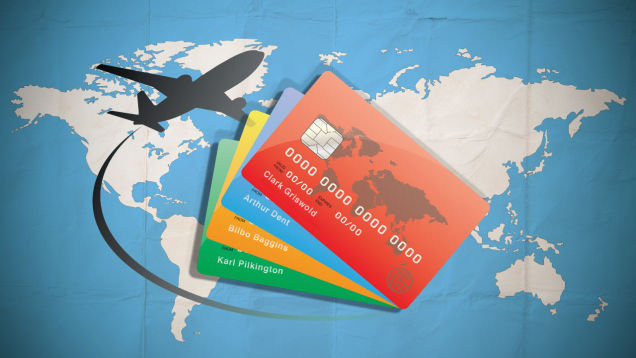
More and more Filipinos are starting to travel. Decades ago, travelling to neighboring Asian countries such as South Korea and Japan was a challenge. Experiencing European culture and going on a trip to the 28-member states of the European Union might have been impossible. Nowadays, these are becoming more realistic. Filipinos are allotting more of their financial resources to traveling overseas because a trip abroad is a great way to de-stress from the daily 9-to-5 grind.
Travelling may have become more accessible and affordable, but there’s still no denying it takes a chunk of your expenses. If you’re planning to travel overseas, you’re probably thinking one, two, or all of the following when it comes to your budget:
Should I have my entire budget converted to the local currency?
How much cash should I bring?
Is it safe to carry my money in cash?
Is it better to pay in credit card or cash?
If I pay in credit card, what fees will I pay?
There’s no denying that when it comes to convenience, credit cards (versus cash) win over cash. There’s no need to carry stacks of bills wherever you go; however, credit cards, when used improperly, can increase your expenses.
Here are tips on how to use your credit card while abroad to save money and to avoid paying fees:
Know the fees beforehand
Credit card providers usually charge an assessment fee (for converting your currency) and a service fee for overseas credit card use. Fees may vary; some credit card issuers may charge 0.75% or 1% for the assessment fee and another 1% for the service fee. Other providers may charge above 3% for both fees. Before you travel, know the exact fees you’ll be paying when you use your credit card.
If you have a trip planned months before your scheduled departure, you can even look for the credit card with the lowest fees and apply for a new one. Comparison websites, such as MoneyMax.ph, allows you to compare and filter different credit card features according to your preferences.
Use it for big-ticket items
It’s scary to carry large amounts of cash, so it’s preferred to pay in credit card. Since you’re paying assessment and service fees, avoid using your credit card for every transaction. Limit it to big buys wherein carrying plastic is safer than cash, and leave your card in your hotel or AirBnB safe. The assessment and service fees are a small price to pay for ensuring your money is safe. Unlike cash, if your credit card is stolen, you may report the theft and have your money refunded.
Brush up on exchange rates
When abroad, establishments usually ask if you want to pay in your local currency or the currency of the country you’re in. This can either add or subtract your expenses. Even though the difference of the amount you’ll pay in one currency versus the other is almost negligible, it’s best to know the daily exchanges rates in the country you’re travelling to. Know which currency costs less and save the difference.
A credit card is a convenient means of carrying money while abroad. There’s no need to carry bundles of cash and fear losing your money in a place away from home. As long as you keep track of your credit card expenses and spend wisely, credit card use is beneficial. Treat it as money that you already have instead of money that will come. This means that you only spend the amount you can afford to pay rather than letting your credit limit dictate your credit card use. Use the tips above to save on credit card fee while travelling.
What to consider in buying an investment property?
By Randell Tiongson on March 28th, 2016
 1 in 6 Filipinos owns real property other than the primary home. This is according to the 2012 Consumer Finance Survey of the Bangko Sentral ng Pilipinas (BSP). While others may use the second or third properties either as a halfway or vacation home or for the rich a ‘pamana’, others use additional real estate as an investment opportunity.
Especially in school and central business districts (CBD), there’s no shortage of rental properties. This is because continuous demand directly relates to the flow of income. If your property is near a university, every four or five years, there’s always a new batch of students looking for a place to stay. You can expect there’s always an individual eyeing a home near one’s workplace if your rental property is in a CBD.
Are you thinking of buying an investment property? Here are four questions to ask when buying an investment property. If you answer ‘yes’ to the following questions, you’re on the right track in becoming a real estate investor.
- Is the property location strategic?
Easy access to malls, parks, hospitals, and accessibility to public transportation increase the profitability of university towns and central business districts.
Quezon City, Makati City, and Paranaque City are the three most searched cities in the Philippines according to Lamudi’s 2015 white paper report. Why?
- Quezon City has many universities and colleges, research institutes, and commercial developments.
- Makati City is the financial center of the country with the highest concentration of local corporations and multinational companies.
- Paranaque is close to Makati City and Pasay City but offers more affordable housing options.
Ask yourself how close is the area from schools, offices, hospitals, malls, and main roadways and public transport if you are planning to buy a property investment.
- Will the area develop and grow in the coming years?
The search traffic for properties in CALABARZON, Central Luzon, and Central Visayas continues to increase in the same Lamudi white paper report. Search traffic in CALABARZON surged 130% from the 4th quarter of 2014 to the 1st of 2015. The reason for this is current and future developments in the region, namely in Cavite and Laguna.
The developments in these two areas show no signs of stopping. Nuvali, in Sta. Rosa, Laguna, has easy access to numerous commercial establishments, schools, leisure areas such as a wakeboarding park, and residential properties where the price per square meter is starting to match Metro Manila’s. Ayala Land, Inc.’s vision for Nuvali is to make it the next financial district south of Makati. This area will continue to grow and thus makes it a strategic location to invest in.
The area is a good investment opportunity if the area is situated in a less developed area that is primed to grow and progress in the future. Don’t join the race when it has already started; invest in properties in the early stages of development.
- Can you handle the monthly amortization?
Having enough to make the downpayment is one thing, paying your monthly amortization is another. Your payment terms, interest rate, and timeframe varies on your personal preferences. The only thing that stays permanent is the necessity to keep up with the monthly payments. Avoid late payments as this leads to paying more in interest. Do the math first and ensure you can afford the monthly amortization before you decide to invest in real estate.
You can use MoneyMax.ph’s comparison portal for housing loans to give you an idea at how much you can expect to pay on a monthly basis depending on your time frame and loan amount.
- Do you have savings for emergency situations?
As the landlord, you are liable to cover for unnecessary situations that may arise (unless otherwise stated in the contract). You should shoulder expenses for water leaks, roof repairs, and floor re-tiling among many other repairs. You’ll also be covering for utility bills and the homeowner’s association fees f your property is left vacant for several months.
The importance of having savings or an emergency fund is to cover for emergency situations in relation to your rental property.
You’re on the right track in buying a profitable property if you find yourself saying ‘yes’ to the questions above. Remember that when you invest in real estate, your intention is to earn and make money because you are investing. Make sure that the property you’re eyeing is profitable before you make a down payment.
———
Learn from the experts at iCon2016 this May 28, 2016. Hear the country’s leading experts: BSP Deputy Gov. Diwa Guinigundo, Rex Mendoza, Marvin Germo, Paulo Tibig, Dodong Cacanando and Reina Pama.
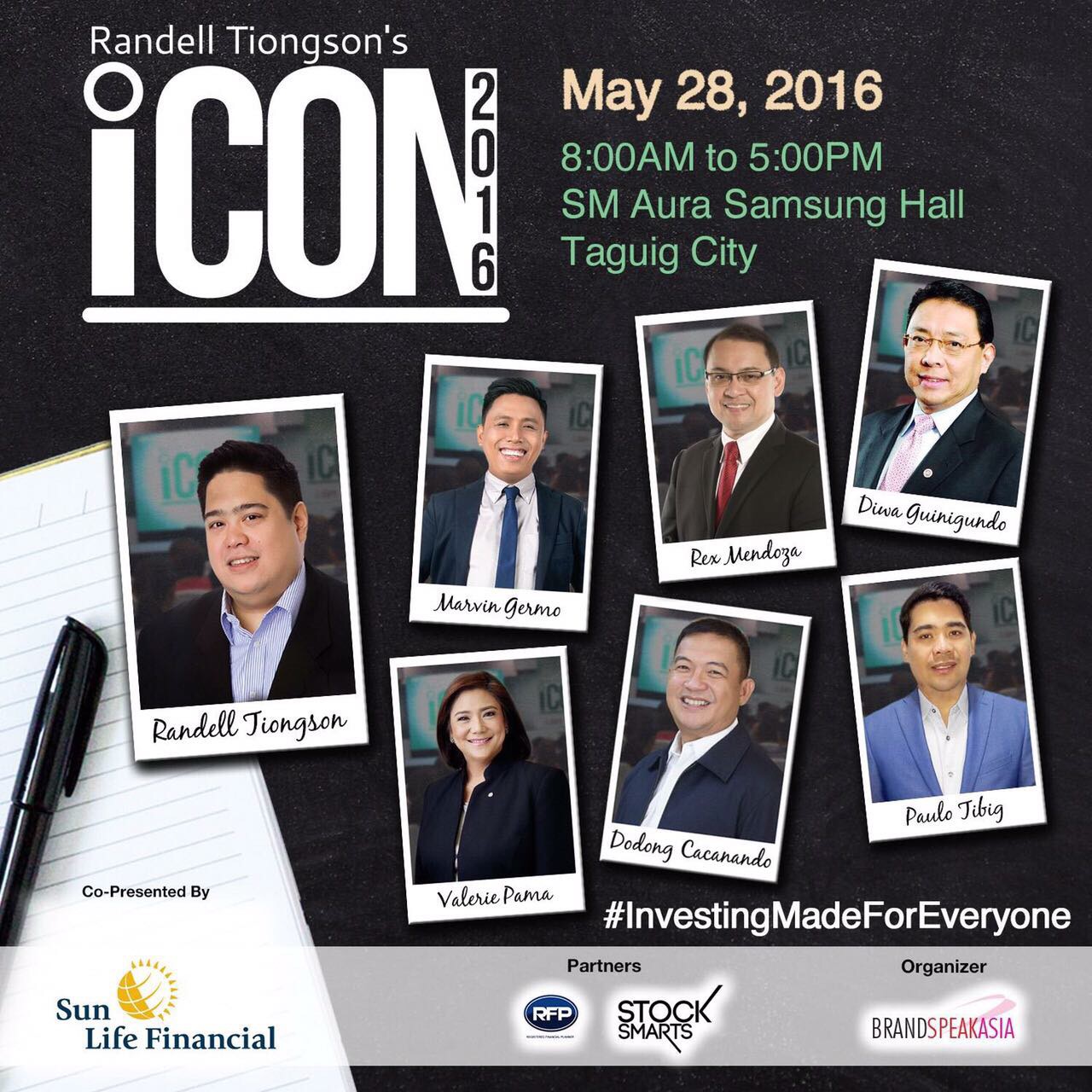
For details, visit HERE