Better Wages, Stronger Businesses, and Wiser Stewardship
By Randell Tiongson on July 2nd, 2026
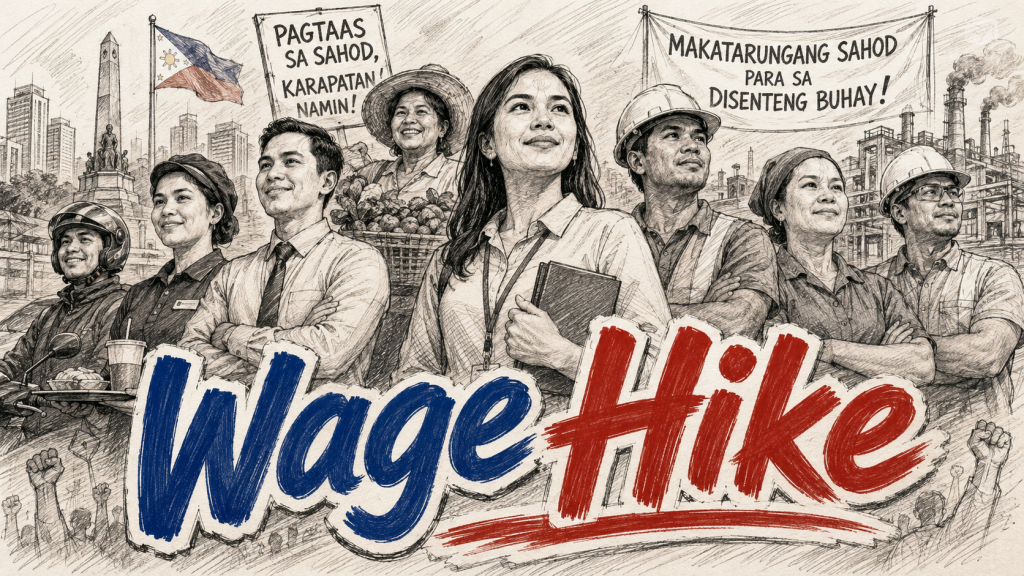
The recent announcement of an ?85 wage hike for Metro Manila workers is welcome news for many Filipino families who have been struggling with the rising cost of living. With the continued increase in the prices of food, transportation, rent, utilities, education, and other basic needs, workers need better pay, and they deserve to be compensated fairly.
As business owners, we should not be indifferent to the plight of workers. Wages are not merely numbers in a payroll report. Wages represent meals on the table, tuition payments, medicine, rent, transportation, and the dignity of people who work hard to provide for their families.
The Bible affirms this clearly. 1 Timothy 5:18 says, “For the Scripture says, ‘You shall not muzzle an ox when it treads out the grain,’ and, ‘The laborer deserves his wages.’” Workers deserve their wages, and a society that values work must also value workers.
However, I also believe that government must do its part to help business owners, especially small and medium enterprises, remain profitable, productive, and sustainable.
It is easy to say that businesses should just pay more, but we must also understand the reality on the ground. Many SMEs are already dealing with rising costs of goods and services, higher rent, expensive utilities, increased logistics costs, supply chain pressures, taxes, permits, compliance requirements, and the daily challenge of keeping the business alive.
When wages increase, businesses do not simply absorb the cost in a vacuum. If productivity does not improve and if the business environment remains difficult, many enterprises will eventually have to raise prices just to survive. This means that higher wages, while necessary, can also lead to higher costs that will eventually be shouldered by consumers. The sad irony is that the very workers who need higher wages may also face higher prices in food, transport, services, and basic goods. This is why wage policy cannot be viewed in isolation.
In addition, we must also recognize that passing on higher costs to consumers may not always be possible. Many consumers are already highly challenged. Families are watching their budgets more carefully, cutting back on non-essentials, and delaying purchases. When businesses raise prices in a market that is already under pressure, customers may simply stop buying, buy less, or look for cheaper alternatives.
This puts many businesses, especially SMEs, at a higher risk of shutting down. If they absorb all the added costs, their margins may disappear. If they pass on the costs, their customers may disappear. Either way, the business owner is placed in a very difficult position. Many businesses may eventually close down because of these combined pressures, and that would be a greater tragedy not only for business owners, but also for employees, suppliers, landlords, service providers, customers, and the communities around them. When a business closes, the owner loses capital and years of hard work, but employees also lose their livelihood, suppliers lose customers, families lose income, and the economy loses productive activity. This is why we must be careful not to frame the issue as if only one group is affected. A struggling business ecosystem eventually hurts everyone.
The pressure becomes even heavier when we consider the BSP’s recent interest rate hike, which is also a big challenging factor for businesses. Higher interest rates make it more expensive for businesses to borrow money, manage cash flow, expand operations, buy inventory, upgrade equipment, or simply survive during difficult seasons. For many SMEs, access to capital is already difficult, and when the cost of capital goes up, the burden becomes even heavier.
This means businesses are being squeezed from many sides: higher wages, higher input costs, higher taxes and compliance costs, weaker consumer spending, difficult bureaucracy, corruption, and now higher financing costs as well.
This is why the discussion must go beyond wages alone. Better wages must be matched with better productivity, better governance, lower friction for business, less corruption, simpler compliance, more reasonable taxes, accessible financing, and policies that help SMEs grow rather than merely survive.
For large corporations, an increase in wages may be easier to absorb. For many SMEs, however, the pressure is much heavier. Many small business owners are not swimming in excess cash and many are also trying to survive. They are paying salaries, rent, suppliers, loans, taxes, and other obligations, often while taking home very little for themselves.
This is why the conversation should not be reduced to workers versus business owners. That is too simplistic, and it is not helpful.
Workers need better wages, and businesses need a better environment to thrive… both are true. If we only help workers without helping enterprises remain sustainable, jobs may eventually be affected. If we only protect profits without caring for workers, we violate justice and human dignity.
A healthy economy needs both fairly paid workers and healthy businesses. This is where stewardship becomes important.
For business owners, stewardship means seeing employees not merely as costs, but as people entrusted to our care. It means paying as fairly as we can, treating people with dignity, creating a healthy workplace, and remembering that profit is important, but profit is not ultimate.
For workers, stewardship means doing our work with diligence, honesty, excellence, and integrity. Colossians 3:23–24 says, “Whatever you do, work heartily, as for the Lord and not for men, knowing that from the Lord you will receive the inheritance as your reward. You are serving the Lord Christ.”
For government, stewardship means creating policies that protect workers while also allowing businesses to grow. It means reducing unnecessary bureaucracy, fighting corruption, simplifying compliance, reviewing burdensome taxes, improving infrastructure, making financing more accessible, and creating an environment where entrepreneurs are encouraged rather than exhausted.
Because let us be honest. Difficult bureaucracy and corruption remain a bane for many business owners in our country. Too many entrepreneurs spend so much time, money, and energy navigating permits, requirements, taxes, inspections, fees, and sometimes even the informal “costs” of doing business.
That should not be normal.
If we want better wages, we must also build a better business environment.
SMEs are the backbone of our economy. They make up the great majority of businesses in the Philippines and employ millions of Filipinos. When SMEs suffer, the whole economy suffers. When SMEs close, jobs disappear. When SMEs stop expanding, opportunities shrink. When SMEs lose hope, the economy loses energy. But when SMEs thrive, everyone benefits. Workers benefit because more jobs are created. Families benefit because incomes become more stable. Communities benefit because local businesses support local needs. Government benefits because a growing economy produces more sustainable tax revenues. The nation benefits because enterprise, productivity, and innovation are encouraged.
This is why wage policy must be partnered with pro-growth policy. Better wages must be accompanied by lower friction for businesses. Higher labor standards must come with better government service. Increased compensation must be paired with serious reforms that make it easier, cleaner, and more affordable to do business.
We cannot keep increasing the burden on SMEs while leaving them to fight inflation, corruption, red tape, inefficiency, taxes, and higher borrowing costs on their own.
A just economy is not one where workers are underpaid. A just economy is also not one where entrepreneurs are punished for creating jobs. A just economy is one where work is honored, workers are dignified, businesses are productive, government is accountable, and prosperity is shared.
This is the kind of stewardship we need.
Business owners must steward their people well. Workers must steward their work well. Government must steward the economic environment well.
We need policies that do not merely sound compassionate, but actually produce long-term good. We need reforms that do not merely increase wages, but also increase productivity, investment, employment, competitiveness, and business confidence. We need a business climate where SMEs are not crushed, but equipped to grow.
Higher wages are good, but higher wages must be sustainable. Better pay is necessary, but better policy is also necessary. Workers deserve dignity, and business owners need support.
If we want a stronger economy, we must stop thinking in terms of one sector winning over another. We need workers to flourish, businesses to flourish, and the nation to flourish.
That will require justice, wisdom, productivity, accountability, and stewardship from all of us.